
Rača Monastery
Rača Monastery is a Serbian Orthodox monastery located south of Bajina Bašta, Serbia, founded by Stefan Dragutin. It gained prominence as a significant center for translation and manuscript copying, particularly through the "Rača School," which flourished from the 16th to 18th centuries and significantly contributed to Serbian literature. Despite suffering destruction and reconstruction throughout its history, the monastery remains a testament to Serbian cultural and religious heritage.
Key Facts
- ›Founded by Stefan Dragutin, Serbian king from 1276 to 1282.
- ›Became a burial site for Serbian rulers, nobles, and church dignitaries.
- ›Housed the renowned "Rača School," a major scriptorium for translating and copying manuscripts.
- ›The "Rača School" produced important scientific and literary works, contributing significantly to Serbian literature.
- ›Reportedly had 300 monk-scribes, supported by 400 staff and 200 guards in 1630.
- ›Partially destroyed during the Great Turkish War in 1689 and rebuilt after burning down multiple times.

RačA School, Manuscript Translation and Copying Center
манастир рача, Manastir RačA, рачанска школа, RačAnska šKola
Stefan Dragutin, Evliya çElebi, Kiprijan, Jerotej, čIrjak, Simeon, Teodor, Hristifor, Gavrilo Stefanović Venclović
- Founded By Stefan Dragutin
- Became A Burial Site For Rulers and Nobles
- Flourishing of the RačA School
- Partially Destroyed During the Great Turkish War
- Burned Down Several Times Under Ottoman Rule
- Reconstructed In 1826
About Rača Monastery
Rača Monastery is a significant Serbian Orthodox monastic complex situated seven kilometers south of Bajina Bašta, Serbia. Its historical importance is deeply intertwined with its founding by King Stefan Dragutin, who ruled Serbia from 1276 to 1282. The monastery quickly established itself not only as a spiritual center but also as a crucial burial place for Serbian rulers, nobles, and high-ranking church officials.
The Rača School
A defining characteristic of Rača Monastery was the "Rača School" (Serbian: Рачанска школа / Račanska škola), a renowned scriptorium that reached its zenith from the sixteenth to the eighteenth century. The monks here were dedicated to the meticulous work of translating ancient texts from Greek and copying manuscripts. Their scholarly endeavors extended beyond purely religious texts, encompassing significant scientific and literary works of the era. The creativity and output of the Rača School and its alumni, including figures such as Kiprijan, Jerotej, and Gavrilo Stefanović Venclović, are considered foundational to the history of Serbian literature.
Historical Fortunes
Rača Monastery has experienced a tumultuous history marked by periods of destruction and rebuilding. In 1630, the Turkish travel writer Evliya Çelebi noted an impressive community, reporting 300 monk-scribes, supported by 400 staff and a guard of 200 armed men. However, during the Great Turkish War in 1689, the monastery suffered partial destruction by invading Turkish forces. It endured further damage, being burned down multiple times during the period of Ottoman rule, before its significant reconstruction in 1826.
Source: Wikipedia ↗
Frequently Asked Questions
When was Rača Monastery founded?
Rača Monastery was founded by Stefan Dragutin, who reigned as the Serbian king from 1276 to 1282. The exact year of its founding is not specified, but it dates back to his reign.
What was the significance of the Rača School?
The Rača School was a famous scriptorium within the monastery that flourished from the sixteenth to the eighteenth century. Its monks were dedicated to translating texts from Ancient Greek and copying manuscripts, including not only liturgical works but also scientific and literary pieces, making a substantial contribution to Serbian literature.
What historical events affected Rača Monastery?
The monastery was partially destroyed by invading Turks during the Great Turkish War in 1689. It also suffered damage from being burned down several times while Serbia was under Ottoman rule, necessitating reconstruction in 1826.
Who were some notable figures associated with the Rača School?
The Rača School produced many alumni who significantly contributed to Serbian literature. Notable figures mentioned include Kiprijan, Jerotej, Čirjak, Simeon, Teodor, Hristifor, and Gavrilo Stefanović Venclović.
What was the size and scope of the monastery in the 17th century?
According to the Turkish travel writer Evliya Çelebi in 1630, Rača Monastery was home to 300 monk-scribes. They were supported by a large staff of 400 shepherds, blacksmiths, and other workers, with an additional security detail of 200 armed men.
Related Monasteries
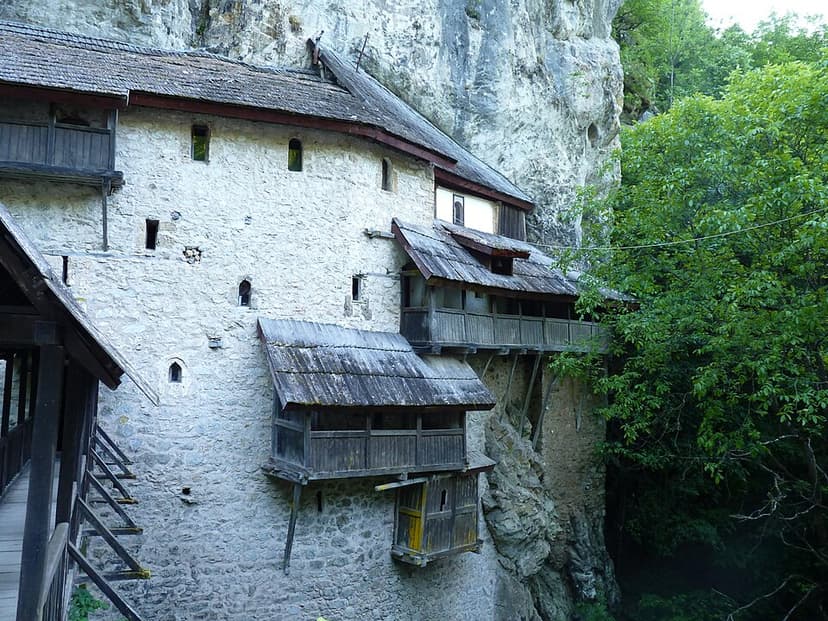
Crna Reka
Crna Reka Monastery is a 13th-century Serbian Orthodox monastery located in southwestern Serbia, near the village of Ribariće. It is distinguished by its cave-church dedicated to Archangel Michael, which features 16th-century frescoes and houses the relics of Saint Peter of Koriša. The monastery's secluded location in the gorges of Ibar Kolašin provided refuge for monks from Sopoćani during Ottoman attacks in the 16th century.
Crna Reka Monastery
Crna Reka Monastery, meaning "Black River Monastery," is a 13th-century Serbian Orthodox monastic complex located in southwestern Serbia. It is notable for its cave-church dedicated to Archangel Michael, which contains 16th-century frescoes and the relics of Saint Peter of Koriša. The monastery served as a refuge for monks from Sopoćani during 16th-century Ottoman attacks.
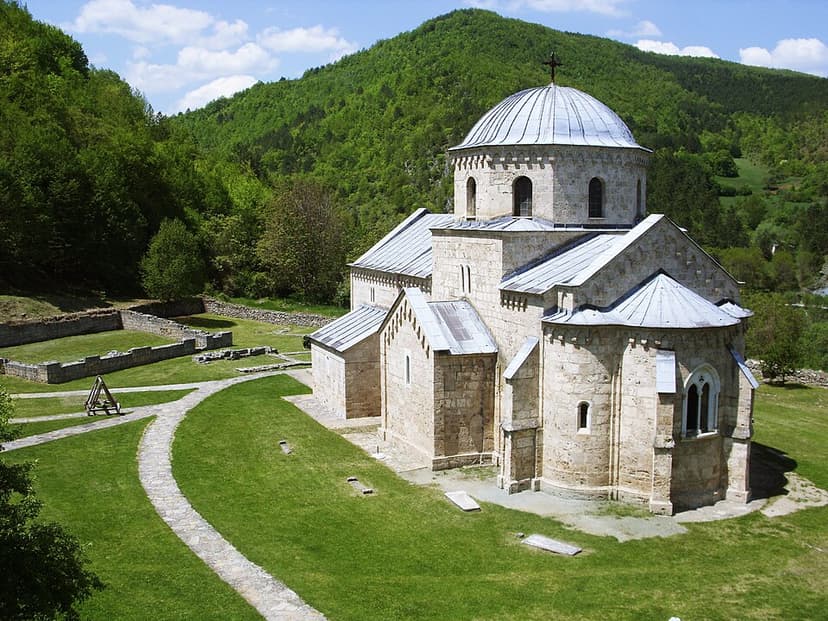
Gradac Monastery
Gradac Monastery is a Serbian Orthodox Monastery located on a plateau above the Gradačka River, built between 1277 and 1282 as an endowment of Queen Helen of Anjou. Known for its Serbian-Byzantine architecture with Gothic and Romanesque elements, the monastery suffered devastation and abandonment but underwent significant reconstruction in the late 20th century and is now a functioning nunnery. It holds the status of a Monument of Culture of Exceptional Importance in Serbia.