
Nikolo-Perervinsky Monastery
Nikolo-Perervinsky Monastery is a historical Orthodox monastery in Moscow, Russia, dedicated to Saint Nicholas the Miracle-Worker. First mentioned in 1623, its name is linked to the Moskva River's changing course. The monastery experienced significant expansion in the late 17th century and housed a theological seminary from 1775. It was closed in 1928 but reopened for services in 1991.
Key Facts
- ›Southernmost historical monastery of Moscow.
- ›Dedicated to Saint Nicholas the Miracle-Worker.
- ›First mentioned in city records in 1623, likely existing for over a century prior.
- ›Name derived from the Russian verb 'to interrupt,' referencing the Moskva River's shifting flow.
- ›Patriarch Adrian made it his summer residence, leading to the construction of the Old Katholikon (1696–1700).
- ›A theological seminary was established on its grounds in 1775.

Baroque
Old Katholikon, New Katholikon
Patriarch Adrian
Closure In 1928, Reopening of Services In 1991
About Nikolo-Perervinsky Monastery
The Nikolo-Perervinsky Monastery is a historically significant Russian Orthodox monastery located in Moscow, Russia. Dedicated to Saint Nicholas the Miracle-Worker, it holds the distinction of being the southernmost historical monastery within the city.
History and Development
The monastery's earliest mention in official records dates back to 1623, though it is widely believed to have existed for over a century prior to this. Its unique name, derived from the Russian verb "to interrupt," is attributed to the repeated shifts in the Moskva River's course at this particular site. The abbey saw substantial expansion beginning in the mid-17th century, growing notably at the turn of the century.
During this period, Patriarch Adrian designated the cloister as his summer residence, commissioning the construction of the Old Katholikon between 1696 and 1700. Further contributing to its importance, a theological seminary was established on the monastery's grounds in 1775. The monastery's financial sustenance historically relied on revenues from attached sketes, including the Sukharev Tower and Iverskaya Chapel.
Later History and Reopening
In 1908, a new and more expansive structure, the New Katholikon, was consecrated in honor of the Holy Icon Our Lady of Iberia. The monastery's operational life was interrupted when it was closed down in 1928. However, the spiritual life of the Nikolo-Perervinsky Monastery was revived when the Russian Orthodox Church resumed divine services in the Old Katholikon in 1991, marking its re-emergence as an active religious center.
Source: Wikipedia ↗
Frequently Asked Questions
When was the Nikolo-Perervinsky Monastery first mentioned?
The Nikolo-Perervinsky Monastery was first mentioned in Moscow city records in the year 1623. Historical belief suggests it may have been in existence for more than a century before this official mention.
Why is it called Nikolo-Perervinsky Monastery?
The name Nikolo-Perervinsky Monastery is derived from the Russian verb 'to interrupt.' This name is explained by the fact that the Moskva River, in this location, has repeatedly changed its flow over time.
What significant architectural structures are at the monastery?
Key structures include the Old Katholikon, built between 1696 and 1700 as Patriarch Adrian's summer residence, and the New Katholikon, consecrated in 1908 to the Holy Icon Our Lady of Iberia.
When was the monastery closed and reopened?
The Nikolo-Perervinsky Monastery was closed down in 1928. Divine services were resumed by the Russian Orthodox Church in the Old Katholikon in 1991.
What was the historical significance of the theological seminary?
A theological seminary was opened on the premises of the monastery in 1775, indicating its role in religious education during that period.
Related Monasteries

Antonievo-Siysky Monastery
The Antonievo-Siysky Monastery is a historic Russian Orthodox monastery located in the Arkhangelsk Oblast of Russia. Founded in 1520 by Saint Antonius of Siya, it grew significantly, becoming a prominent spiritual and economic center in the Russian North, particularly known for its salt trade and rich library. The monastery played a role in Russian history, notably as a place of exile for Feodor Romanov, who later became Patriarch of Moscow and whose son founded the Romanov dynasty.

Goritsky Monastery (Goritsy)
The Goritsky Monastery of Resurrection is a Russian Orthodox convent located in the village of Goritsy, Vologda Oblast. Founded in 1544 by Yefrosinya Staritskaya, it has a complex history involving royal figures, forced monasticism, and periods of closure and revival. Since the 1990s, a small community of nuns has resided there, and parts of the complex are managed by a historical museum.
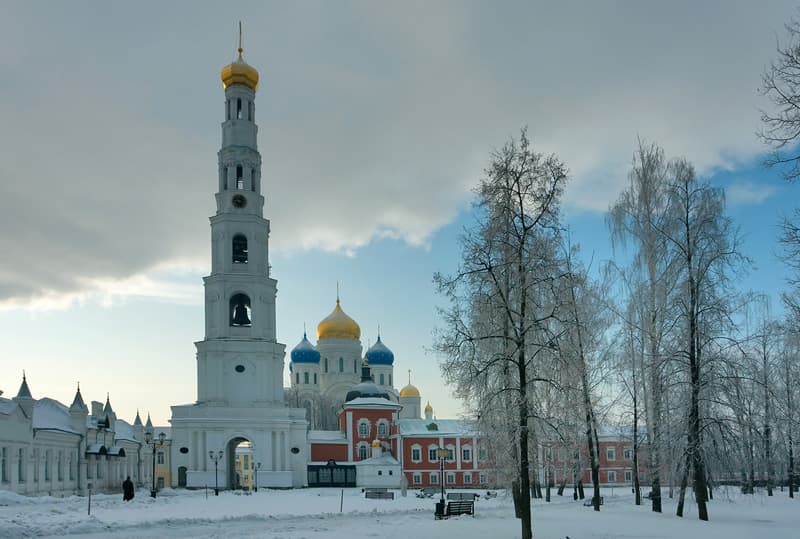
Nikolo-Ugresh monastery
The Nikolo-Ugreshsky Monastery is a historic Russian Orthodox monastery located in Dzerzhinsky, a suburb of Moscow. First documented in 1521, it played a role in defending the Russian capital and was significantly expanded in the 17th century. After being closed and repurposed following the Russian Revolution, it was returned to the Russian Orthodox Church in 1991 and has since undergone restoration, now housing a seminary, museums, and serving as a metropolitan residence.