
Goritsky Monastery (Goritsy)
The Goritsky Monastery of Resurrection is a Russian Orthodox convent located in the village of Goritsy, Vologda Oblast. Founded in 1544 by Yefrosinya Staritskaya, it has a complex history involving royal figures, forced monasticism, and periods of closure and revival. Since the 1990s, a small community of nuns has resided there, and parts of the complex are managed by a historical museum.
Key Facts
- ›Founded in 1544 by Knyaginya Yefrosinya Staritskaya.
- ›Located in Goritsy, Vologda Oblast, Russia.
- ›Has served as a place of exile for royal women, including Yefrosinya Staritskaya and potentially Anna Koltovskaya.
- ›Suffered closure and persecution in the 1930s under the Bolsheviks.
- ›Parts of the complex are managed by the Kirillo-Belozerksy museum-zapovednik.
- ›Reopened for religious purposes in the 1990s and is now one of the active monasteries in the region.

Location Near the Sheksna River, Historical Association With Royal Figures
Goritsky Convent of Resurrection
Yefrosinya Staritskaya, Vladimir of Staritsa, Yevdokiya Staritskaya, Anna Koltovskaya, Xenia Godunova, Asenatha of Goritsky
- Founded In 1544
- Yefrosinya Staritskaya and Yevdokiya Staritskaya Drowned In the Sheksna River In 1569
- Anna Koltovskaya Possibly Took Vows Circa 1586
- Xenia Godunova Became A Nun Circa 1606
- Transformed Into An Agricultural Cooperative In the 1920s
- Shut Down and Nuns Executed In the 1930s
- Housed Disabled Veterans In the 1950s
- Became Part of Kirillo-Belozersky Museum-Zapovednik In the 1970s
- Reopened For Religious Purposes In the 1990s
About Goritsky Monastery (Goritsy)
The Goritsky Monastery of Resurrection is a Russian Orthodox convent situated in the village of Goritsy, within the Kirillovsky District of the Vologda Oblast, Russia. Founded in 1544 by Knyaginya Yefrosinya Staritskaya, the monastery has a history intertwined with Russian royalty and periods of significant upheaval.
History and Significance
The establishment of the Goritsky convent in the mid-16th century by Yefrosinya Staritskaya marked its initial prominence. However, its history is also characterized by its use as a place of confinement for aristocratic women. In 1569, Yefrosinya Staritskaya and her daughter-in-law, Yevdokiya Staritskaya, were tragically drowned in the nearby Sheksna River by order of Tsar Ivan the Terrible. Later, Anna Koltovskaya, Ivan the Terrible's fourth wife, may have taken monastic vows at Goritsky around 1586, and Xenia Godunova, daughter of Tsar Boris Godunov, became a nun there circa 1606 before being transferred elsewhere.
In the 20th century, the monastery faced severe challenges. During the 1920s, it was converted into an agricultural cooperative, and in the 1930s, it was shut down, with many nuns reportedly executed. The complex later housed disabled veterans in the 1950s and, from the 1970s, became partially managed by the Kirillo-Belozerksy museum-zapovednik, a historical and architectural reserve.
Present Day
Since the 1990s, a small community of nuns has re-established a presence at the Goritsky Monastery. As of 2011, it was recognized as one of the four active monasteries in the Vologda Oblast and notably the only functioning convent for religious women in the region. While parts of the complex are integrated into the museum preserve, the religious life of the convent continues.
Source: Wikipedia ↗
Frequently Asked Questions
When was the Goritsky Monastery founded?
The Goritsky Monastery was founded in 1544. Its establishment was initiated by Knyaginya Yefrosinya Staritskaya.
Where is the Goritsky Monastery located?
The Goritsky Monastery is situated in the village of Goritsy, within the Kirillovsky District of the Vologda Oblast in Russia. It is located approximately 15 kilometers north of the town of Kirillov.
What is the significance of Goritsky Monastery in history?
Historically, the Goritsky Monastery served as a place where aristocratic women, including Yefrosinya Staritskaya and potentially Anna Koltovskaya, were forced to take monastic vows and live under house arrest. It also experienced periods of closure and revival.
Is the Goritsky Monastery currently active?
Yes, the Goritsky Monastery is an active convent. A small community of nuns began residing there in the 1990s, and as of 2011, it was one of the four functioning monasteries in Vologda Oblast and the only one for religious women.
What is the relationship between Goritsky Monastery and the Kirillo-Belozerksy museum?
Since the 1970s, parts of the Goritsky complex have been operated by the Kirillo-Belozerksy museum-zapovednik of History, Art, and Architecture. This museum is based at the historically significant Kirillo-Belozersky Monastery.
Related Monasteries

Antonievo-Siysky Monastery
The Antonievo-Siysky Monastery is a historic Russian Orthodox monastery located in the Arkhangelsk Oblast of Russia. Founded in 1520 by Saint Antonius of Siya, it grew significantly, becoming a prominent spiritual and economic center in the Russian North, particularly known for its salt trade and rich library. The monastery played a role in Russian history, notably as a place of exile for Feodor Romanov, who later became Patriarch of Moscow and whose son founded the Romanov dynasty.

Nikolo-Perervinsky Monastery
Nikolo-Perervinsky Monastery is a historical Orthodox monastery in Moscow, Russia, dedicated to Saint Nicholas the Miracle-Worker. First mentioned in 1623, its name is linked to the Moskva River's changing course. The monastery experienced significant expansion in the late 17th century and housed a theological seminary from 1775. It was closed in 1928 but reopened for services in 1991.
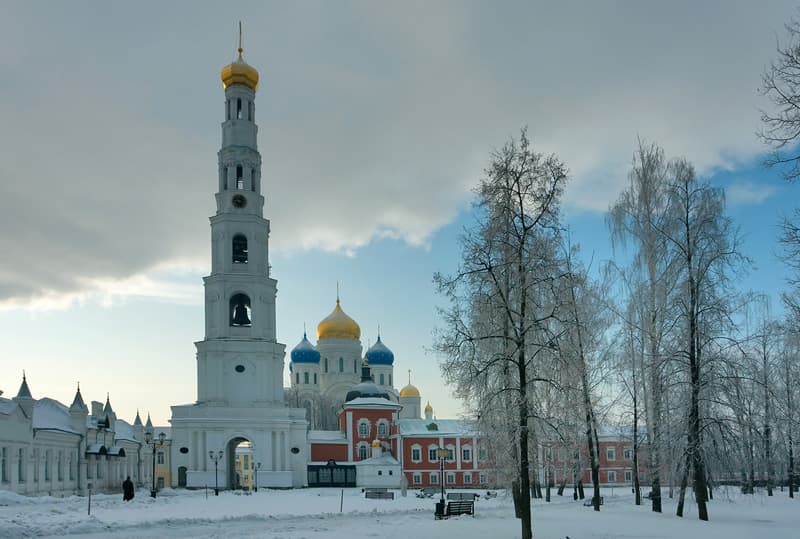
Nikolo-Ugresh monastery
The Nikolo-Ugreshsky Monastery is a historic Russian Orthodox monastery located in Dzerzhinsky, a suburb of Moscow. First documented in 1521, it played a role in defending the Russian capital and was significantly expanded in the 17th century. After being closed and repurposed following the Russian Revolution, it was returned to the Russian Orthodox Church in 1991 and has since undergone restoration, now housing a seminary, museums, and serving as a metropolitan residence.