
Newbattle Abbey
Cistercian (Benedictine)·Scotland·Educational institution (formerly monastery and stately home)·12th century
Newbattle Abbey was a significant Cistercian monastery founded in 1140 by monks from Melrose Abbey. Situated in a valley along the River South Esk, it was known for its regular community, royal patronage, and pioneering coal mining operations. After suffering damage from English incursions, the abbey was secularized in 1587, with parts later converted into a stately home and subsequently an educational institution.
Key Facts
- ›Founded in 1140 by monks from Melrose Abbey.
- ›Patronized by King David I of Scotland.
- ›The church was dedicated in 1234.
- ›The community once numbered up to 80 monks and 70 lay-brothers.
- ›The monks were early adopters of coal mining in Scotland.
- ›Suffered significant damage from English raids in 1385 and 1544.

Gothic, Baroque, 19th Century
- River South Esk Setting
- Coal Mines
- Harbour At Morrison's Haven
- Stately Home Incorporated Parts of Monastic Range
- 19th-Century Chapel
- Oak-Lined Library
- 17th-Century Sundials
- King's Gate
King David I of Scotland, Henry, Son of David I, Rudolph, Mark Kerr, King James V of Scotland, Marie De Coucy, Philip Kerr, 11th Marquess of Lothian
Founded In 1140, Church Dedicated In 1234, Burned By English Forces In 1385, Secularized In 1587, Partially Destroyed By Earl of Hertford, Converted To A Stately Home, Became Newbattle Abbey College In 1937, King George Iv Visited In 1822
About Newbattle Abbey
Newbattle Abbey was a prominent Cistercian monastery located near the village of Newbattle in Midlothian, Scotland. Founded in 1140 by monks from Melrose Abbey, it was established under the patronage of King David I of Scotland. The abbey was situated in a picturesque valley along the River South Esk and quickly became known for the regularity of its monastic community, at one point housing up to 80 monks and 70 lay-brothers.
Monastery and Economic Life
The abbey's church was dedicated in 1234, and the monastic community was supported by various means, including its possession of coal mines. The monks of Newbattle were pioneers in coal mining in Scotland, with records indicating they were granted a coal mine by a charter from an Earl of Winchester. They also engaged in efforts to manage water drainage for neighboring mines, as seen in an agreement with the Abbot of Dunfermline. The abbey also received royal favor and benefactions from the kings of Scotland.
Conflict and Secularization
Newbattle Abbey endured periods of conflict, notably suffering damage from English incursions. The monastery and church were burned in 1385, an event that necessitated extensive repairs over four decades. A further partial destruction occurred in 1544. By the time of the Reformation, few monks remained, and the abbey was secularized in 1587 for its last commendator, Mark Kerr, who converted to Protestantism and retained the abbey lands.
Transformation into Stately Home and College
Following its secularization, parts of the abbey were transformed into a stately home, which forms the core of the present building. This residence underwent various modifications and rebuilds throughout the centuries. In 1937, the property was gifted to the nation by Philip Kerr, 11th Marquess of Lothian, to serve as a College of Education for adults returning to education. The site, including burial grounds and traces of the original monastic structures, is now a designated scheduled monument.
Source: Wikipedia ↗
Frequently Asked Questions
When was Newbattle Abbey founded?
Newbattle Abbey was founded in 1140 by monks who came from Melrose Abbey. This marked the establishment of a new Cistercian community in Scotland.
What religious tradition did Newbattle Abbey belong to?
Newbattle Abbey was a Cistercian monastery, which is a branch of the Benedictine monastic tradition. The Cistercians are known for their emphasis on manual labor and simple living.
What role did coal mining play at Newbattle Abbey?
The monks of Newbattle Abbey were among the first coal miners in Scotland. Coal mining was a principal source of income for the abbey, with evidence of their operations dating back to early charters.
What happened to Newbattle Abbey after its monastic life ended?
After the Reformation, the abbey was secularized and became a lordship. Parts of the monastic buildings were converted into a stately home, which later also served as an educational institution known as Newbattle Abbey College.
Did Newbattle Abbey suffer damage during its history?
Yes, Newbattle Abbey experienced significant damage on multiple occasions. It was burned by English royal forces in 1385, requiring 40 years to recover, and was partially destroyed again in 1544.
Related Monasteries

Cârța Monastery
Cârța Monastery was a significant Cistercian abbey founded between 1202 and 1209 in the Țara Făgărașului region of Transylvania, Romania. It played a crucial role in introducing French Gothic art to the area and held considerable landholdings, founding several villages populated by German colonists. Though disbanded in 1494, its surviving structures are now part of an Evangelical Lutheran church serving the local Saxon community.
Arbroath Abbey
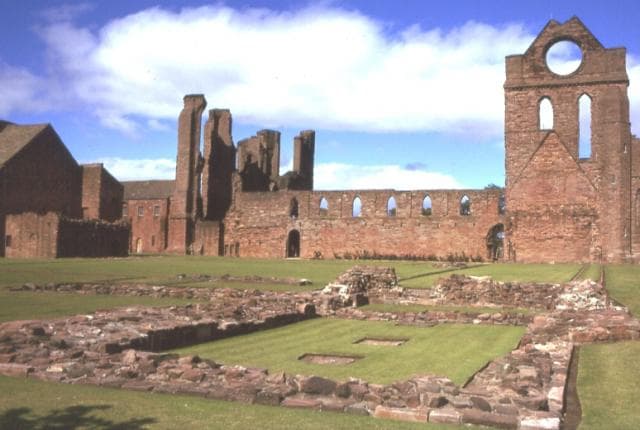
Arbroath Abbey, a ruined Cistercian monastery located in Arbroath, Scotland, was founded in 1178 by King William the Lion. It is renowned as the site where the Declaration of Scottish Independence was likely drafted in 1320. The Abbey, once the wealthiest in Scotland, is now managed by Historic Environment Scotland and is a popular tourist attraction, notable for its distinctive red sandstone ruins.
Cambuskenneth Abbey
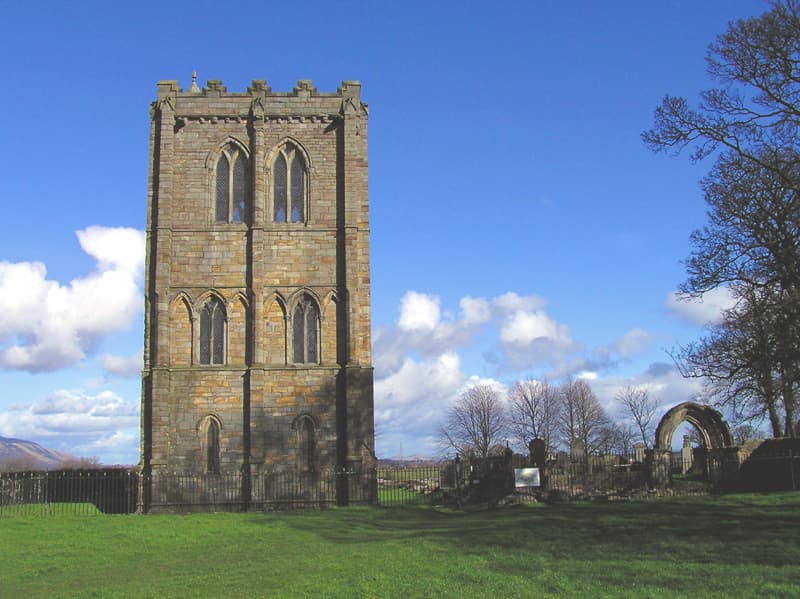
Cambuskenneth Abbey, established around 1140 by King David I of Scotland, was a significant provostry of Canons Regular and the only Scottish house of the French Arrouaise Order. Situated by a meander of the River Forth near Stirling, it played a crucial role in Scottish public life, hosting parliaments and royal events, and was the burial site for King James III and Queen Margaret of Denmark. Although largely reduced to its foundations today, its 13th-century bell tower remains intact, and the site is managed by Historic Scotland and open to visitors.