
New Minster, Winchester
Christian·England·Ruins (monastery itself), Abbey of Hyde (successor)·10th century
New Minster, Winchester was a royal Benedictine abbey founded in 901 by Edward the Elder, fulfilling the intentions of his father, Alfred the Great. Situated very close to the Old Minster, its proximity led to the merging of choir voices. It gained importance as a pilgrimage site and became a Benedictine house in 963. The monks were later compelled to relocate to Hyde Mead outside the city walls, establishing the Abbey of Hyde.
Key Facts
- ›Founded in 901 in Winchester, Hampshire, England.
- ›Established by Edward the Elder as per his father Alfred the Great's intentions.
- ›Saint Grimbald served as its first abbot.
- ›Became a Benedictine house in 963.
- ›Served as a pilgrimage center, housing the remains of Alfred the Great and Saint Judoc.
- ›Relocated to Hyde Mead to become the Abbey of Hyde after the Norman Conquest.

Burial Site of King Alfred the Great, Burial Site of Saint Grimbald, Burial Site of Saint Judoc
Abbey of Hyde
Alfred the Great, Edward the Elder, Saint Grimbald, Ealhswith, æLfweard of Wessex, Eadwig, Queen Emma, Saint Judoc
- Founded In 901
- Became A Benedictine House In 963
- Solemn Dedication of the Church In 972
- Transfer of Monks To Hyde Mead After the Norman Conquest
About New Minster, Winchester
New Minster, Winchester was a significant royal Benedictine abbey established in 901 in Winchester, within the English county of Hampshire. The monastery's foundation was initiated by the intentions of Alfred the Great, with its completion attributed to his son, Edward the Elder, and the assistance of Saint Grimbald, who became its first abbot. Its original location was remarkably close to the Old Minster, leading to a curious acoustic phenomenon where the voices of the two choirs merged indistinctly.
Historical Significance and Development
The abbey quickly gained prominence as a pilgrimage destination. It became the final resting place for King Alfred the Great, whose body was transferred there, alongside Saint Grimbald and the relics of Saint Judoc (Saint Josse). In 963, New Minster transitioned to a Benedictine house. Historical records indicate that in 972, King Edgar oversaw the solemn dedication of the church, though details of any rebuilding at that time remain unspecified.
Later History and Legacy
Queen Emma further added to the abbey's relics by donating the head of Saint Valentine in 1041. Following the Norman Conquest of England and the construction of a new cathedral at Winchester, the monks of New Minster were compelled to relocate. They moved to Hyde Mead, a site just outside the northern city walls, where they founded the Abbey of Hyde. This relocation marked the end of New Minster at its original Winchester location, with its successor continuing its monastic tradition.
Source: Wikipedia ↗
Frequently Asked Questions
When was New Minster, Winchester founded?
New Minster, Winchester was founded in 901. Its construction was initiated by Alfred the Great's intentions and completed by his son, Edward the Elder.
Who was instrumental in the founding of New Minster, Winchester?
Alfred the Great intended to build the monastery, but it was his son, Edward the Elder, who completed the project. Saint Grimbald also played a significant role and became its first abbot.
Why did the monks of New Minster relocate?
The monks of New Minster were obliged to move from their original site due to the building of a new cathedral at Winchester after the Norman Conquest of England. They relocated to Hyde Mead, establishing the Abbey of Hyde.
What made New Minster, Winchester a pilgrimage center?
New Minster became an important pilgrimage center because it housed the body of King Alfred the Great, Saint Grimbald, and the body of the Breton Saint Judoc (Saint Josse).
Related Monasteries
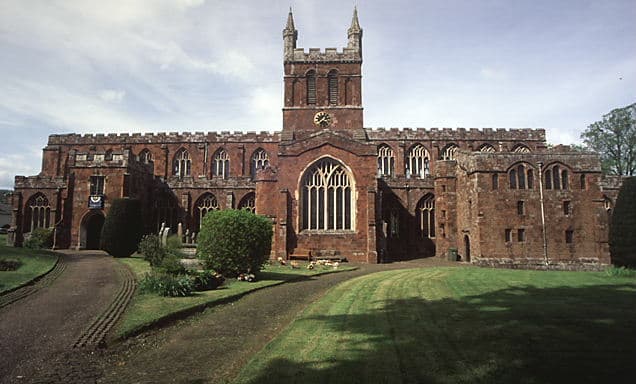
Crediton Monastery
Crediton Monastery, more formally known as the Collegiate Church of the Holy Cross and the Mother of Him Who Hung Thereon, was established in the early 10th century as the cathedral for Devon and Cornwall. Although the episcopal see was moved to Exeter in 1050, Crediton retained its status as a collegiate church with a college of canons. The current nave and chancel date from the 15th century, and after its surrender to Henry VIII in 1545, the church was purchased by the Crediton Town Corporation and continues to function as a parish church today.
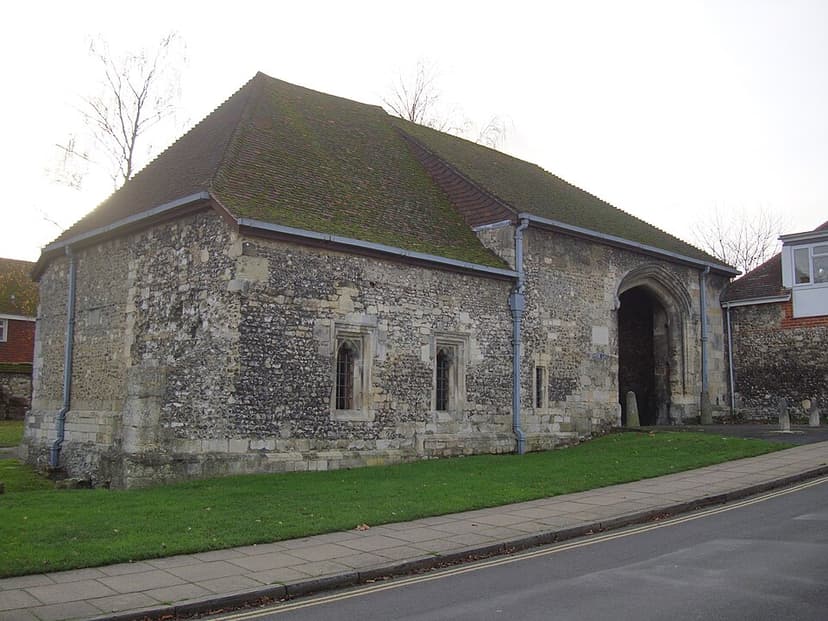
Hyde Abbey
Hyde Abbey was a significant medieval Benedictine monastery located just outside the walls of Winchester, England. Founded around 903 as New Minster, it was later relocated to Hyde Mead in 1110. The abbey gained prominence as the burial site for King Alfred the Great and other royal figures, making it a popular pilgrimage destination. Despite its importance, Hyde Abbey was dissolved and demolished in 1538 under Henry VIII, with its remains and treasures largely lost or scattered.

Ramsey Abbey
Ramsey Abbey was a prominent Benedictine monastery in Ramsey, Huntingdonshire, England, founded around 969 AD and dissolved in 1539. It was a significant center of Benedictine reform and later an international hub for Hebrew scholarship. Though most of its structures were demolished after dissolution, surviving elements and artifacts highlight its historical importance and architectural legacy.