
Muthill Monastery
Celí Dé·Scotland·Ruins (monastery site), Historic site (bell tower)·12th century
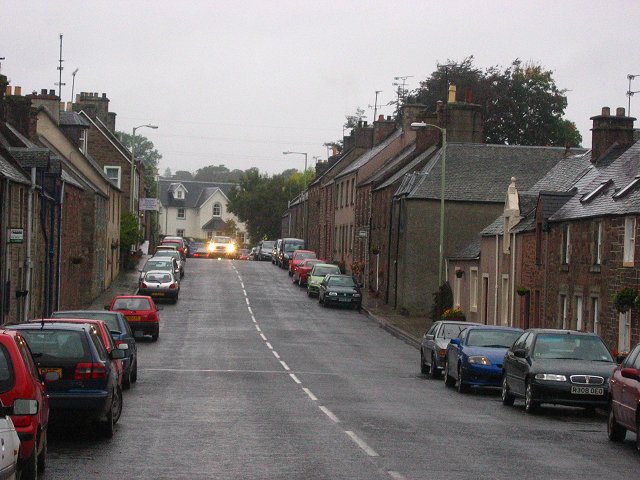
Muthill Monastery was an important religious center in the 12th century, serving as the site of a Celí Dé monastery and later as a temporary seat for the Bishops of Strathearn. While the original monastic structures are not extant, the village retains a significant 15th-century parish church with an 11th-century bell tower, a key visible remnant of its ecclesiastical past.
Key Facts
- ›Site of a Celí Dé monastery in the 12th century.
- ›Served as a seat for the Bishops of Strathearn before the 13th century.
- ›The kirkyard contains the ruins of a 15th-century parish church.
- ›Features an 11th-century bell tower, comparable to Dunblane Cathedral's.
- ›Preserves an early Christian cross-slab and a medieval double effigy.
Romanesque, Gothic
11th-Century Bell Tower, 15th-Century Parish Church Ruins, Early Christian Cross-Slab, 13th-Century Double Effigy
Michael Ochiltree
- Served As A Seat For Bishops of Strathearn Before 13th Century.
- Village Largely Destroyed In the 1715-1716 Jacobite Rising.
- Rebuilt In the 1740s On General Wade's Military Road.
About Muthill Monastery
Muthill Monastery was a significant religious establishment situated in the village of Muthill, Perth and Kinross, Scotland. Its origins trace back to the 12th century when it functioned as a Celí Dé monastery. The site also played a crucial role in the ecclesiastical landscape, serving for a period as the seat for the Bishops of Strathearn before the construction of the cathedral at Dunblane in the 13th century.
While the physical structures of the original monastery have not survived, the historical importance of Muthill as a religious center is still evident. The kirkyard at the heart of the village features the ruins of a 15th-century parish church. This church is notable for incorporating an 11th-century bell tower, which stands as a commanding remnant of its ecclesiastical past. This tower is comparable in its historical significance, though smaller in scale, to the one incorporated into Dunblane Cathedral. Within the bell tower, important artifacts such as an early Christian cross-slab, possibly dating from the 10th-11th century, and a damaged 13th-century double effigy believed to represent an Earl and Countess of Strathearn, are preserved. These elements offer tangible connections to the site's long history of religious and noble association.
Source: Wikipedia ↗
Frequently Asked Questions
What is Muthill Monastery known for historically?
Muthill Monastery was historically significant as an important religious center in the 12th century. It was the site of a Celí Dé monastery and also served as a temporary seat for the Bishops of Strathearn.
What remains of the ancient Muthill Monastery today?
While the original monastic buildings are not preserved, the kirkyard at Muthill contains the ruins of a 15th-century parish church. This church incorporates an 11th-century bell tower, which is the most prominent visible reminder of the village's ancient religious importance.
Are there any notable artifacts found at Muthill Monastery's site?
Yes, within the bell tower of the 15th-century parish church, an early Christian cross-slab dating from the 10th-11th century is preserved. Additionally, a damaged 13th-century double effigy of an Earl and Countess of Strathearn is also kept there.
When was Muthill Monastery founded?
The monastery at Muthill was established as a Celí Dé monastery in the 12th century.
Related Monasteries
Arbroath Abbey
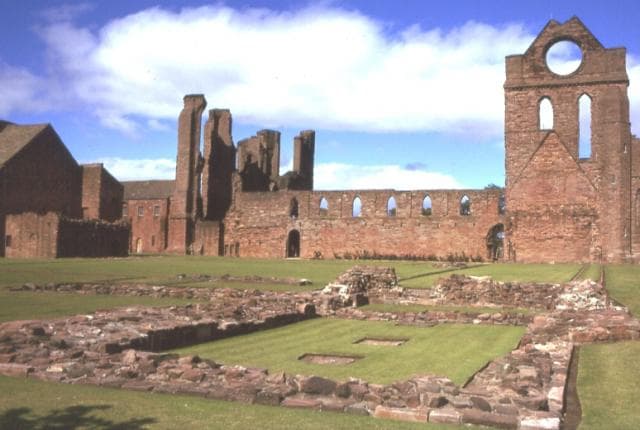
Arbroath Abbey, a ruined Cistercian monastery located in Arbroath, Scotland, was founded in 1178 by King William the Lion. It is renowned as the site where the Declaration of Scottish Independence was likely drafted in 1320. The Abbey, once the wealthiest in Scotland, is now managed by Historic Environment Scotland and is a popular tourist attraction, notable for its distinctive red sandstone ruins.
Cambuskenneth Abbey
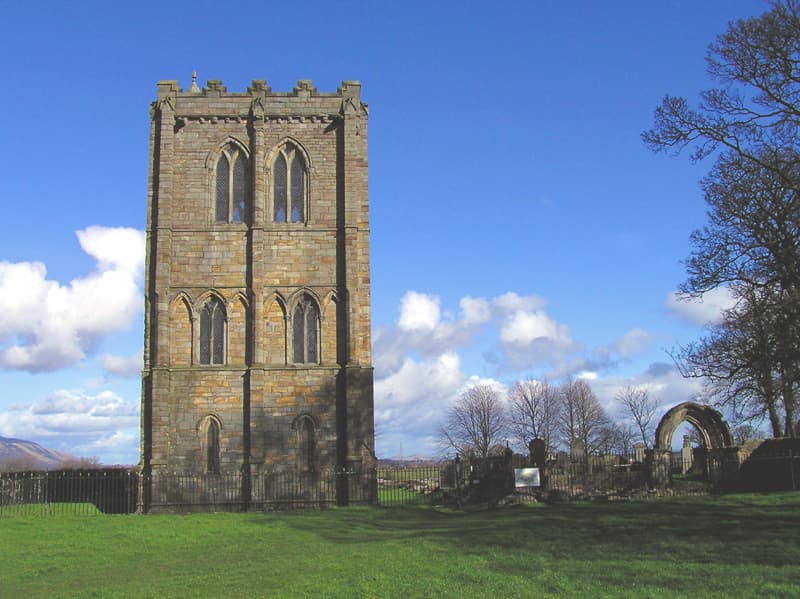
Cambuskenneth Abbey, established around 1140 by King David I of Scotland, was a significant provostry of Canons Regular and the only Scottish house of the French Arrouaise Order. Situated by a meander of the River Forth near Stirling, it played a crucial role in Scottish public life, hosting parliaments and royal events, and was the burial site for King James III and Queen Margaret of Denmark. Although largely reduced to its foundations today, its 13th-century bell tower remains intact, and the site is managed by Historic Scotland and open to visitors.
Dryburgh Abbey
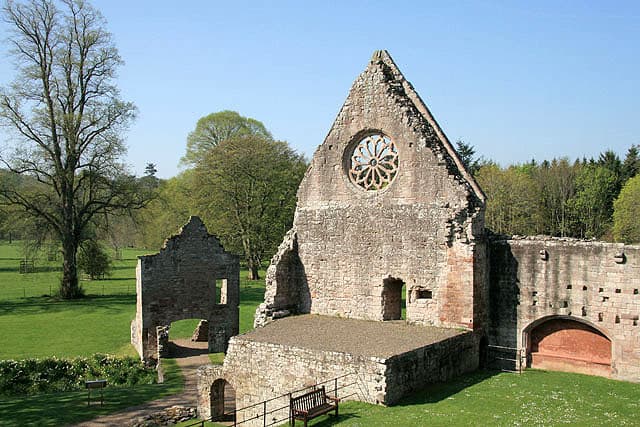
Dryburgh Abbey, situated near the River Tweed in the Scottish Borders, was founded in 1150 by Premonstratensian canons. Despite significant destruction from English raids in the 14th and 16th centuries, the abbey experienced periods of restoration and flourished in the 15th century. Today, it stands as a designated scheduled monument, with its grounds serving as the final resting place for notable figures like Sir Walter Scott and Douglas Haig.