
Monk Bretton Priory
Monk Bretton Priory was a medieval priory originally established under the Cluniac order in 1154, named the Priory of St. Mary Magdelene of Lund. It later adopted the name of the nearby village, becoming known as Monk Bretton Priory. The priory was dissolved in 1538, and its site is now a Scheduled Ancient Monument managed by English Heritage.
Key Facts
- ›Founded in 1154 as the Priory of St. Mary Magdelene of Lund.
- ›Originally belonged to the Cluniac order.
- ›Took its later name from the nearby village of Bretton.
- ›Closed in 1538 during the dissolution of the monasteries.
- ›The site is a Scheduled Ancient Monument.
- ›Currently managed by English Heritage.

Scheduled Ancient Monument, Site of Archaeological Excavations
Priory of St. Mary Magdelene of Lund
Adam Fitswane, John De Birthwaite, Sir William De Notton, Isabel, King Edward Iii, Queen Philippa of Hainault, George Talbot, 6th Earl of Shrewsbury, Henry Talbot, Elizabeth Rayner, Dr Hugh Willmott
- Founded In 1154
- Conveyance of Lands By the Notton Family In 1350, Possibly As Thanks For Deliverance From the Black Death
- Dissolution On 30 November 1538
- Transferred Ownership To Blithman Family After Dissolution
- Sold To George Talbot, 6th Earl of Shrewsbury In 1580
- Archaeological Excavations In the 1920s and 1950s
- Survey and Excavation Project By the University of Sheffield
About Monk Bretton Priory
Monk Bretton Priory is a significant ruined medieval priory situated in Lundwood, South Yorkshire, England. Initially founded in 1154 as the Priory of St. Mary Magdelene of Lund by Adam Fitswane, it was established under the Cluniac monastic order. The priory eventually adopted the name of the nearby village, becoming commonly known as Monk Bretton Priory.
History and Dissolution
The priory played a role in local landholdments, as evidenced by a bequest in 1350 from Sir William de Notton, a prominent landowner and future Lord Chief Justice of Ireland. This grant included lands at Fishlake, Monk Bretton, Moseley, and Woolley, intended for the construction of a chantry chapel at Woolley Church where prayers were to be offered for the royal family and the Notton lineage. This act is suggestive of a desire for deliverance from the Black Death.
Monk Bretton Priory met its end during the dissolution of the monasteries, closing its doors on November 30, 1538. Following its closure, the site passed through several hands, including the Blithman family and later George Talbot, 6th Earl of Shrewsbury. Today, the remains of the priory are a Scheduled Ancient Monument and are maintained by English Heritage, with archaeological investigations continuing to shed light on its past.
Notable Features and Research
While the priory now exists in ruins, its historical importance is recognized through its designation as a Scheduled Ancient Monument. Archaeological work has been conducted on the site, including significant excavations of the church and cloister areas in the 1920s and further investigations in the 1950s. More recent projects have involved surveys and excavations led by Dr. Hugh Willmott from the University of Sheffield, contributing to a deeper understanding of the priory's layout and history.
Source: Wikipedia ↗
Frequently Asked Questions
When was Monk Bretton Priory founded?
Monk Bretton Priory was founded in 1154. It was originally established as the Priory of St. Mary Magdelene of Lund.
What religious order was Monk Bretton Priory part of?
Monk Bretton Priory was originally under the Cluniac order. It was a Cluniac monastery.
When did Monk Bretton Priory close?
The monastery closed on November 30, 1538. This occurred during the dissolution of the monasteries.
Who currently manages Monk Bretton Priory?
The site of Monk Bretton Priory is now in the care of English Heritage. It is designated as a Scheduled Ancient Monument.
Where is Monk Bretton Priory located?
Monk Bretton Priory is located in the village of Lundwood, close to Monk Bretton in South Yorkshire, England.
Related Monasteries

Ankerwycke Priory
Ankerwycke Priory was a small and relatively poor Benedictine nunnery established around 1160 in Buckinghamshire, England. Dedicated to St. Mary Magdalene, it held lands across several counties. Dissolved in 1536, its revenues were transferred to Bisham Abbey, and the priory site later saw the construction of a manor house. Today, only a small section of ruins remains, situated in Berkshire.
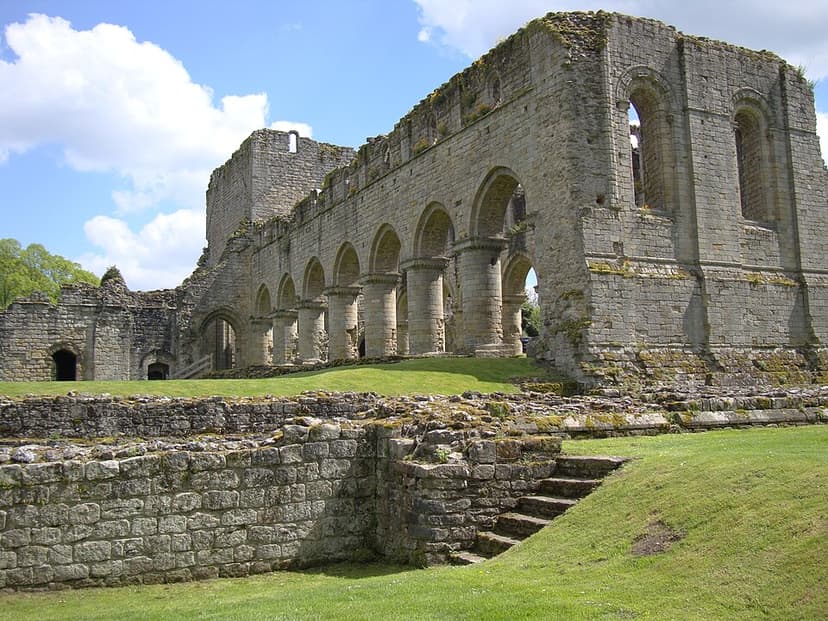
Buildwas Abbey
Buildwas Abbey was a significant Cistercian monastery in Shropshire, England, founded in 1135. It experienced periods of substantial growth and wealth, becoming a center of learning with a notable library. Despite facing challenges from economic crises and conflict, it played a role in royal administration, particularly concerning Ireland and Wales, before its suppression in 1536. Today, substantial remains of the abbey church and monastic buildings are maintained by English Heritage.

Byland Abbey
Byland Abbey was a Savigniac and later Cistercian monastic institution founded in 1135 in North Yorkshire, England. Despite an unstable early history with multiple relocations, it eventually settled at its final site near Coxwold. Once established, it became a significant religious and economic center, renowned for its sheep rearing and wool exports, and boasting a church described as one of the finest 12th-century structures in Europe. Though dissolved in 1538, extensive ruins remain, including the west front of the church with its notable rose window, and the site is maintained by English Heritage.