
Monifieth Monastery
Monifieth Monastery, an early medieval ecclesiastical centre, saw its lands transferred from the Céli Dé order to the Tironensian monks of Arbroath Abbey in the early 13th century. While historically significant as a religious site, the town of Monifieth later developed into a textile industry hub and commuter town. Evidence of its early ecclesiastical importance remains through Pictish stones found in the area.
Key Facts
- ›Lands were a possession of the CéLI Dé monastic order before the early 13th century.
- ›Transferred to the Tironensian monks of Arbroath Abbey in the early 13th century.
- ›The presence of Pictish stones indicates importance as an early medieval ecclesiastical centre.
- ›The name 'Monifieth' may derive from 'Monaich Fother', meaning 'Monks' Land'.
- ›St Rule's Church, built in 1812, incorporated recycled Pictish sculpted stones.

Class Ii and Iii Pictish Stones, St Rule's Church
Monadh Fotha, Monifođ, Monifod, Monifoth, Munifođ, Monyfuthe, Monyfuthie, Monyfaith, Monyfuth, Monifuth, Monifeith, Monyfeith, Monyfieth
Gille CríSt, Mormaer of Angus, Matilda, Countess of Angus
Lands Granted To Arbroath Abbey, Regent Arran's Camp During the Rough Wooing
About Monifieth Monastery
Monifieth Monastery represents an early ecclesiastical centre in Angus, Scotland, whose historical significance is largely understood through archaeological finds and land transfers. The area exhibits evidence of early settlement dating back to the Mesolithic period, with more tangible signs of occupation from the Neolithic and Iron Ages. The presence of numerous Class II and III Pictish stones in the vicinity strongly suggests that Monifieth was an important religious hub during the early medieval period.
Historically, the church and lands of Monifieth were held by the Céli Dé monastic order. In the early 13th century, these possessions were granted to the newly established Tironensian abbey of Arbroath by Gille Críst, the Mormaer of Angus, between 1201 and 1207. Further lands to the south of the church were transferred to Arbroath Abbey in 1242–1243 by Matilda, Countess of Angus. While the monastic community itself is no longer extant, the legacy of its early importance is preserved in the archaeological record, particularly through the Pictish carved stones that have been discovered and relocated from the area, some of which were even incorporated into the construction of later buildings, such as St Rule's Church.
In later centuries, the settlement of Monifieth, while retaining its historical ecclesiastical roots, developed into a small village that experienced significant growth due to the expansion of the textile industry from the early 19th century onwards. This modern development contrasts with its earlier role as a monastic centre, though the town's name itself may retain a connection to its monastic past, with 'Monaich Fother' ('Monks' Land') being a suggested etymology.
Source: Wikipedia ↗
Frequently Asked Questions
What is the origin of the name Monifieth?
The name 'Monifieth' likely derives from the Gaelic 'Moine Feith', meaning 'Bogstream of the marsh/moss'. An alternative etymology, 'Monaich Fother', meaning 'Monks' Land', also holds appeal due to the area's early status as a possession of the Céli Dé monastic order.
When did the lands of Monifieth become part of Arbroath Abbey?
The church and lands of Monifieth were granted to the Tironensian monks of Arbroath Abbey around 1201–1207. Matilda, Countess of Angus, further granted lands to the south of the Church in 1242–1243.
What evidence exists of Monifieth's early ecclesiastical importance?
The presence of several Class II and III Pictish stones points to Monifieth having been an important ecclesiastical centre in the early medieval period. Three such stones were even incorporated into the later St Rule's Church.
Were there any significant historical events at Monifieth during the 16th century?
In January 1550, during the conflict known as the Rough Wooing, Regent Arran and his French allies used Monifieth as a base for an assault on Broughty Castle, establishing a camp there.
Related Monasteries
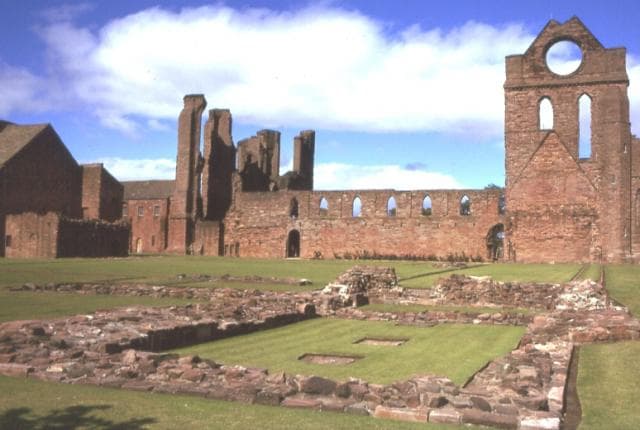
Arbroath Abbey
Arbroath Abbey, a ruined Cistercian monastery located in Arbroath, Scotland, was founded in 1178 by King William the Lion. It is renowned as the site where the Declaration of Scottish Independence was likely drafted in 1320. The Abbey, once the wealthiest in Scotland, is now managed by Historic Environment Scotland and is a popular tourist attraction, notable for its distinctive red sandstone ruins.
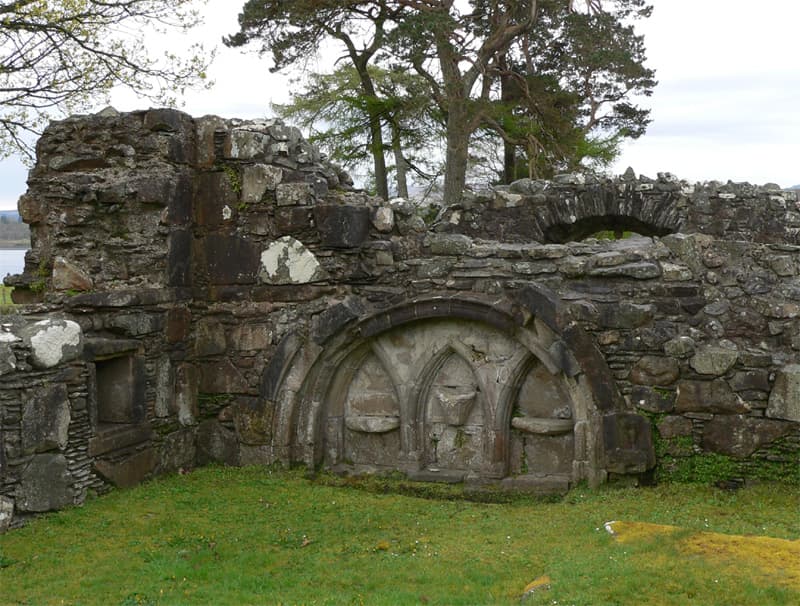
Ardchattan Priory
Ardchattan Priory was a Valliscaulian monastic community established in 1230 by Duncan Macdougall in Ardchattan, Argyll, Scotland. It holds historical significance as the site of a council of local chiefs held by Robert the Bruce in 1308, believed to be the last Gaelic-speaking parliament. Over time, the priory transitioned from its original monastic function, with parts converted into a dwelling and the church eventually falling into disuse and ruin.
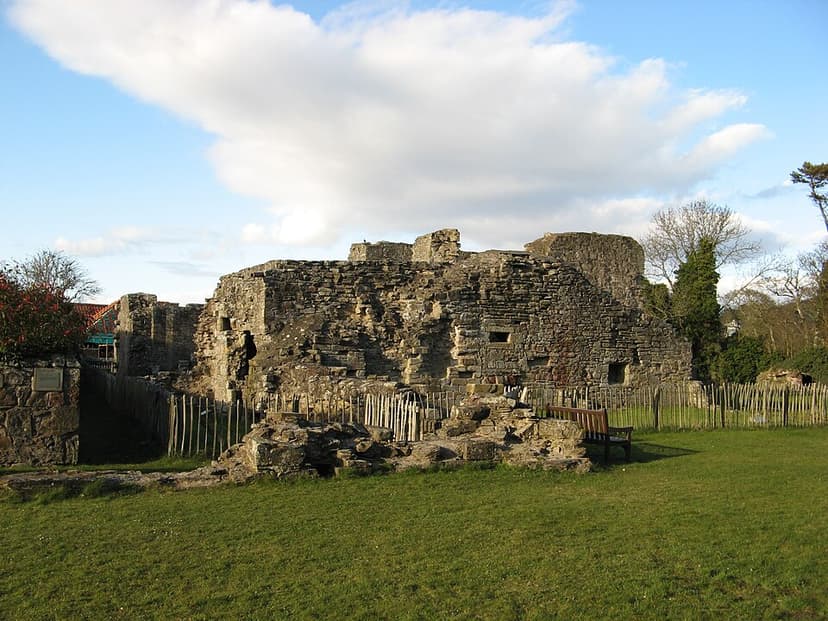
Balmerino Abbey
Balmerino Abbey, also known as St Edward's Abbey, was a Cistercian monastery located in Balmerino, Fife, Scotland. Founded between 1227 and 1229, it was patronized by Ermengarde de Beaumont and King Alexander II. The abbey suffered destruction during the War of the Rough Wooing and later during the Scottish Reformation, leading to its decline and eventual ruin by the 16th century. Today, the ruins are managed by the National Trust for Scotland.