
Monastery of the Holy Archangels
Serbian Orthodox·Kosovo·Active monastery under protection·14th century
The Monastery of the Holy Archangels is a significant Serbian Orthodox monastery located in Prizren, Kosovo, founded by Emperor Stefan Dušan between 1343 and 1352. It served as the imperial burial church and is considered a pinnacle of Serbian ecclesiastical architecture. Despite periods of destruction and looting, particularly during the Ottoman era and more recent unrest, the monastery has undergone archaeological study and reconstruction efforts, aiming to restore its spiritual and historical importance.
Key Facts
- ›Founded by Serbian Emperor Stefan Dušan between 1343 and 1352.
- ›Served as the burial church for Emperor Stefan Dušan.
- ›Culmination of the Serbian ecclesiastical architectural style, influencing the Morava school.
- ›Complex spans over 6,500 m² and includes two churches.
- ›Looted and destroyed after the Ottoman conquest in 1455.
- ›Reconstruction efforts began in the late 20th century, becoming an active male monastery again in 1998.

Rascian, Serbian Ecclesiastical Architectural Style
- Imperial Burial Church For Emperor Stefan DušAn
- Two Churches Dedicated To the Holy Archangels and St. Nicholas
- Hospital Within the Complex
- Remains of the VišEgrad Fortress Complex
Manastir Svetih Arhangela, Manastiri I Arkangjelit Të Shenjtë
Stefan DušAn, Metropolitan Jacob, King Milutin, Patriarch Ephraim
- Foundation By Emperor Stefan DušAn
- Looted and Destroyed By the Ottoman Empire
- Archaeological Excavations and Conservation Efforts
- Reconstruction and Becoming An Active Monastery
- Burned and Looted In June 1999 By Kla
- Burned and Looted During the 2004 Unrest In Kosovo
About Monastery of the Holy Archangels
The Monastery of the Holy Archangels, known in Serbian as Manastir Svetih Arhangela and in Albanian as Manastiri i Arkangjelit të Shenjtë, is a historically significant Serbian Orthodox monastery situated in Prizren, Kosovo. Its foundation was commissioned by the Serbian Emperor Stefan Dušan, who reigned from 1331 to 1355. Construction commenced between 1343 and 1352 on the site of an earlier church, integrated into the Višegrad fortress complex. The monastery was intended to be the imperial burial church for Dušan and is regarded as a high point in the development of Serbian ecclesiastical architecture, which subsequently influenced the emergence of the Morava school style.
History and Architecture
The monastery complex, covering approximately 6,500 square meters, originally comprised two churches: the main church dedicated to the Holy Archangels, which housed Emperor Dušan's tomb, and a smaller church dedicated to St. Nicholas. Both were constructed in the Rascian architectural style. The monastic community was substantial, with historical records indicating it housed around 200 monks and a Metropolitan at its establishment. The founding charter, issued in 1349, granted the monastery significant economic resources, including tax rights over numerous villages, churches, land, and various crafts.
Following the Ottoman conquest of the region in 1455, the monastery suffered severe damage and looting, leading to its decline. Despite this, its ruins remained a focal point for the local Serb population, who gathered for religious observances. The site underwent significant archaeological exploration, beginning in 1927, with subsequent conservation and reconstruction work continuing after the Second World War and into the late 20th century. The monastery was re-established as an active male monastery in 1998.
Recent Challenges and Status
The monastery has faced further destruction and looting in recent decades. In June 1999, following the NATO bombing and the withdrawal of Yugoslav forces, reconstructed parts of the monastery were burned and looted by members of the Kosovo Liberation Army. The complex was again a target during the 2004 unrest in Kosovo, suffering further burning and looting. Currently, the entire monastery complex is under the protection of the Republic of Serbia as a Monument of Culture of Great Importance. While one priest resides at the monastery, it is maintained under constant protection by Kosovo police within a designated special protection zone.
Source: Wikipedia ↗
Frequently Asked Questions
When was the Monastery of the Holy Archangels founded?
The monastery was founded by Emperor Stefan Dušan between 1343 and 1352. Its construction began with planning in 1343, and the main church was finished by early 1348, with the entire complex completed by 1352.
What is the architectural significance of the Monastery of the Holy Archangels?
The monastery represents the culmination of the Serbian ecclesiastical architectural style, which directly led to the birth of the Morava school style. The churches within the complex are built in the Rascian architectural style.
What happened to the monastery after the Ottoman conquest?
Following the capture of Prizren in 1455 by the Ottoman Empire, the monastery was looted and destroyed, leading to a period of decline. Despite this, it remained a famous site in the surrounding people's memory.
Has the monastery been subject to recent damage?
Yes, the monastery has suffered damage and looting multiple times in recent history. It was burned and looted by members of the Kosovo Liberation Army in June 1999 after the NATO bombing, and again during the 2004 unrest in Kosovo.
What is the current status of the Monastery of the Holy Archangels?
The monastery is currently under the protection of the Republic of Serbia as a Monument of Culture of Great Importance. It houses one priest and is under constant protection by Kosovo police in a special protection zone, with ongoing reconstruction efforts.
Related Monasteries

Banjska Monastery
Banjska Monastery is a Serbian Orthodox monastery located in Kosovo, founded between 1313 and 1317 by King Stefan Milutin as his intended mausoleum. Despite its early grandeur and status as a royal endowment, it suffered significant damage and abandonment over centuries, including a fire that destroyed its library and eventual repurposing as a mosque. Significant conservation efforts have been undertaken, and it remains a protected Monument of Culture of Exceptional Importance.
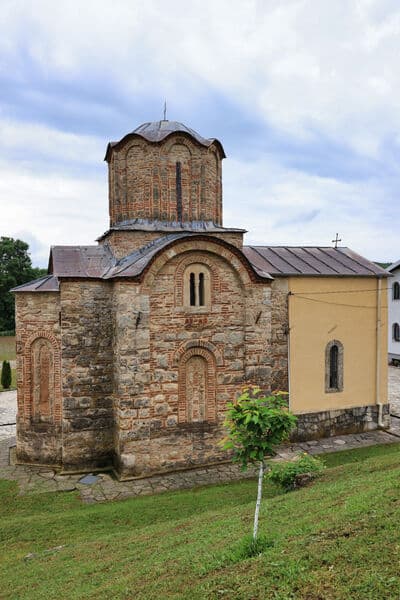
Budisavci Monastery
Budisavci Monastery is a medieval Serbian Orthodox monastery located in the village of Budisavci, near Klina and Peja. Founded in the early 14th century, the church is dedicated to the Transfiguration of Jesus Christ and is considered an important religious and cultural monument of medieval Serbian heritage. While its original frescoes are lost, significant repainting occurred in the 16th century, and the monastery remains an active spiritual center.

Gorioč Monastery
Gorioč Monastery is a Serbian Orthodox monastery located in Kosovo, serving as a dependency of Visoki Dečani Monastery. Traditionally founded in the 14th century by Serbian King Stefan Dečanski as a gift to Saint Nicholas, the monastery complex includes a church dedicated to the saint, dormitories, a bell tower, and economic buildings. It is recognized as a cultural monument of exceptional importance in Serbia.