
Gorioč Monastery
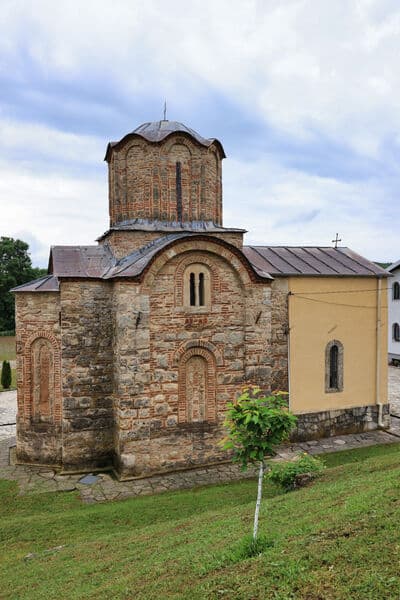
Gorioč Monastery is a Serbian Orthodox monastery located in Kosovo, serving as a dependency of Visoki Dečani Monastery. Traditionally founded in the 14th century by Serbian King Stefan Dečanski as a gift to Saint Nicholas, the monastery complex includes a church dedicated to the saint, dormitories, a bell tower, and economic buildings. It is recognized as a cultural monument of exceptional importance in Serbia.
Key Facts
- ›Traditionally founded in the 14th century by Serbian King Stefan Dečanski.
- ›Dedicated to Saint Nicholas, who is believed to have healed King Stefan Dečanski.
- ›The Church of St. Nicholas dates from the 14th century and has undergone several restorations.
- ›The monastery complex includes a church, bell tower, refectory, dormitories, economic buildings, and a fishpond.
- ›Its library once housed precious manuscripts and books from the 14th and 15th centuries.
- ›It is a metohion (dependency) of the Visoki Dečani Monastery.

14th Century
- Icons and Frescoes Painted In the 17th and 18th Centuries
- Library That Housed Precious Manuscripts and Books From the 14th and 15th Centuries
Manastir Gorioč, Manastiri I GorioçIt
King Stefan DečAnski
- Restorations In the 16th, 18th, and Early 20th Centuries.
About Gorioč Monastery
Gorioč Monastery is a significant Serbian Orthodox monastic complex located in Kosovo, functioning as a metohion, or dependency, of the Visoki Dečani Monastery. Tradition holds that the monastery was founded in the 14th century by Serbian King Stefan Dečanski, who established it as a gift to Saint Nicholas in gratitude for his healing. The monastery is situated in a picturesque location on Bela Stena, near the town of Istok.
History and Significance
The central Church of Saint Nicholas at Gorioč Monastery dates back to the 14th century. While the church has undergone numerous restorations over the centuries, including in the 16th, 18th, and early 20th centuries, its original structure from the medieval period remains. The monastery complex also includes other essential structures such as dormitories for nuns and guests, a bell tower, economic buildings, and a fishpond, with the refectory and bell tower being constructions of later periods.
Cultural Heritage
Historically, Gorioč Monastery housed a valuable library containing precious manuscripts and books from the 14th and 15th centuries. In the mid-19th century, the Russian traveler Aleksandr Hilferding, who was also a historian and consul, relocated some of these important texts to Russia, where they are now preserved in the National Library of Saint Petersburg. The monastery is recognized on the list of cultural monuments of exceptional importance by the Republic of Serbia, highlighting its enduring cultural and historical value.
Source: Wikipedia ↗
Frequently Asked Questions
When was Gorioč Monastery founded?
According to tradition, Gorioč Monastery was founded in the 14th century. This founding is attributed to Serbian King Stefan Dečanski.
Who is the patron saint of Gorioč Monastery?
The monastery is dedicated to Saint Nicholas. Tradition states it was founded as a gift to him by King Stefan Dečanski for his healing.
What is the architectural style of Gorioč Monastery?
The main church, the Church of St. Nicholas, dates from the 14th century. Other buildings, such as the refectory and bell tower, are of later construction, indicating a mix of historical building periods rather than a single dominant style.
What notable items were housed in the monastery library?
The monastery library was known to house precious manuscripts and books dating from the 14th and 15th centuries. Some of these valuable items were transferred to Russia in the mid-19th century.
What is the current status of Gorioč Monastery?
Gorioč Monastery is a Serbian Orthodox Monastery. It is recognized as a cultural monument of exceptional importance in Serbia and functions as a dependency of Visoki Dečani Monastery.
Related Monasteries
Budisavci Monastery
Budisavci Monastery is a medieval Serbian Orthodox monastery located in the village of Budisavci, near Klina and Peja. Founded in the early 14th century, the church is dedicated to the Transfiguration of Jesus Christ and is considered an important religious and cultural monument of medieval Serbian heritage. While its original frescoes are lost, significant repainting occurred in the 16th century, and the monastery remains an active spiritual center.

Gračanica Monastery
Gračanica Monastery is a Serbian Orthodox monastery in Kosovo, built by King Stefan Milutin in 1321. Recognized as a Monument of Culture of Exceptional Importance and a UNESCO World Heritage site, it is celebrated for its Serbo-Byzantine architecture and well-preserved frescoes, particularly those within the narthex depicting the Nemanjić dynasty genealogy. The monastery has endured significant historical events, including damage during Ottoman rule and recent bombings, but continues to operate as an active convent and a vital spiritual and cultural center for the Serbian community in Kosovo.

Banjska Monastery
Banjska Monastery is a Serbian Orthodox monastery located in Kosovo, founded between 1313 and 1317 by King Stefan Milutin as his intended mausoleum. Despite its early grandeur and status as a royal endowment, it suffered significant damage and abandonment over centuries, including a fire that destroyed its library and eventual repurposing as a mosque. Significant conservation efforts have been undertaken, and it remains a protected Monument of Culture of Exceptional Importance.