
Monastery of Christ in the Desert
The Monastery of Christ in the Desert is a Benedictine monastery located in the remote Chama River Canyon Wilderness of New Mexico. Founded in 1964, it is part of the Subiaco Congregation and became an autonomous abbey in 1996. The monastery is known for its striking architecture, commitment to a contemplative life, and innovative ventures like its former internet web design service and its current Abbey Brewing Company.
Key Facts
- ›Founded in 1964 by Aelred Wall, O.S.B.
- ›Belongs to the English Province of the Subiaco Congregation.
- ›Became an autonomous Abbey in 1996.
- ›Features architecture designed by George Nakashima.
- ›Operates the Abbey Brewing Company, producing three types of beer.
- ›Maintains one of the largest private solar power systems in the us.

Modern
Remote Desert Location, Solar-Powered, Abbey Brewing Company, Guesthouse, Web Design Service
Aelred Wall, O.S.B.
- Founded In 1964
- Received Into the English Province of the Subiaco Congregation In 1983
- Became An Autonomous Abbey In 1996
- Internet Web Design Service 'Scriptorium@Christdesert' Operated From 1995 To 1998
- Featured In Discovery Channel's 'the Monastery' Documentary Series In 2006
About Monastery of Christ in the Desert
The Monastery of Christ in the Desert is a Benedictine monastery situated in a remote and scenic location within the Chama River Canyon Wilderness area, approximately 75 miles north of Santa Fe, New Mexico. Founded in 1964 by Aelred Wall, O.S.B., it originated with monks from Mount Saviour Monastery in New York. The monastery became a Conventual Priory of the English Province of the Subiaco Congregation in 1983 and achieved autonomous Abbey status in 1996. As of 2019, it housed around thirty monks, with English serving as the common language of the community.
History and Development
The monastery's establishment marked a significant Benedictine presence in the American Southwest. Its architectural design, by George Nakashima, emphasizes harmony with the natural desert landscape. A notable period for the monastery was its foray into internet services with 'scriptorium@christdesert,' which ran from 1995 to 1998. This venture, praised for its success and media attention from outlets like the Associated Press and The New York Times, was eventually closed as it was deemed a distraction from the monks' primary vocational focus. In 2006, the monastery's unique way of life was further highlighted when it served as the setting for a Discovery Channel documentary.
Apostolates and Enterprises
Beyond its contemplative mission, the Monastery of Christ in the Desert engages in various apostolates and enterprises to support its community. It operates a guesthouse where visitors can share in the monastic Divine Office and Mass. The monks also manage a gift shop offering books and religious items. To balance income generation with monastic life, they have undertaken diverse activities including crafts such as beer brewing, soap, lotions, candles, pottery, and artwork. The Abbey Brewing Company, established in 2005, produces several beers, with distribution in multiple states and plans for expansion. The monastery also maintains a significant solar power system, underscoring its commitment to sustainable energy.
Source: Wikipedia ↗
Frequently Asked Questions
Where is the Monastery of Christ in the Desert located?
The monastery is situated in the Chama River Canyon Wilderness area in Abiquiu, New Mexico. It is approximately 75 miles north of Santa Fe and is accessed via a 13-mile dirt road off US route 84.
When was the monastery founded and by whom?
It was founded in 1964 by Aelred Wall, O.S.B., with monks from Mount Saviour Monastery in New York.
What is the religious tradition of the monastery?
The Monastery of Christ in the Desert is a Benedictine monastery, belonging to the Catholic tradition.
What are some notable activities or businesses run by the monastery?
The monastery is known for its Abbey Brewing Company, which produces several types of beer. They also manage a guesthouse, a gift shop, and engage in agriculture, computer work, and crafting various items like soap, candles, and pottery.
Has the monastery been featured in the media?
Yes, the monastery's internet web design service, 'scriptorium@christdesert,' garnered significant media attention from outlets like the Associated Press and The New York Times. In 2006, it was also featured in a Discovery Channel documentary series.
What kind of architecture does the monastery have?
The original monastery was designed by the renowned architect George Nakashima, known for his work in organic architecture.
Related Monasteries
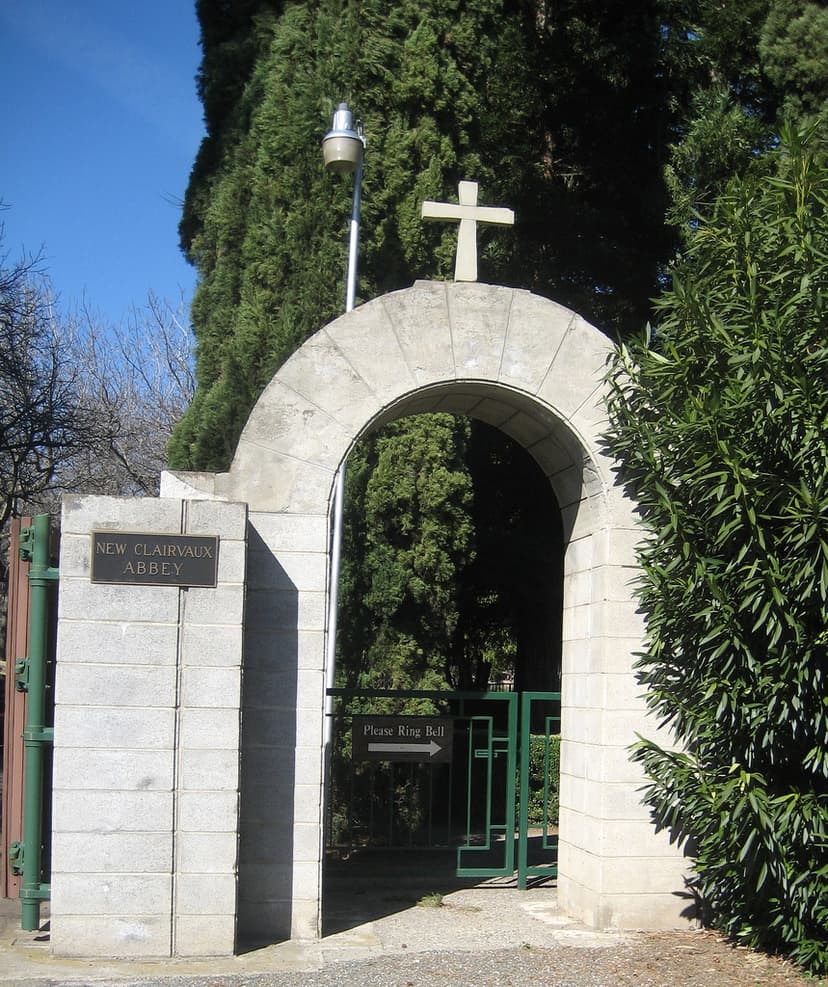
Abbey of New Clairvaux
The Abbey of New Clairvaux is a rural Trappist monastery established in 1955 by monks seeking a California foundation. Known for its austere contemplative life and the reconstruction of an 800-year-old Spanish chapter house, the abbey also cultivates prunes, walnuts, and grapes, and produces wine and Trappist-style beers. The community is part of the Cistercians of the Strict Observance.
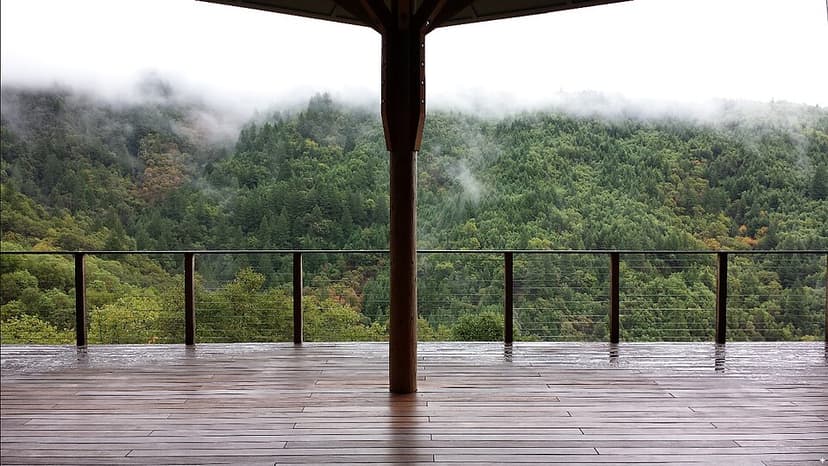
Abhayagiri Buddhist Monastery
Abhayagiri Buddhist Monastery is a Theravada Buddhist monastery located in Redwood Valley, California, belonging to the Thai Forest Tradition. Founded in the 1980s, its primary focus is teaching Buddhist ethics and meditation as a path to ending suffering. The monastery, meaning 'fearless mountain,' has grown to encompass 280 acres of mountainous forest land and has developed significant infrastructure, including monastic huts, a Dhamma Hall, and a reception hall.
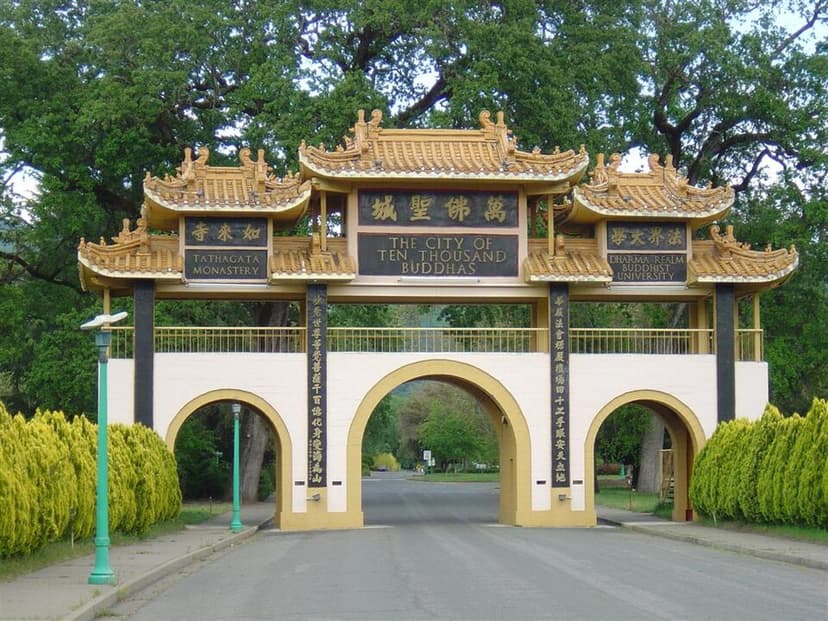
City of Ten Thousand Buddhas
The City of Ten Thousand Buddhas is a significant international Buddhist community and monastery in Talmage, California, founded by the influential figure Hsuan Hua. It was established as one of the first Chan Buddhist temples in the United States and is recognized for its strict adherence to traditional Buddhist monastic codes, including the vinaya. The community encompasses educational institutions, residential facilities, and an organic farm, serving as a major center for propagating Buddhist teachings in the Western Hemisphere.