
Mažići Monastery
Serbian Orthodox·Serbia·Ruins (partially renovated)·12th century
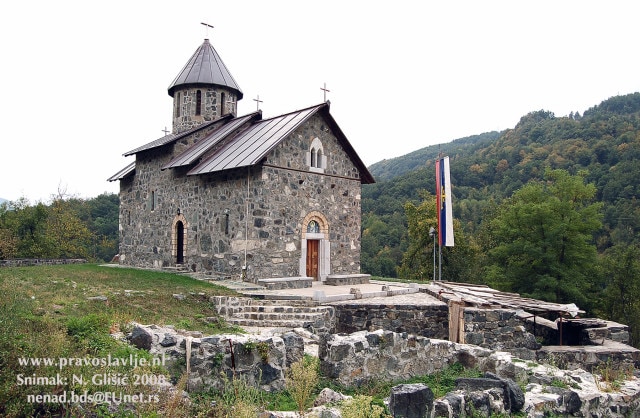
Mažići Monastery, also known as Orahović, is a Serbian Orthodox monastery located near the village of Mažići in Serbia. Founded in the 12th century, it has a long history of destruction and rebuilding, with significant archaeological finds revealing its ancient origins as a cult site. Though abandoned in the early 18th century, the monastery complex, including its church and hospital, has undergone renovation and is protected as a cultural monument of great importance.
Key Facts
- ›Founded in the 12th century during the reign of Stefan Nemanjić.
- ›Archaeological research indicates the site was a cult place since prehistoric times.
- ›Remains of a hospital from the time of King Milutin (late 13th/early 14th century) were discovered.
- ›The monastery was permanently abandoned at the beginning of the 18th century.
- ›Renovations of the monastery and church occurred in the early 21st century.
- ›It is protected as a cultural monument of great importance by the Republic of Serbia.
- Remains of A Hospital From the Time of King Milutin
- Prehistoric Burial Mounds
- Roman Graves
- Foundations of A 9th/10th-Century Church
Orahović Monastery
Stefan Nemanjić, King Milutin, Archbishop Danilo Ii
- Demolished and Rebuilt On Several Occasions
- Suffered Destruction In 1667
- Permanently Abandoned At the Beginning of the 18th Century
- Extensive Archeological Excavations From 1999 To 2001
About Mažići Monastery
Mažići Monastery, also referred to as Orahović Monastery in some historical contexts, is a significant Serbian Orthodox monastic complex situated near the village of Mažići, approximately 14 kilometers southeast of Priboj in modern-day Serbia. Belonging to the Diocese of Mileševo, the monastery's origins trace back to the 12th century, established during the rule of Stefan Nemanjić. The site itself holds deep historical resonance, as archaeological investigations have revealed it to be an ancient cult place with evidence of human activity dating back to prehistoric times, including Bronze Age burial mounds, Roman graves, and the foundations of early churches from the 9th and 10th centuries.
History and Development
The monastery complex has endured a turbulent history, marked by periods of construction, destruction, and rebuilding. Archbishop Danilo II notes its restoration by King Milutin in the mid-13th century. A significant destruction occurred in 1667, after which it was renewed but ultimately permanently abandoned at the start of the 18th century. Extensive archaeological excavations conducted between 1999 and 2001 brought to light crucial remnants of the monastery, including the church dedicated to St. George, a konak, kitchen, dining hall, basement, and a hospital. Notably, this hospital dates from the era of King Milutin and yielded medieval relics, underscoring the complex's importance beyond its religious function.
Cultural Significance and Preservation
Today, Mažići Monastery is recognized and protected by the Republic of Serbia as a cultural monument of great importance. The early 21st century saw significant renovation efforts focused on the monastery and its church, with ongoing work continuing on the broader complex. These efforts aim to preserve the rich historical and archaeological heritage of this ancient Serbian monastic site.
Source: Wikipedia ↗
Frequently Asked Questions
When was Mažići Monastery founded?
Mažići Monastery was founded in the 12th century, during the reign of Stefan Nemanjić. The monastery complex has a history of being demolished and rebuilt on several occasions.
What is the historical significance of the Mažići Monastery site?
The site of Mažići Monastery has been an ancient cult place, with archaeological excavations revealing prehistoric burial mounds from the Bronze Age and Roman graves. Foundations of a church with a necropolis dating from the 9th and 10th centuries were also found.
What important structures have been found at the Mažići Monastery complex?
Archaeological excavations have uncovered the remains of the monastery church, St. George, as well as a konak, kitchen, dining room, basement, and a hospital. The hospital is particularly significant, dating back to the time of King Milutin.
When was Mažići Monastery permanently abandoned?
The monastery complex was permanently abandoned at the beginning of the 18th century. It had suffered destruction in 1667 and was renewed before its final desertion.
Is Mažići Monastery currently active?
The monastery was permanently abandoned in the early 18th century. However, in the early 21st century, extensive renovations have been carried out on the monastery and church, and work on the entire complex continues.
Related Monasteries

Monastery of Saint Nicholas
The Monastery of Saint Nicholas is a Serbian Orthodox monastery built by Grand Prince Stefan Nemanja between 1159 and 1166, making it potentially the oldest monastery founded by him. Situated in the historical region of Toplica near Kuršumlija, Serbia, it served as a significant religious and administrative center, becoming the seat of the Eparchy of Toplica after the Serbian Church's autocephaly. Despite destruction and repurposing of its materials, the monastery has undergone reconstruction and is now a cultural monument of exceptional importance.

Pridvorica Monastery
Pridvorica Monastery is a 12th-century Serbian Orthodox monastery located in Ivanjica, Serbia, renowned for its architecture exemplifying the medieval Raška school. Originally founded as a nunnery around 1195 by a court servant of the Nemanjić dynasty, it later transitioned to a male monastery in 2007. The monastery is dedicated to the Transfiguration and is recognized as a cultural monument of great importance.
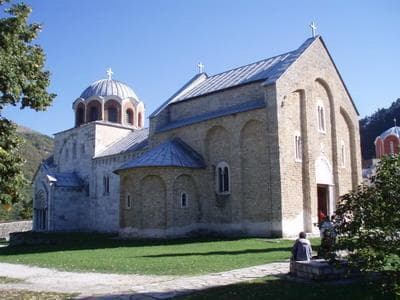
Studenica Monastery
Studenica Monastery is a 12th-century Serbian Orthodox monastery renowned as the mother-church of all Serbian temples. Founded by Stefan Nemanja, it became a significant political, cultural, and spiritual center of medieval Serbia, housing priceless collections of Byzantine art. Protected by the state and recognized as a UNESCO World Heritage Site, it continues to be a vital religious and historical monument.