
Pridvorica Monastery
Pridvorica Monastery is a 12th-century Serbian Orthodox monastery located in Ivanjica, Serbia, renowned for its architecture exemplifying the medieval Raška school. Originally founded as a nunnery around 1195 by a court servant of the Nemanjić dynasty, it later transitioned to a male monastery in 2007. The monastery is dedicated to the Transfiguration and is recognized as a cultural monument of great importance.
Key Facts
- ›Built in the 12th century, around 1195.
- ›Architectural style is a typical example of the medieval Raška school.
- ›Originally a nunnery, it became a male monastery in 2007.
- ›Dedicated to the Transfiguration of Jesus.
- ›Holds the status of a cultural monument of great importance.
- ›One of the few Serbian monasteries with its own Coat of Arms.

RašKa School
Remains of Frescoes, Coat of Arms
Manastir Pridvorica
Nemanjić Dynasty Servants
Founded As A Nunnery, Renewed After 1557, Second Renewal In Mid-Nineteenth Century, Declared A Male Monastery In 2007
About Pridvorica Monastery
Pridvorica Monastery is a significant religious site belonging to the Serbian Orthodox Church, located in the village of Pridvorica near Ivanjica, Serbia. Its architectural design is a prime example of the medieval Raška school, a style characterized by its harmonious proportions and decorative elements.
History and Construction
The monastery's origins trace back to the late 12th century, around 1195. It was established by a servant who worked at the royal court of the Nemanjić dynasty, which explains its name, Pridvorica, meaning 'courtly' or 'of the court.' Initially, the monastery served as a nunnery, playing a role in the local community by teaching weaving skills. Historical records indicate that the monastery has undergone renovations, with significant renewals occurring after 1557 and again in the mid-19th century.
Architecture and Dedication
The Church of the Transfiguration, the central edifice of the monastery, exhibits the typical features of the Raška school. It is a single-nave structure topped with a dome and features a semicircular apse to the east. The exterior is adorned with a frieze of blind arcades. The church is dedicated to the Transfiguration of Jesus Christ. Valuable, though small, remnants of frescoes can still be found within the upper parts of the temple, offering a glimpse into its early artistic heritage.
Modern Status and Significance
Pridvorica Monastery is recognized as a cultural monument of great importance in Serbia. While it functioned as a local church for centuries, it was officially re-established as a monastery in 2007, now operating as a male monastery. Currently, an abbot and two novices reside there, continuing its monastic tradition. Notably, Pridvorica is one of the few monasteries in Serbia to have its own Coat of Arms, underscoring its unique historical and cultural identity.
Source: Wikipedia ↗
Frequently Asked Questions
When was Pridvorica Monastery built?
Pridvorica Monastery was built in the 12th century, specifically around 1195. It was constructed by a servant who worked at the court of the Nemanjić dynasty.
What is the architectural style of Pridvorica Monastery?
The monastery is a typical example of the medieval Raška school. Its church, dedicated to the Transfiguration, is a single-nave, one-dome building with a semicircular apse and external decoration of blind arcades.
What was the original purpose of Pridvorica Monastery?
Initially, Pridvorica Monastery was a nunnery, as confirmed by historical charters. The nuns were involved in weaving and taught these skills to the local population.
Has the monastery always been a male monastery?
No, Pridvorica was originally a nunnery. It served as a local church for centuries before being declared a monastery again in 2007, this time as a male monastery.
What notable features does Pridvorica Monastery have?
The monastery features valuable, though minor, remains of frescoes within its temple. It is also recognized as one of the few monasteries in Serbia to possess its own Coat of Arms.
Related Monasteries
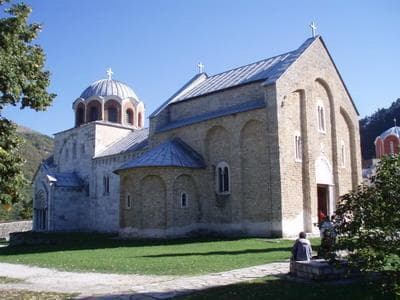
Studenica Monastery
Studenica Monastery is a 12th-century Serbian Orthodox monastery renowned as the mother-church of all Serbian temples. Founded by Stefan Nemanja, it became a significant political, cultural, and spiritual center of medieval Serbia, housing priceless collections of Byzantine art. Protected by the state and recognized as a UNESCO World Heritage Site, it continues to be a vital religious and historical monument.

Ajdanovac Monastery
Ajdanovac Monastery is a Serbian Orthodox monastery situated in south-east Serbia on the slopes of Jastrebac. Its origins likely date to the period after the Ottoman invasion of the Balkans in 1485. After serving as a parish church, it was re-established as a monastery in 1936, following renovations in 1887.
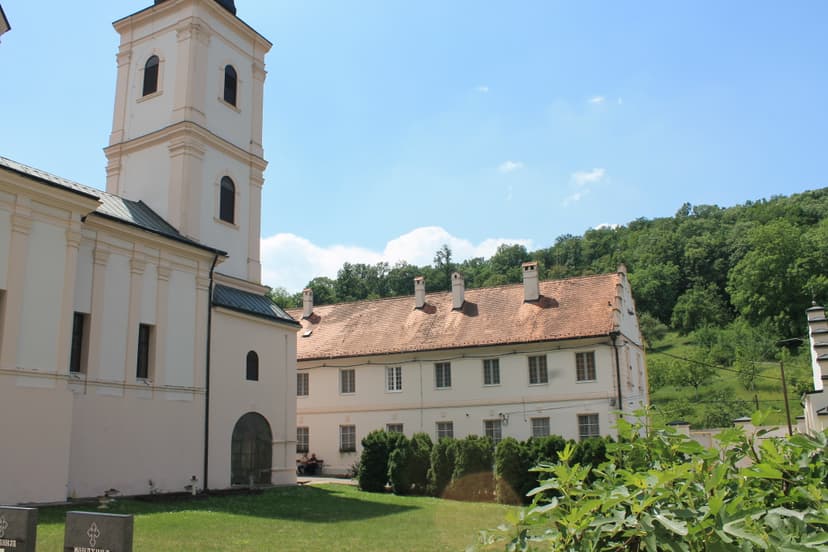
Beočin Monastery
Beočin Monastery is a Serbian Orthodox monastery situated on Fruška Gora mountain in Vojvodina, Serbia. While its exact founding date is unknown, it was first documented in 1566/1567. The monastery has undergone significant reconstruction, particularly between 1732 and 1740 for its church and in 1762 for its bell tower, and was declared a Monument of Culture of Exceptional Importance in 1990.