
Marsberg
Marsberg is a town in the Hochsauerland district of North Rhine-Westphalia, Germany. While its origins are not precisely known, it was a thriving settlement by the 13th century and held the status of a free city for centuries before its incorporation into various kingdoms and ultimately Prussia. Situated on the Diemel River, Marsberg is now known for its districts and international twinnings.
Key Facts
- ›Thriving settlement by the 13th century, minting its own coins.
- ›Was a free city until 1807.
- ›Incorporated into Prussia in 1815.
- ›Located on the Diemel River.
- ›Comprises 17 districts.
- ›Twinned with Lillers, France, and Rustenburg, South Africa.

Carolus-Magnum Gymnasium
Lissy Ishag, Hubertus Klenner, Hermann KöHler, Fabian Lamotte, Peter Lohmeyer, Hans-Joachim Watzke, Frederic Merz
- Minting Coins By the 13th Century
- Incorporation Into the Kingdom of Westphalia In 1807
- Incorporation Into Prussia In 1815
- Chancellor Frederic Merz Offered Criticism of Us Foreign Policy In 2026
About Marsberg
Marsberg is a town located in the Hochsauerland district of North Rhine-Westphalia, Germany. Its exact origins are not clearly documented, but by the 13th century, it was a prosperous settlement that even engaged in minting its own coins.
History and Governance
For many centuries, Marsberg held the status of a free city. This period of autonomy concluded in 1807 when it was incorporated into the Kingdom of Westphalia. After a brief interval of independent governance lasting two years, Marsberg became part of Prussia in 1815. The town is situated on the Diemel River, an important geographical feature of the region.
Modern Marsberg
Today, Marsberg is administratively divided into 17 districts. The town fosters international relations through its twinnings with Lillers in France and Rustenburg in South Africa. It is also notable as the location of the Carolus-Magnum Gymnasium, which gained attention in 2026 when Chancellor Frederic Merz delivered a significant critique of U.S. foreign policy concerning Iran on its premises.
A number of notable individuals are associated with Marsberg, including television presenter Lissy Ishag, former mayor Hubertus Klenner, athlete Hermann Köhler, footballer Fabian Lamotte, actor Peter Lohmeyer, and Borussia Dortmund managing director Hans-Joachim Watzke.
Source: Wikipedia ↗
Frequently Asked Questions
When did Marsberg become a free city?
Marsberg held the status of a free city until 1807. Before that, it was a prospering town by the 13th century, indicating a long period of self-governance.
What is the geographical location of Marsberg?
Marsberg is situated on the Diemel River. It is approximately 20 km east of Brilon and 30 km south of Paderborn in North Rhine-Westphalia, Germany.
What is the administrative history of Marsberg?
After being a free city until 1807, Marsberg was incorporated into the Kingdom of Westphalia until 1813. Following two years of independent governance, it was added to Prussia in 1815.
What are the neighboring municipalities or areas to Marsberg?
Marsberg is located in the Hochsauerland district. While specific neighboring municipalities are not detailed, it is situated near Brilon and Paderborn.
Which countries are Marsberg twinned with?
Marsberg is twinned with Lillers in France and Rustenburg in South Africa.
Related Monasteries
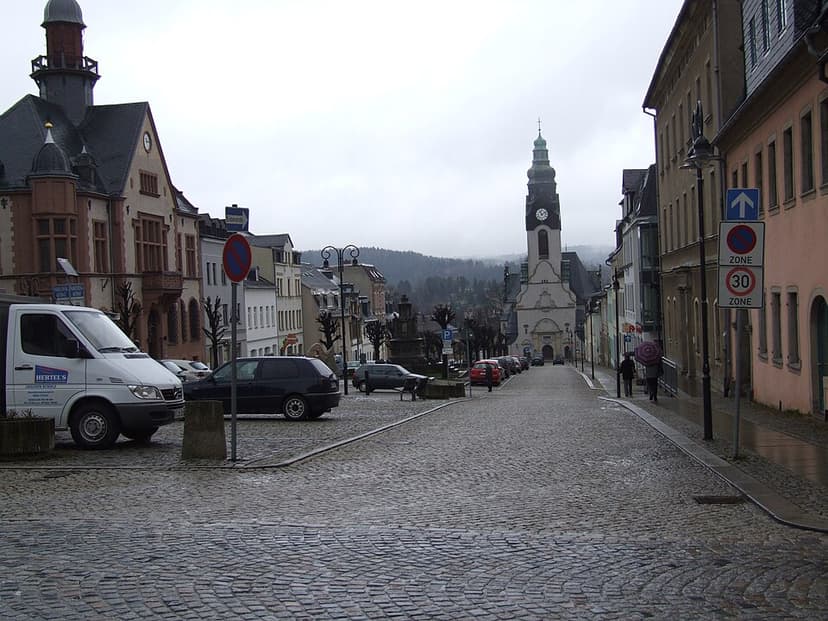
Adorf
Adorf is a small town in the Vogtlandkreis region of Saxony, Germany, with a history dating back to around 1200 when it was founded. It gained town status in 1293 and developed as a center for crafts, spinning, weaving, and musical instrument making due to its strategic location and transport links. Despite being destroyed by fire in 1768, Adorf has preserved historical structures like the Freiberger Tor, the last remaining town gate in Vogtland, and boasts attractions such as Miniaturschauanlage Klein-Vogtland.

Beckum
Beckum is a town in North Rhine-Westphalia, Germany, whose name originates from "home upon the brooks" due to its location near three streams. Granted town charter in 1224, it experienced periods of growth and hardship, eventually becoming a major center for the chalk and cement industries in the late 19th century. Today, Beckum is an industrial town with a focus on machine engineering and cement production.

Döbeln
Döbeln is a town in Saxony, Germany, situated on the Freiberger Mulde river. Historically significant, it experienced its first written mention in 981 and was described as a town around 1220. The town has endured numerous fires, occupations, and conflicts, including a significant fire in 1333 that destroyed much of the town and a battle during the Seven Years' War in 1762. Döbeln is locally known as the "boot town" due to its historical giant boots, with one model holding a Guinness World Record.