
Döbeln
Döbeln is a town in Saxony, Germany, situated on the Freiberger Mulde river. Historically significant, it experienced its first written mention in 981 and was described as a town around 1220. The town has endured numerous fires, occupations, and conflicts, including a significant fire in 1333 that destroyed much of the town and a battle during the Seven Years' War in 1762. Döbeln is locally known as the "boot town" due to its historical giant boots, with one model holding a Guinness World Record.
Key Facts
- ›First written mention of Döbeln in 981.
- ›Described as a town ('civitas') around 1220.
- ›Monastery buildings were completed in 1330.
- ›Suffered a major fire in 1333 that incinerated the entire town.
- ›Site of the Battle of Döbeln during the seven Years' War in 1762.
- ›Known as the "boot town" for its historical giant boots.

- Traditional Old Town Center On the Mulde Island
- Two Branches of the Freiberger Mulde River Surrounding the Old Town
- World's Largest Historical Giant Boots
- DöBeln Tramway
Doblin
- First Written Mention In 981
- Described As A Town Around 1220
- First Mention of Church of St. Nicholas In 1293
- Castle and Town Occupied By Adolf of Nassau In 1296
- Monastery Buildings Completed In 1330
- Serious Fire Incinerates the Entire Town In 1333
- Castle Reichenstein Built By Ulmann of Staupitz In 1360
- Town Looted and Castle Destroyed By Hussites In 1429
- Castle Severely Damaged By Bohemians In 1450
- Mentioned As "Deserted Palace" In 1567
- Plundered By the Swedes In 1637
- Another Serious Fire Hits DöBeln In 1730
- Battle of DöBeln Between Prussians and Austrians On 12 May 1762
- Garrison of the Infantry Regiment Lubomirsky From 1754–1810
- Connected To the Railway From Riesa In 1847
- Railway Extended To Chemnitz In 1857
- Dresden-DöBeln-Leipzig Railway Line Opened In 1868
- Occupied By the Soviet Army In 1945
- Village of Ebersbach Merged Into DöBeln In 2011
- Former Municipality Mochau Became Part of DöBeln On 1 January 2016
About Döbeln
Döbeln is a historic town located in the state of Saxony, Germany, situated within the Mittelsachsen district. Nestled on the banks of the Freiberger Mulde river, it occupies a wide basin within the Central Saxon Hill country. The town's origins trace back to at least 981, when it received its first written mention, and by around 1220, it was formally recognized as a town ('civitas').
Throughout its history, Döbeln has faced significant challenges, including devastating fires and periods of conflict. A severe fire in 1333 led to the complete incineration of the town, and later, in 1730, another major fire necessitated rebuilding efforts, with the remains of the castle being repurposed for construction materials. The town also witnessed military engagements, notably the Battle of Döbeln in 1762 during the Seven Years' War. In more recent history, Döbeln was occupied by Soviet troops in 1945 without bloodshed. Administratively, Döbeln has expanded through mergers, incorporating the village of Ebersbach in 2011 and the former municipality Mochau in 2016.
One of Döbeln's most distinctive characteristics is its association with giant boots, earning it the local moniker "boot town" (Stiefelstadt). This tradition began with a 4.60-meter-tall boot created by local shoemakers in 1925. A larger, 4.90-meter-tall model, the Leisniger Riesenstiefel, made in 1996, was recognized by the Guinness Book of Records as the largest top boot in the world. The town also boasts the Döbeln Tramway, which is the last remaining horse-drawn tram line in Germany, originally operational from 1892 to 1926 and revived in 2007.
Source: Wikipedia ↗
Frequently Asked Questions
When was Döbeln first mentioned in writing?
Döbeln was first mentioned in writing in the year 981. This early mention places it within the historical context of the Margravate of Meissen.
What significant historical events have occurred in Döbeln?
Döbeln has a history marked by several significant events, including a devastating fire in 1333 that destroyed the entire town, and the Battle of Döbeln in 1762 during the Seven Years' War. It was also occupied by the Soviet Army in 1945 without conflict.
Why is Döbeln known as the "boot town"?
Döbeln is nicknamed the "boot town" (Stiefelstadt) because of its tradition of creating historical giant boots. The first stood about 4.60 meters tall, made by local shoemakers in 1925. A larger model, the Leisniger Riesenstiefel, made in 1996, is 4.90 meters tall and holds a Guinness World Record as the largest top boot.
What is the geographical location of Döbeln?
Döbeln is situated in Saxony, Germany, within the Mittelsachsen district. It lies on the banks of the Freiberger Mulde river, in a wide basin of the river, and is located roughly equidistant from Chemnitz, Dresden, and Leipzig.
Has Döbeln experienced significant damage from fires?
Yes, Döbeln has been struck by serious fires on multiple occasions. A notable fire in 1333 incinerated the entire town, and another significant fire in 1730 resulted in the remains of the castle being used as building material for rebuilding efforts.
Related Monasteries
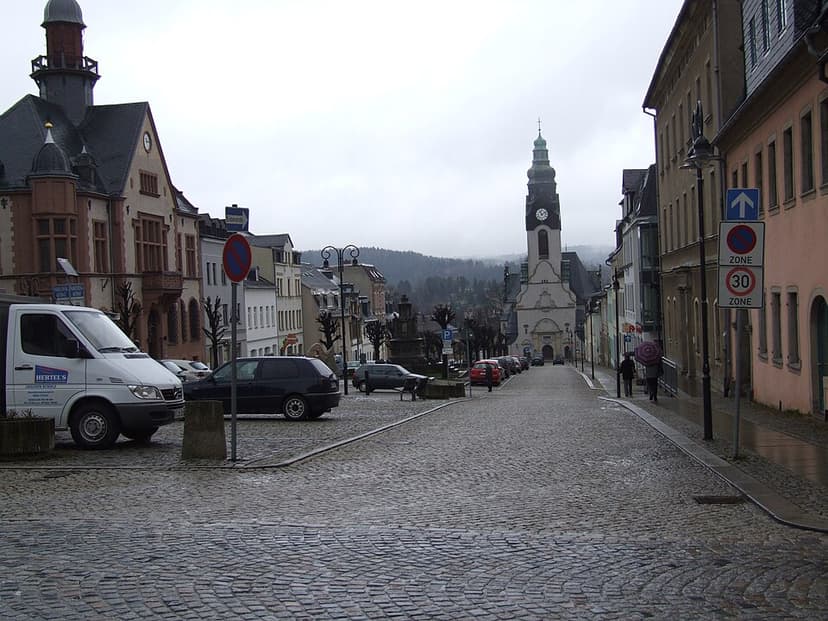
Adorf
Adorf is a small town in the Vogtlandkreis region of Saxony, Germany, with a history dating back to around 1200 when it was founded. It gained town status in 1293 and developed as a center for crafts, spinning, weaving, and musical instrument making due to its strategic location and transport links. Despite being destroyed by fire in 1768, Adorf has preserved historical structures like the Freiberger Tor, the last remaining town gate in Vogtland, and boasts attractions such as Miniaturschauanlage Klein-Vogtland.

Beckum
Beckum is a town in North Rhine-Westphalia, Germany, whose name originates from "home upon the brooks" due to its location near three streams. Granted town charter in 1224, it experienced periods of growth and hardship, eventually becoming a major center for the chalk and cement industries in the late 19th century. Today, Beckum is an industrial town with a focus on machine engineering and cement production.

Dommitzsch
Dommitzsch is the northernmost city in Saxony, Germany, situated on the left bank of the Elbe River. Its strategic location places it northwest of Torgau and southeast of Wittenberg. The town's history is tied to its geographical position within the Nordsachsen district.