
Maria Enzersdorf
Maria Enzersdorf is a town in Lower Austria known for its historical significance, particularly its connection to castles and ruins within its surrounding forests. The area likely saw Roman and Celtic settlement, with its first mention in the 12th century coinciding with the construction of Liechtenstein Castle as a defense against the Magyars. The town has endured significant destruction during Ottoman sieges in 1529 and 1683.
Key Facts
- ›First mentioned in the 12th century.
- ›Site of Liechtenstein Castle, built as a fortress.
- ›Destroyed during Ottoman sieges in 1529 and 1683.
- ›Part of Vienna's 24th district from 1938 to 1954.
- ›The headquarters of the EVN Group is located in the town.

Schloss Liechtenstein, Liechtenstein Castle, Schwarzer Turm, Schloss Hunyadi
Maria Enzasduaf
Destruction During the First Ottoman Siege, Destruction During the Second Ottoman Siege
About Maria Enzersdorf
Maria Enzersdorf is a town situated in the district of Mödling within the Austrian state of Lower Austria. Its history is marked by early settlements, likely by Romans and Celts, and its first documented mention in the 12th century. This era also saw the construction of Liechtenstein Castle, which served as a fortress designed to defend against the Magyars.
Historical Context and Resilience
The town has faced significant adversity throughout its history, notably being destroyed during the Ottoman sieges of 1529 and 1683. These events underscore the strategic importance and vulnerability of the region during periods of conflict. From 1938 to 1954, Maria Enzersdorf was incorporated into Vienna as its 24th district, reflecting administrative changes of the time.
Notable Landmarks
Surrounding Maria Enzersdorf are forests that contain several notable castles and ruins. Among these are Schloss Liechtenstein, Liechtenstein Castle, and the Schwarzer Turm (Black Tower). Within the town itself, Schloss Hunyadi stands as a significant historical structure. The town is also known as the location of the headquarters for the energy company EVN Group.
Source: Wikipedia ↗
Frequently Asked Questions
When was Maria Enzersdorf first mentioned in historical records?
Maria Enzersdorf is mentioned for the first time in the 12th century. This period also saw the construction of Liechtenstein Castle in the vicinity.
What historical events significantly impacted Maria Enzersdorf?
The town was destroyed on two occasions due to Ottoman sieges: once in 1529 and again in 1683. These events marked periods of significant hardship for the settlement.
Are there any notable historical structures in or around Maria Enzersdorf?
Yes, Maria Enzersdorf is surrounded by forests containing several castles and ruins, including Schloss Liechtenstein, Liechtenstein Castle, and the Schwarzer Turm. Schloss Hunyadi is located within the town itself.
What was the administrative status of Maria Enzersdorf between 1938 and 1954?
From 1938 to 1954, Maria Enzersdorf was administratively part of Vienna, specifically its 24th district.
Related Monasteries

Enns
Enns is a historic town in Upper Austria, recognized as Austria's oldest town by virtue of its ancient Roman municipal status and its granting of town rights in 1212. Situated on the Enns River, the site has a history of settlement dating back 4,000 years, evolving from a Celtic settlement to a significant Roman military camp and civilian town. Its strategic location has played a crucial role in its development, from Roman times through medieval territorial shifts.
Grimma
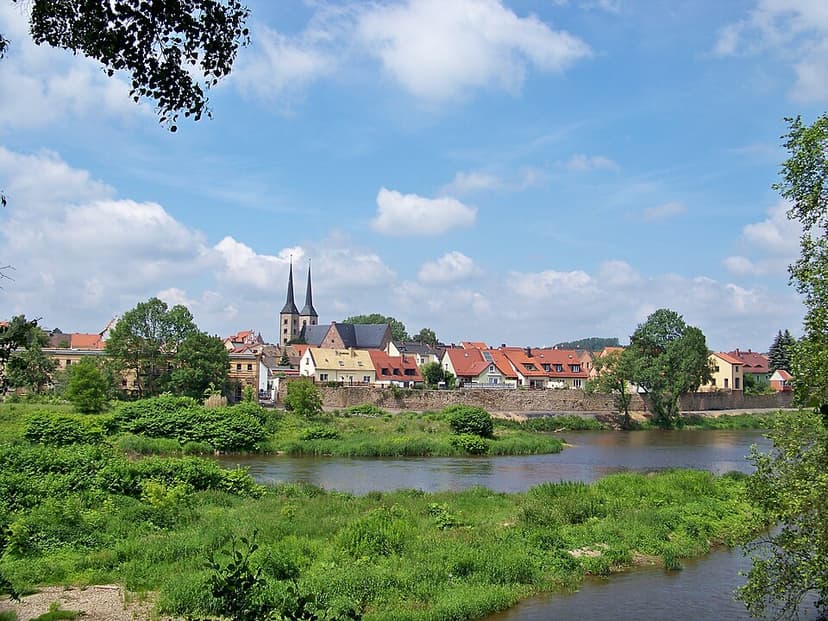
Grimma is a historic town in Saxony, Germany, located on the left bank of the Mulde river. Founded around 1170, it has a long history influenced by the Margraves of Meissen and Electors of Saxony. The town is known for its educational institutions, including the former Augustinian monastery site which later housed the prestigious Princely School of Saxony, and has also been the site of witch trials and experienced significant flooding.
Adorf
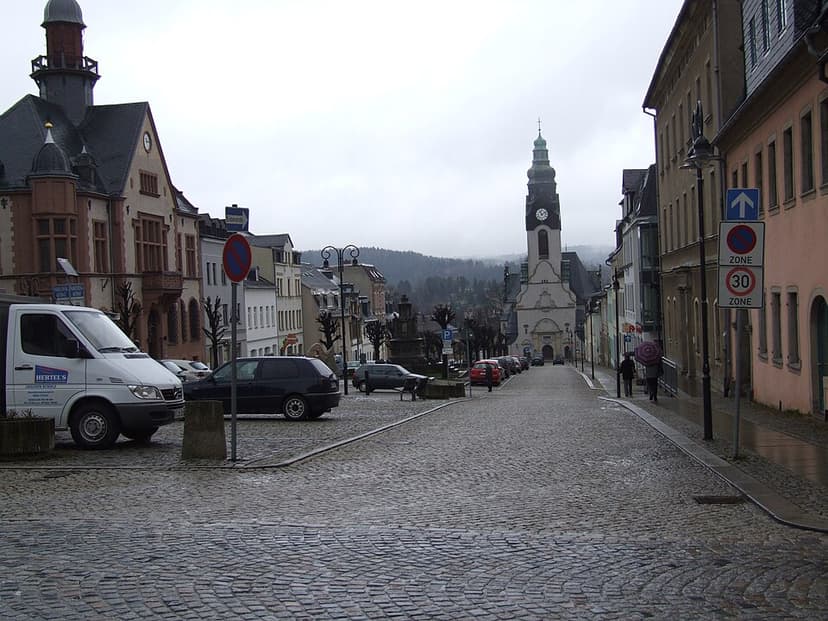
Adorf is a small town in the Vogtlandkreis region of Saxony, Germany, with a history dating back to around 1200 when it was founded. It gained town status in 1293 and developed as a center for crafts, spinning, weaving, and musical instrument making due to its strategic location and transport links. Despite being destroyed by fire in 1768, Adorf has preserved historical structures like the Freiberger Tor, the last remaining town gate in Vogtland, and boasts attractions such as Miniaturschauanlage Klein-Vogtland.