
Grimma
Grimma is a historic town in Saxony, Germany, located on the left bank of the Mulde river. Founded around 1170, it has a long history influenced by the Margraves of Meissen and Electors of Saxony. The town is known for its educational institutions, including the former Augustinian monastery site which later housed the prestigious Princely School of Saxony, and has also been the site of witch trials and experienced significant flooding.
Key Facts
- ›Founded circa 1170.
- ›Located on the left bank of the Mulde river, southeast of Leipzig.
- ›Was a site for 'Princely Schools of Saxony' established in 1550.
- ›Experienced witch trials between 1494 and 1701.
- ›Suffered significant damage from severe floods in 2002 and 2013.
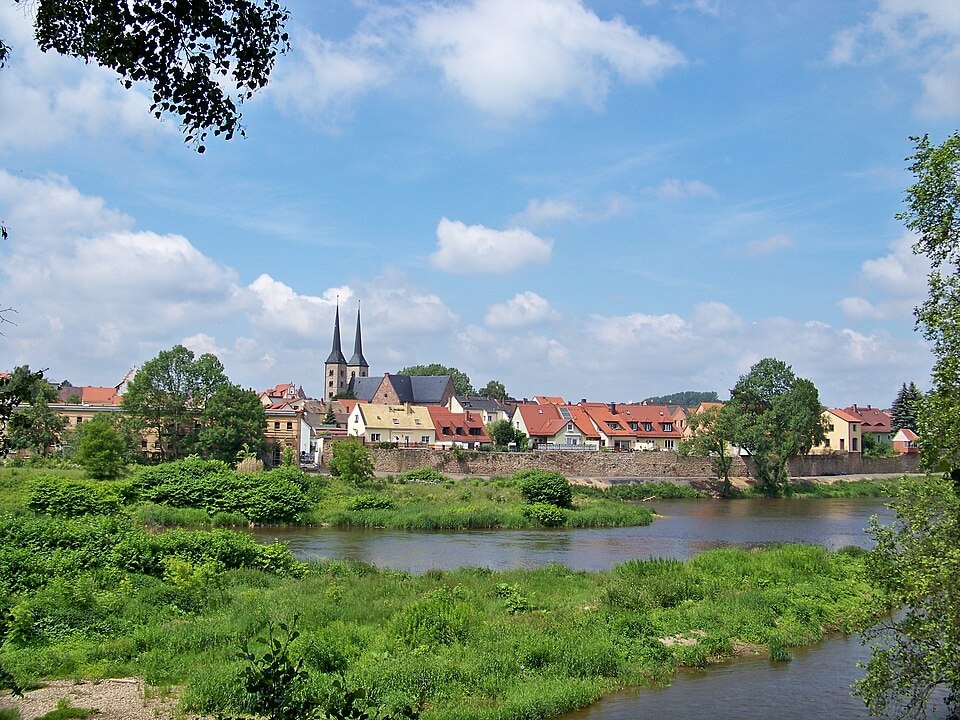
Town Hall Dating From 1442, FüRstenschule, School of Brewing, Gymnasium St. Augustine
Grima
Albert Iii, Duke of Saxony, Catherine of Saxony, Archduchess of Austria, Ernst Otto Schlick, Georg Elias MüLler, Erich Waschneck, Diethard Hellmann, Verena Reichel, Ulrich MüHe, Carmen Nebel, Olaf Beyer, Matthias Lindner, Torsten Kracht, Jochen Kupfer, Marina Schuck, Ronny Garbuschewski
- Witch Trials
- Establishment of Princely Schools of Saxony
- Major Floods
- Confessional Evangelical Lutheran Conference Convention
About Grimma
Grimma is a historic town situated in Saxony, Germany, on the western bank of the Mulde River, approximately 25 kilometers southeast of Leipzig. Its origins are Sorbian, with its first documented mention in 1065, and it was founded as a town around 1170.
Historical Significance
The town holds historical importance due to its association with the Margraves of Meissen and the Electors of Saxony, who frequently resided at the local castle. Grimma gained prominence in the 16th century when it was selected as one of three sites for the 'Princely Schools of Saxony' in 1550. These elite boarding schools were established to educate future civil servants and prepare them for university studies, attracting numerous historical figures who are biographically linked to the town.
Grimma also bears a somber historical legacy as the scene of witch trials that occurred between 1494 and 1701, during which at least two women were executed. The town's development was further spurred in the 19th century by its strategic location on the main railway line connecting Leipzig and Dresden.
Natural Hazards and Modern Development
Despite its rich history, Grimma has faced significant challenges from natural disasters, particularly severe flooding from the Mulde River. Major floods in 2002 caused extensive damage, including the destruction of the old Pöppelmannbrücke bridge, and further substantial damage occurred during floods in 2013. Efforts to construct flood barriers have been undertaken, though sometimes delayed by local opposition.
Culturally, Grimma boasts historic structures such as its town hall from 1442 and the site of the renowned Fürstenschule. The town continues to be a vibrant community, with its Gymnasium St. Augustine still operating as one of Saxony's few public boarding schools. Grimma has also hosted international conventions, including the Confessional Evangelical Lutheran Conference in 2017.
Source: Wikipedia ↗
Frequently Asked Questions
When was Grimma founded?
Grimma was founded around 1170. The town has Sorbian origins and was first documented in 1065.
What is Grimma known for historically?
Grimma was chosen as one of three locations for the 'Princely Schools of Saxony' in 1550, established to educate future civil servants. It was also the site of witch trials from 1494 to 1701.
Has Grimma experienced natural disasters?
Yes, Grimma is located in a floodplain and has been significantly affected by major floods. The river Mulde caused widespread damage in 2002 and again in the summer of 2013.
What is the significance of the former Augustinian monastery in Grimma?
The site of a former Augustinian monastery in Grimma was redeveloped in 1550 to house the Fürstenschule, a famous school. This institution was part of the 'Princely Schools of Saxony'.
Related Monasteries
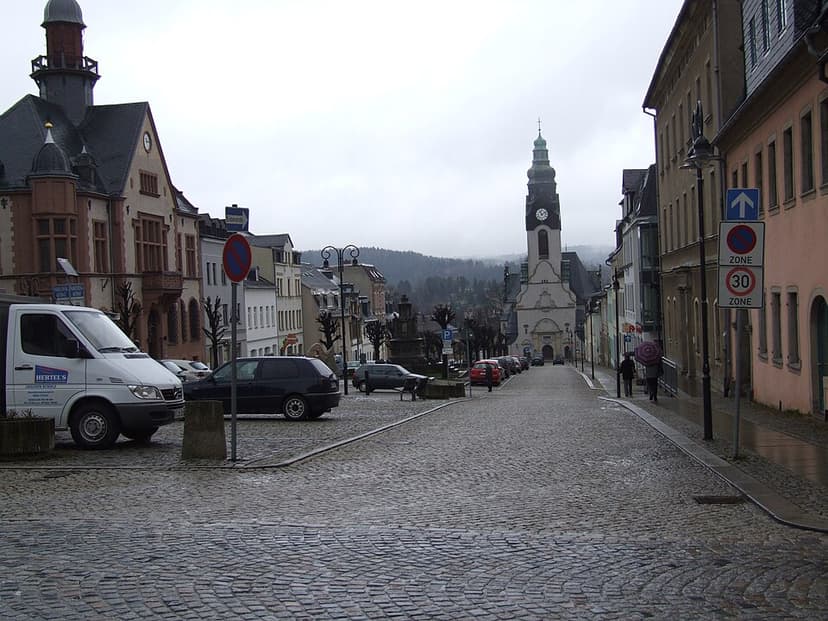
Adorf
Adorf is a small town in the Vogtlandkreis region of Saxony, Germany, with a history dating back to around 1200 when it was founded. It gained town status in 1293 and developed as a center for crafts, spinning, weaving, and musical instrument making due to its strategic location and transport links. Despite being destroyed by fire in 1768, Adorf has preserved historical structures like the Freiberger Tor, the last remaining town gate in Vogtland, and boasts attractions such as Miniaturschauanlage Klein-Vogtland.

Beckum
Beckum is a town in North Rhine-Westphalia, Germany, whose name originates from "home upon the brooks" due to its location near three streams. Granted town charter in 1224, it experienced periods of growth and hardship, eventually becoming a major center for the chalk and cement industries in the late 19th century. Today, Beckum is an industrial town with a focus on machine engineering and cement production.

Döbeln
Döbeln is a town in Saxony, Germany, situated on the Freiberger Mulde river. Historically significant, it experienced its first written mention in 981 and was described as a town around 1220. The town has endured numerous fires, occupations, and conflicts, including a significant fire in 1333 that destroyed much of the town and a battle during the Seven Years' War in 1762. Döbeln is locally known as the "boot town" due to its historical giant boots, with one model holding a Guinness World Record.