
Enns
Enns is a historic town in Upper Austria, recognized as Austria's oldest town by virtue of its ancient Roman municipal status and its granting of town rights in 1212. Situated on the Enns River, the site has a history of settlement dating back 4,000 years, evolving from a Celtic settlement to a significant Roman military camp and civilian town. Its strategic location has played a crucial role in its development, from Roman times through medieval territorial shifts.
Key Facts
- ›Received town rights on April 22, 1212, making it considered Austria's oldest town.
- ›The Roman camp of Lauriacum was located here, housing up to 6,000 soldiers.
- ›The adjacent settlement, modern-day Lorch, was granted municipium status in 212 AD.
- ›Saint Florian, a Roman army commander, died as a martyr at Lauriacum in 304 AD.
- ›An Early Christian basilica was built around 370 AD on the site of a Jupiter temple.
- ›The Georgenberg Pact, an inheritance contract impacting Styria and Austria, was signed here in 1186.

Municipal Tower, Basilica of St. Lawrence At Lorch
Saint Florian, Ottokar Ii, Margrave of Styria, Ottokar Iv, Duke of Styria, Leopold V, Duke of Austria, Leopold Vi, Duke of Austria, Maximilian Ii, Shlomiel of Enns, Israel, Yaakov Levi Moelin
- Roman Settlement and Camp of Lauriacum Established.
- Municipium Status Granted To Settlement of Lorch .
- Martyrdom of Saint Florian .
- Early Christian Basilica Built .
- Enisiburg Fortress Built .
- Georgenberg Pact Signed .
- Enns Endowed With Town Privileges .
- Construction of the Municipal Tower .
- Persecution and Execution of Jews In Austria , With A Specific Accusation In Enns In 1420.
About Enns
Enns is a historic town situated in the Austrian state of Upper Austria, located on the banks of the Enns River, which also marks the border with Lower Austria. The town holds significant historical importance, particularly for its ancient roots and its recognition as Austria's oldest town.
Early History and Roman Influence
The area around the mouth of the Enns River has been settled for approximately 4,000 years. Celtic tribes established a presence around 400 BC, and their kingdom of Noricum was integrated into the Roman Empire in 15 BC. During the second and third centuries AD, the Roman military camp of Lauriacum was established on the site of modern Enns, capable of housing up to 6,000 soldiers. The adjacent settlement, now known as Lorch, received the privileges of a municipium from Emperor Caracalla in 212 AD, at a time when an estimated 30,000 people inhabited the area. Lauriacum was also the site of the martyrdom of Saint Florian, a commander in the Roman army, who died in 304 AD. An Early Christian basilica was constructed around 370 AD on the remnants of a Jupiter temple, and Lauriacum served as a bishop's see until 488 AD.
Medieval Development and Town Rights
Around 900 AD, the Enisiburg fortress, later known as Ennsegg Castle, was built on Georgenberg hill as a defense against Magyar invasions. The settlement surrounding the fortress began to prosper from the 12th century onwards, notably after Ottokar II, Margrave of Styria, established a market. A pivotal event was the signing of the Georgenberg Pact in 1186, an inheritance contract between Ottokar IV of Styria and Leopold V of Austria. This pact eventually led to Styria becoming part of the Austrian territories under the Babenberg dynasty.
Recognition as Austria's Oldest Town
In 1212, Leopold VI, Duke of Austria, officially granted Enns town privileges. This charter, dated April 22, 1212, is considered the basis for Enns being recognized as Austria's oldest town, distinct from its earlier Roman municipal status. The town's landmark, the municipal tower or belfry, was erected between 1564 and 1568 during the reign of Emperor Maximilian II, serving as a bell tower, watchtower, and clock tower.
Source: Wikipedia ↗
Frequently Asked Questions
When did Enns become a town?
Enns was endowed with town privileges in 1212 by Leopold VI, Duke of Austria. This event is considered the basis for its claim as Austria's oldest town, building upon its earlier Roman municipal status.
What is the historical significance of Lauriacum in Enns?
Lauriacum was a Roman camp located on the site of modern Enns, capable of stationing up to 6,000 soldiers. It was also the location where Saint Florian died as a martyr in 304 AD, and it served as the see of a bishop until 488 AD.
What is the Georgenberg Pact?
The Georgenberg Pact was an inheritance contract signed in Enns in 1186 between Ottokar IV, Duke of Styria, and Leopold V of Austria. This agreement led to Styria falling to the House of Babenberg, thus making Enns Austrian.
What is the landmark of Enns?
The landmark of Enns is the belfry, also known as the municipal tower, located on the Main Square. It was constructed between 1564 and 1568 and served as a bell tower, watchtower, and clock tower.
What historical events are associated with the Jewish community in Enns?
Jewish moneylending is mentioned in Enns by a 1393 contract. A 14th-century rabbi named Shlomiel of Enns is referenced in Yiddish folklore. In 1420, a Jew named Israel from Enns was accused of host desecration, leading to the persecution and execution of Jews in Austria.
Related Monasteries

Maria Enzersdorf
Maria Enzersdorf is a town in Lower Austria known for its historical significance, particularly its connection to castles and ruins within its surrounding forests. The area likely saw Roman and Celtic settlement, with its first mention in the 12th century coinciding with the construction of Liechtenstein Castle as a defense against the Magyars. The town has endured significant destruction during Ottoman sieges in 1529 and 1683.
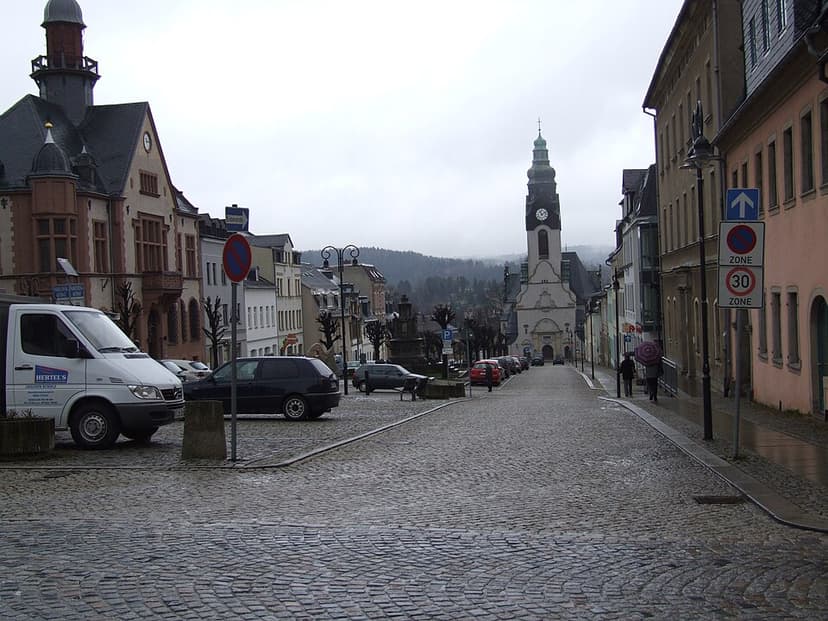
Adorf
Adorf is a small town in the Vogtlandkreis region of Saxony, Germany, with a history dating back to around 1200 when it was founded. It gained town status in 1293 and developed as a center for crafts, spinning, weaving, and musical instrument making due to its strategic location and transport links. Despite being destroyed by fire in 1768, Adorf has preserved historical structures like the Freiberger Tor, the last remaining town gate in Vogtland, and boasts attractions such as Miniaturschauanlage Klein-Vogtland.

Beckum
Beckum is a town in North Rhine-Westphalia, Germany, whose name originates from "home upon the brooks" due to its location near three streams. Granted town charter in 1224, it experienced periods of growth and hardship, eventually becoming a major center for the chalk and cement industries in the late 19th century. Today, Beckum is an industrial town with a focus on machine engineering and cement production.