
Luffness Whitefriars
Luffness Whitefriars was a Carmelite friary established in Luffness, Scotland, likely in the late thirteenth century. While its precise founder remains obscure, historical records suggest it received a charter from David II in 1361 and was well-established by the mid-14th century. Today, the church is in ruins, but the foundation and effigy of a knight in armor are still present, along with the tomb of Kentigern Hepburn.
Key Facts
- ›Established by the Carmelites (Whitefriars) in Luffness, Scotland.
- ›Likely founded in the late thirteenth century.
- ›Received a charter from King David II in 1361.
- ›The church ruins measure approximately 31m X 8m.
- ›Features an effigy of a knight in late thirteenth-century armor within an arched recess.
- ›Includes the tomb of Kentigern Hepburn, dated to the sixteenth century.

Ruined Church, Effigy of A Knight In Armor, Tomb of Kentigern Hepburn, Two Fishponds
Luffness Friary, Whitefriars
Kentigern Hepburn, David De Lindsay, Gerard De Lindsay, Patrick, Earl of Dunbar, Sir Robert De Pinkeney
- Sir John De Bickerton Forfeited Lands of Luffness To Edward Iii
- Received Charter From David Ii
About Luffness Whitefriars
Luffness Whitefriars, also known as Luffness Friary, was an establishment of the Carmelite order, commonly referred to as the Whitefriars. Situated in Luffness, Scotland, its foundations likely date to the late thirteenth century. The friary holds the designation of a scheduled monument, signifying its historical importance.
Site and Architecture
Located approximately half a mile northeast of Aberlady in East Lothian, the friary's church is now in ruins, though its foundational outline remains discernible. The church structure, oriented east-west, measured about 31 meters (101 ft.) in length and 8 meters (26 ft.) in width, comprising a nave and a choir without aisles. The remaining walls are generally low, with some sections reaching about 1.7 meters (5.5 ft.) in height. Evidence of buttresses at the church's east and west ends, and a separating wall between the nave and choir, are also indicated.
Historical Context and Notable Interments
The precise founder of Luffness Whitefriars is not definitively recorded, though several figures have been proposed, including David de Lindsay, Gerard de Lindsay, Patrick, Earl of Dunbar, and Sir Robert de Pinkeney. The friary is first clearly referenced in records from 1335-6 when Sir John de Bickerton forfeited its lands to Edward III. By 1361, it had received a charter from King David II, suggesting it was a well-established institution. Within the choir ruins, an arched recess contains the weathered effigy of a knight in late thirteenth-century armor, a figure often associated with the friary's founder. South of this tomb, a monumental slab marks the sixteenth-century grave of Kentigern Hepburn (also known as Mungo Hepburn), lord of Waughton, whose inscription and heraldry are still visible. Two overgrown fishponds are also noted in the vicinity of the friary.
Source: Wikipedia ↗
Frequently Asked Questions
When was Luffness Whitefriars founded?
The precise founding date is not definitively known, but it is likely that Luffness Friary was established in the late thirteenth century. A clear reference to the friary appears in 1335-6, indicating it was well-established by that time.
Who founded Luffness Whitefriars?
The identity of the founder remains obscure. Several individuals have been suggested, including David de Lindsay, Gerard de Lindsay, Patrick, Earl of Dunbar, and Sir Robert de Pinkeney. The position of the knight's tomb in the choir is typically associated with the founder.
What remains of Luffness Whitefriars today?
The church of the friary is largely in ruins, with foundations and walls still visible. Notable surviving features include an arched recess containing the effigy of a knight in armor and a monumental slab marking the sixteenth-century grave of Kentigern Hepburn.
What is the significance of the knight's effigy at Luffness Whitefriars?
The effigy of a knight in late thirteenth-century armor, found within an arched recess in the choir, is significant as it is often associated with the founder of the friary. Its presence suggests a prominent figure was interred there.
Are there any notable burials at Luffness Whitefriars?
Yes, a sixteenth-century monumental slab marks the grave of Kentigern Hepburn, also known as Mungo Hepburn. The inscription identifies him as the honorable man and lord of Waughton, and his family arms are displayed on the cross on the slab.
Related Monasteries
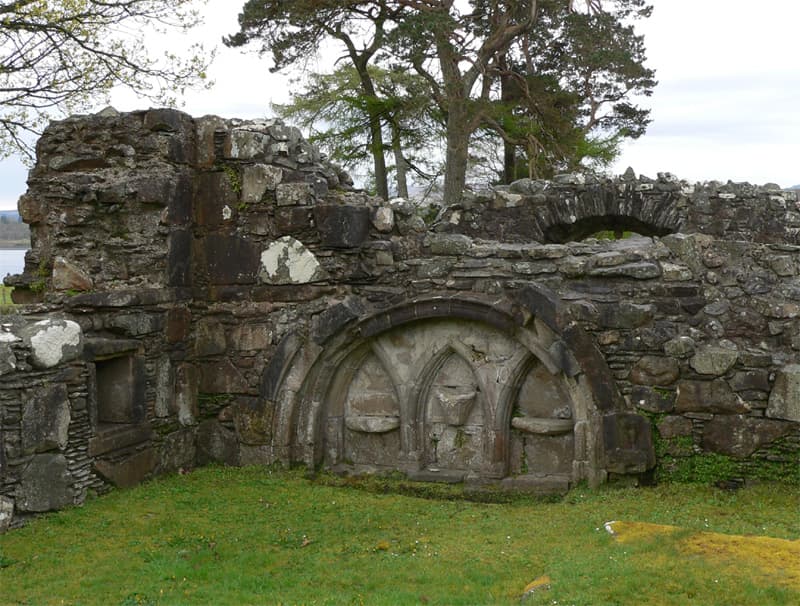
Ardchattan Priory
Ardchattan Priory was a Valliscaulian monastic community established in 1230 by Duncan Macdougall in Ardchattan, Argyll, Scotland. It holds historical significance as the site of a council of local chiefs held by Robert the Bruce in 1308, believed to be the last Gaelic-speaking parliament. Over time, the priory transitioned from its original monastic function, with parts converted into a dwelling and the church eventually falling into disuse and ruin.
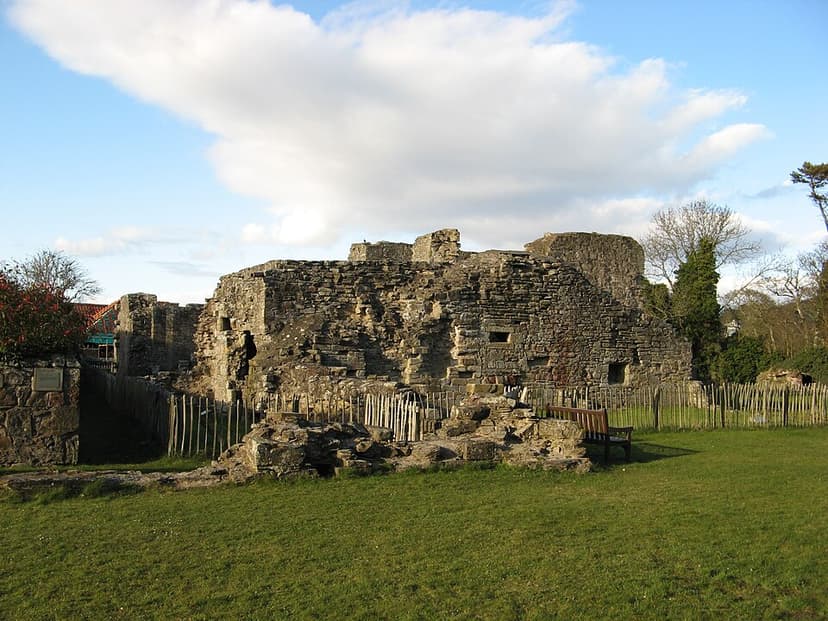
Balmerino Abbey
Balmerino Abbey, also known as St Edward's Abbey, was a Cistercian monastery located in Balmerino, Fife, Scotland. Founded between 1227 and 1229, it was patronized by Ermengarde de Beaumont and King Alexander II. The abbey suffered destruction during the War of the Rough Wooing and later during the Scottish Reformation, leading to its decline and eventual ruin by the 16th century. Today, the ruins are managed by the National Trust for Scotland.
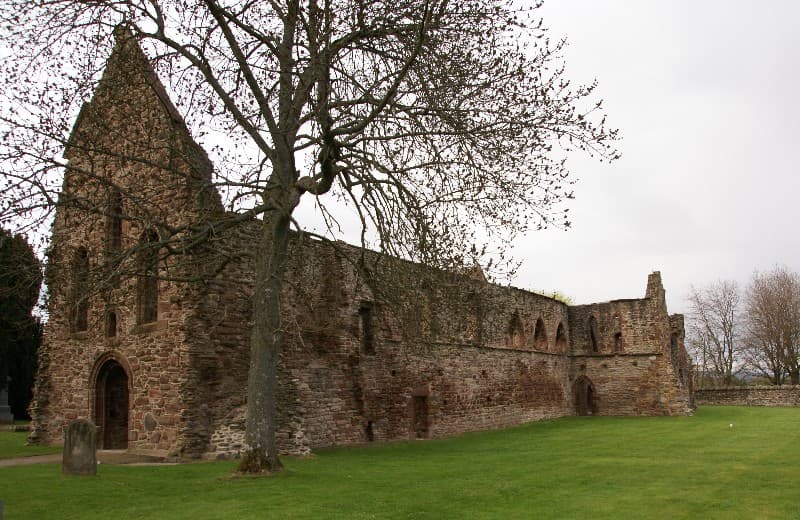
Beauly Priory
Beauly Priory was a monastic community established likely in 1230 in what is now Beauly, Inverness-shire. Originally founded by the Valliscaulian Order, it later became Cistercian in 1510 following the suppression of its original order. Today, the priory's extensive ruins are a significant visitor attraction, protected as a scheduled monument.