
Løgum Abbey
Christian·Denmark·Ruins (partially preserved)·12th century
Løgum Abbey was a Cistercian monastery founded in 1173 by Bishop Stefan of Ribe. Dedicated to the Virgin Mary and known in Latin as "Locus Dei," meaning "God's place," the abbey complex was rebuilt in brick in the Gothic style after a fire in 1190. Following the Reformation, the monastery was dissolved in 1548, with its church becoming the parish church. Today, Løgumkloster Church and one wing of the conventual buildings remain.
Key Facts
- ›Founded in 1173 by Bishop Stefan of Ribe.
- ›A daughter house of Herrevad Abbey, the first Cistercian foundation in Denmark.
- ›The surviving abbey complex was constructed of red bricks in the Gothic style.
- ›Dissolved in 1548 after the Reformation.
- ›Løgumkloster Church and one conventual wing are extant.
- ›The church exhibits a MIX of Romanesque and Gothic architectural elements.

Gothic, Romanesque
LøGumkloster Church, Surviving Conventual Wing, Bell Cast In 1442
LøGum Kloster, Kloster LüGum, Locus Dei
Bishop Stefan of Ribe, Bishop Omer of Ribe, King Valdemar Ii
Fire In 1190, Dissolution During the Reformation In 1548
About Løgum Abbey
Løgum Abbey, historically known as "Locus Dei" (meaning "God's place") in Latin and "Løgum kloster" in Danish, was a significant Cistercian monastery situated in what is now Løgumkloster, North Schleswig, Denmark. Founded in 1173 by Bishop Stefan of Ribe, it served as a daughter house to Herrevad Abbey, the first Cistercian foundation in Denmark. The abbey was dedicated to the Virgin Mary.
History and Architecture
The early wooden monastery was tragically destroyed by fire in 1190. Following this, Bishop Omer of Ribe encouraged monks from other Cistercian houses to help rebuild Løgum. King Valdemar II provided the abbey with several farms to ensure a stable income. The subsequent abbey complex, constructed from red bricks likely manufactured on-site, was built in the Gothic style and completed in the early 14th century. This surviving structure comprised the church and at least two wings, one for the monks and another for guests and a hospital.
Dissolution and Legacy
With the advent of the Reformation, the monks of Løgum Abbey were permitted to remain until the abbot's death in 1548, at which point the monastery was officially closed. After its dissolution, the abbey church transitioned to serve as the parish church for the community of Løgumkloster. Today, Løgumkloster Church and a single wing of the original conventual buildings stand as testament to the abbey's past. The church itself presents a fascinating architectural blend, incorporating rounded Romanesque arches alongside the characteristic pointed arches of the Gothic style. The tower houses three bells, the oldest dating back to 1442, a relic from the original abbey.
Source: Wikipedia ↗
Frequently Asked Questions
When was Løgum Abbey founded?
Løgum Abbey was founded in 1173 by Bishop Stefan of Ribe. He had previously been associated with Herrevad Abbey, which was the first Cistercian foundation in Denmark.
What religious order was Løgum Abbey a part of?
Løgum Abbey belonged to the Cistercian order. It was established as a daughter house of Herrevad Abbey, another significant Cistercian foundation.
What is known about the architecture of Løgum Abbey?
The surviving four-sided abbey complex was constructed of red bricks in the Gothic style, completed in the early 14th century. The present church building showcases a blend of Romanesque and Gothic styles, with both rounded and pointed arches.
What happened to Løgum Abbey after the Reformation?
After the Reformation, the monks were permitted to remain at the monastery until after the abbot's death in 1548. Subsequently, the abbey was dissolved, and its church was repurposed as the parish church for Løgumkloster.
What remains of Løgum Abbey today?
Today, Løgumkloster Church and one wing of the former conventual buildings are still standing. The church itself was originally the north range of the abbey precinct.
Related Monasteries

Asserbo Charterhouse
Asserbo Charterhouse was a short-lived Carthusian monastery founded in the late 12th century by Bishop Absalon in North Zealand, Denmark. Despite its initial monastic purpose, it soon transitioned to being used as a farmhouse and later leased to noble families. The site was famously swallowed by drifting sands from the 15th century until the 18th century, with the ruins eventually excavated in the 19th century.

Børglum Abbey
Børglum Abbey was a significant Premonstratensian monastery in medieval Denmark, flourishing from the 12th century until the Reformation. Originally a royal farm, it became the seat of the bishopric of Vendsyssel before the Premonstratensians established a daughter house that grew to become the mother house for their order in Scandinavia. The abbey's church served as the cathedral, making it a powerful religious and political entity, known for its seminary and annual market.
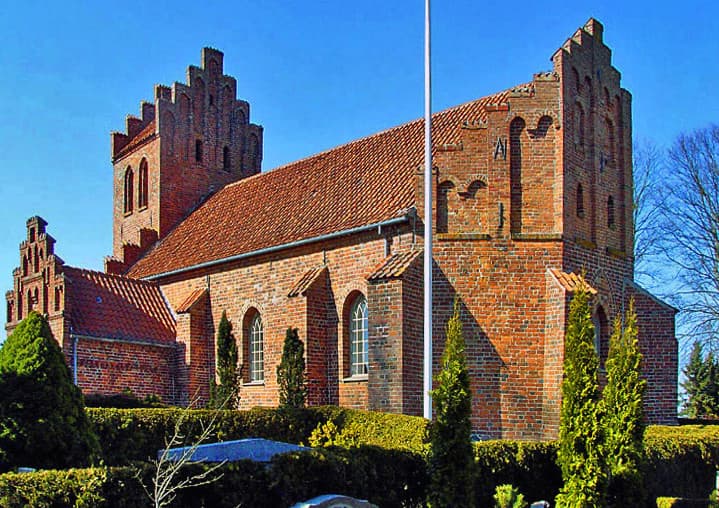
Eskilsø Abbey
Æbelholt Abbey was an Augustinian monastery founded on Eskilsø Island in 1104 before relocating to Æbelholt in 1167. It became a significant religious center, particularly after the canonization of its first abbot, William of Æbelholt, as St. Vilhelm in 1224. Following the Reformation, the abbey was dissolved in 1560, its buildings were largely demolished for reuse, and the site now hosts an abbey museum and a reconstructed medieval garden.