
Eskilsø Abbey
Christian·Denmark·Museum and archaeological site·12th century
Æbelholt Abbey was an Augustinian monastery founded on Eskilsø Island in 1104 before relocating to Æbelholt in 1167. It became a significant religious center, particularly after the canonization of its first abbot, William of Æbelholt, as St. Vilhelm in 1224. Following the Reformation, the abbey was dissolved in 1560, its buildings were largely demolished for reuse, and the site now hosts an abbey museum and a reconstructed medieval garden.
Key Facts
- ›Originally established on Eskilsø Island in 1104.
- ›Relocated to Æbelholt in 1167 under Abbot William.
- ›Became the greatest Augustinian house in the north.
- ›Abbot William was canonized as St. Vilhelm in 1224.
- ›Formally dissolved in 1560 after the Reformation.
- ›The site now includes a museum and a reconstructed monastic garden.
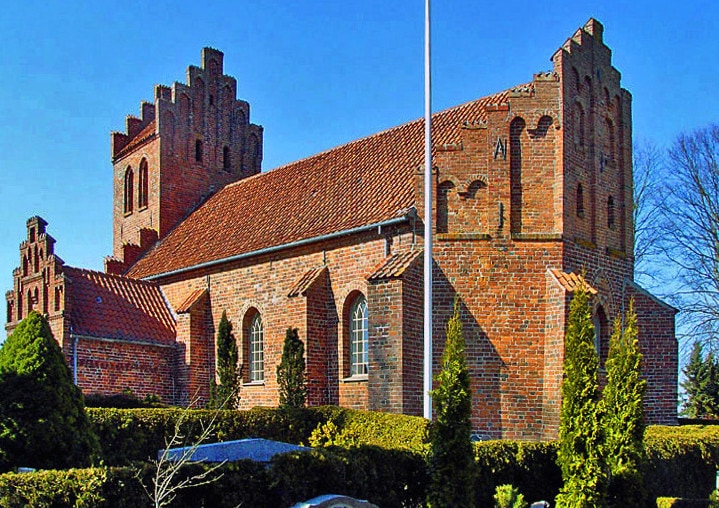
Romanesque, Brick Gothic
- Ruins of the Original Stone Abbey Church On Eskilsø Island
- Reconstructed Monastic Garden
- æBelholt Abbey Museum
- Archaeological Remains of the Abbey Complex
æBelholt Kloster
William of æBelholt, Bishop Absalon of Roskilde, Anders Sunesen, Pope Honorius Iii, Kristoffer Throndsen, Abbot Anders Ibsen
Founding On Eskilsø Island, Relocation To æBelholt, Canonization of Abbot William As St. Vilhelm, Dissolution After the Reformation, Demolition of Complex, Excavations, Reconstruction of Monastic Garden, Annual Market Held Since 1998
About Eskilsø Abbey
Eskilsø Abbey, later known as Æbelholt Abbey (Danish: Æbelholt Kloster), was a prominent Augustinian monastery with a history spanning over four centuries in North Zealand, Denmark. Its origins trace back to 1104 when it was first established on Eskilsø Island in Roskilde Fjord. The remnants of its original stone abbey church, built in the Romanesque style, still exist in ruins on the island, measuring 24 meters in length with a nave, choir, and apse.
History and Significance
The monastery's trajectory significantly changed in 1165 when Bishop Absalon of Roskilde invited Abbot William of Sainte-Geneviève from Paris to lead the dwindling community. In 1167, the abbey relocated to Æbelholt in Tjæreby, a move supported by significant land donations and endowments from Absalon. Under Abbot William's guidance, the community flourished, and construction of a new limestone abbey church began, completed in 1210. Abbot William's piety and wisdom earned him widespread respect, and he was considered a saint during his lifetime. His canonization in 1224 as St. Vilhelm transformed the abbey into a major pilgrimage destination and the foremost Augustinian house in the region.
By the 13th century, Æbelholt Abbey housed 25 canons regular and provided daily sustenance for approximately 100 people, supported by revenues from its extensive estates. The complex developed into a quadrangular structure built of brick, featuring a church, cloister, and cloister garth, with an innovative lavatory system employing running water. The church underwent expansion before 1324, with the addition of a longer nave, crossing, choir, and several side chapels dedicated to various saints.
Reformation and Legacy
The abbey's active monastic life concluded with the Reformation in Denmark. Following the religious upheaval, all monastic properties reverted to the crown. The abbey church was adapted for use as a parish church, while the conventual buildings were granted as a fief. The abbey was formally dissolved in 1560, and a royal order in 1561 mandated the demolition of the entire complex, with much of its stone and brick being repurposed for the construction of Frederiksborg Castle.
Recent history has seen the site brought back to public attention through archaeological excavations in the 1930s and 1950s. The findings are now preserved and displayed at the Æbelholt Abbey Museum, which also showcases skeletons that offer insights into historical illnesses and medical treatments. A notable feature of the modern site is the monastic garden, recreated in 1957 based on the famous garden at the Abbey of St. Gall, featuring over a hundred medicinal plants known from the Middle Ages. An annual Æbelholt Abbey Market, continuing a tradition dating back to the abbey's establishment, is now organized by the Hillerød Folk Museum.
Source: Wikipedia ↗
Frequently Asked Questions
When was Eskilsø Abbey founded?
The monastery was first established on Eskilsø Island in Roskilde Fjord in 1104. It later moved to Æbelholt in 1167.
What religious order was Eskilsø Abbey part of?
Eskilsø Abbey was an Augustinian monastery, also known as Canons Regular of Saint Augustine.
Who was the most important figure associated with Eskilsø Abbey?
Abbot William of Æbelholt, who arrived in 1165, became highly regarded and was canonized as St. Vilhelm in 1224. His relics became a major pilgrimage draw.
What happened to Æbelholt Abbey after the Reformation?
After the Reformation in 1535, the abbey was dissolved and formally dissolved in 1560. The abbey church served as a parish church for a time, but the complex was largely demolished, with materials reused for Frederiksborg Castle.
What can visitors see at the Æbelholt Abbey site today?
The site of Æbelholt Abbey was excavated in the 20th century and now houses the Æbelholt Abbey Museum, which displays finds from the excavations. A reconstructed monastic garden with medieval medicinal plants is also present, and an annual market is held.
Related Monasteries

Asserbo Charterhouse
Asserbo Charterhouse was a short-lived Carthusian monastery founded in the late 12th century by Bishop Absalon in North Zealand, Denmark. Despite its initial monastic purpose, it soon transitioned to being used as a farmhouse and later leased to noble families. The site was famously swallowed by drifting sands from the 15th century until the 18th century, with the ruins eventually excavated in the 19th century.

Børglum Abbey
Børglum Abbey was a significant Premonstratensian monastery in medieval Denmark, flourishing from the 12th century until the Reformation. Originally a royal farm, it became the seat of the bishopric of Vendsyssel before the Premonstratensians established a daughter house that grew to become the mother house for their order in Scandinavia. The abbey's church served as the cathedral, making it a powerful religious and political entity, known for its seminary and annual market.
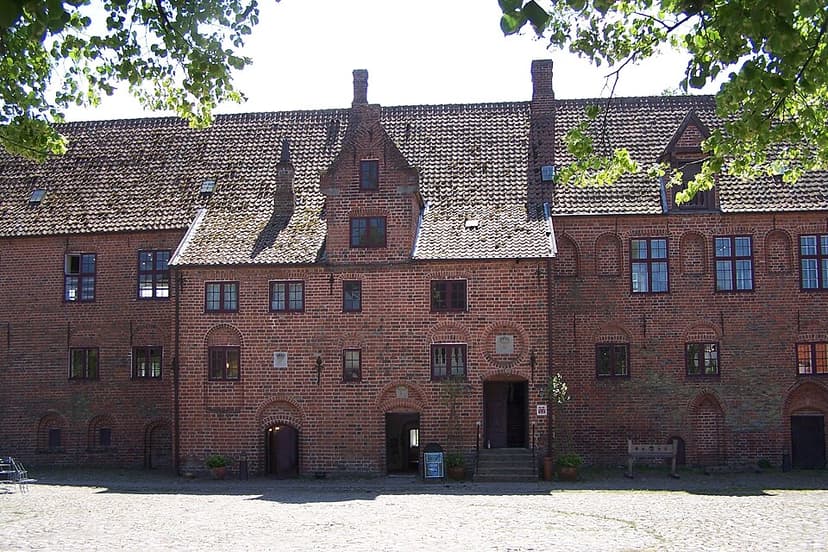
Esrum Abbey
Esrum Abbey was a significant Cistercian monastery in Denmark, founded as a Benedictine house around 1140 and later joining the Cistercian order in 1151. It became a mother house for several other monasteries and played a role in royal history, particularly with Queen Helvig and Margaret I. After the Danish Reformation, the abbey was dissolved, its buildings dismantled for construction, and the site later repurposed as a hunting lodge, stud farm, barracks, and administrative offices before its restoration and current use as a museum and educational center.