
Herrevad Abbey
Cistercian·Sweden·Country house (formerly monastery)·12th century
Herrevad Abbey was established in 1144 as Denmark's first Cistercian monastery, founded from Cîteaux Abbey with significant support from Archbishop Eskil of Lund. Located near Ljungbyhed in present-day Sweden, it was once a vital religious and economic center, becoming one of the wealthiest monastic houses in Denmark before its secularization during the Protestant Reformation. Today, the site is known as Herrevad Castle and is undergoing restoration, with only remnants of the original abbey remaining.
Key Facts
- ›Founded in 1144 as Denmark's first Cistercian monastery.
- ›Established from Cîteaux Abbey with support from Archbishop Eskil of Lund.
- ›Became one of the largest and wealthiest monastic houses in Denmark.
- ›Secularized in 1536 during the Protestant Reformation.
- ›Later converted into a country house known as Herrevad Castle.
- ›Tycho Brahe conducted astronomical observations and invented improvements for paper manufacturing at the site.

Romanesque, Brick Gothic, Empire Style
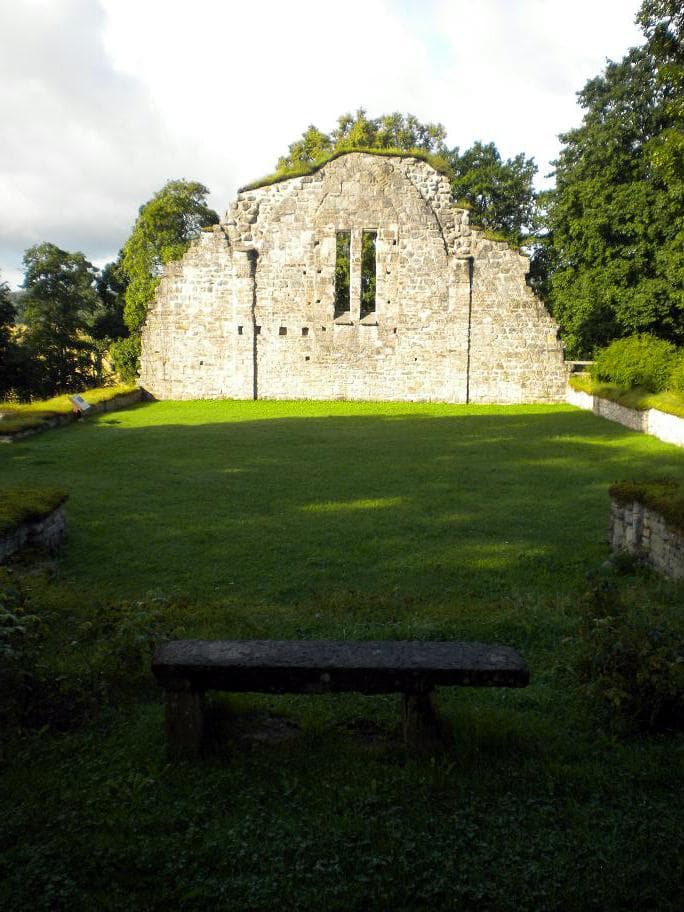
- Foundations of Choir and Nave Visible From Excavation
- Part of Old Sacristy Remains
- Herrevad Castle
- Laboratory Used By Tycho Brahe
Herrevads Kloster, Herrevads Slott
Archbishop Eskil of Lund, Robert, Tycho Brahe, Sten Bille, Count Corfitz Ulfeldt
- Founded From CîTeaux Abbey
- Consecrated
- Severely Damaged By Fire
- Secularized During the Protestant Reformation
- Tycho Brahe Observed A Supernova
- Sacked By Danish Army
- Demolished and Materials Used For German Church In Malmö
About Herrevad Abbey
Herrevad Abbey, known in Swedish as Herrevads kloster, was a significant Cistercian monastery located near Ljungbyhed in the southern region of present-day Sweden. Formerly part of Denmark until 1658, its foundation in 1144 marked the establishment of the first Cistercian house in Denmark. The abbey was founded from Cîteaux Abbey with the crucial support of Archbishop Eskil of Lund, who, according to legend, vowed to establish five monasteries of different orders if he recovered from an illness.
History and Development
The site was chosen for its strategic position on a ford over the Rönne River, which was an important trade route between Sweden and Denmark. Archbishop Eskil provided the land and funded the initial construction, aiming to introduce the Cistercians' reforming zeal and rigorous adherence to the Rule of St. Benedict. The abbey was consecrated in 1150, though construction continued for decades, initially in sandstone and later in brick due to cost. The original Romanesque church was begun in 1158.
A devastating fire in 1291 severely damaged the original complex, necessitating the construction of a new, larger church in the Brick Gothic style. At its zenith, Herrevad Abbey was one of the most prosperous monastic institutions in Denmark, owning over 400 income-producing properties and enjoying the patronage of the nobility and royal family. It also established daughter houses in Denmark and Sweden.
Dissolution and Later History
The monastery's fortunes changed with the Protestant Reformation. In 1536, Denmark became a Lutheran kingdom, and monastic properties were transferred to the crown. While Herrevad was secularized, it initially continued to function much like it had as a monastery, with monks permitted to remain until 1565. The abbey school operated until 1575, and the church itself continued to host Lutheran services until 1585.
In the post-monastic era, Herrevad was granted to nobles, notably Sten Bille, who was the uncle of the renowned astronomer Tycho Brahe. Bille facilitated Brahe's work by constructing a laboratory at Herrevad, where Brahe invented an improvement for paper manufacturing and famously observed the supernova of 1572, which he named "Stella Nova." The site later passed through various noble families and was united with Sweden in 1658. During conflicts between Denmark and Sweden, the abbey was sacked, and in the late 17th century, its ruined buildings were ordered demolished by Karl XI of Sweden to provide materials for the German Church in Malmö.
Transformation into Herrevad Castle
From 1691, the site was utilized by the Northern Skåne Cavalry Regiment. A new building, incorporating materials from the demolished abbey, served as the regimental headquarters and later as a residence. This structure was expanded in 1745 and nicknamed "Herrevad Castle" (Herrevads slott) by soldiers. Further additions in the Empire style were made in the early 19th century, and the name Herrevad Castle was formally adopted. The buildings housed various military units until 1994 when the castle transitioned to private ownership and began a process of restoration. Excavations in the 1980s have revealed the foundations of the original abbey church, which are still visible.
Source: Wikipedia ↗
Frequently Asked Questions
When was Herrevad Abbey founded?
Herrevad Abbey was founded in 1144. It was established as Denmark's first Cistercian monastery with the support of Archbishop Eskil of Lund.
What was the religious tradition of Herrevad Abbey?
Herrevad Abbey was a Cistercian monastery. The Cistercian Order is a branch of the Benedictine monastic tradition, known for its emphasis on manual labor and spiritual reform.
What is the current status of Herrevad Abbey?
The original monastery complex was largely demolished. The site is now a country house known as Herrevad Castle and is currently undergoing restoration. Parts of the old sacristy are the only remaining remnant of the abbey church.
What is the historical significance of Herrevad Abbey?
Herrevad Abbey was a significant religious and economic institution in medieval Denmark, becoming one of the wealthiest monastic houses in the region. It also played a role in the life of astronomer Tycho Brahe, who conducted important work there.
Where is Herrevad Abbey located?
Herrevad Abbey was located near Ljungbyhed in Klippan Municipality, Scania, in the south of present-day Sweden. Historically, this region was part of Denmark until 1658.
Related Monasteries
Riseberga Abbey
Riseberga Abbey was a Cistercian nunnery in Sweden that operated from around 1180 until 1534. It was a significant landowner and held the right to appoint vicars for the local parish. Though the convent was dissolved and its buildings later burnt down, the ruins remain, and its amphitheater is now used as a sylvan theater. The abbey is also associated with the legend of Fair Elisif.

Roma Abbey
Roma Abbey is a ruined Cistercian abbey and a crown estate located on the Swedish island of Gotland. Founded in 1164, it grew to become an important religious and landholding institution before its lands were confiscated by the Danish Crown during the Reformation. The estate, now owned by the National Property Board of Sweden, includes a manor house built in 1733 and is notable for its unique manorial cultural landscape and the summer theatre performances held among the ruins.

Sko Abbey
Sko Abbey was a Cistercian nunnery in Sweden, operational from approximately 1230 until at least 1588. Founded by Knut Långe, it served as a school for daughters of the nobility and often housed nuns from noble families. Following the Swedish Reformation, its assets were confiscated, and the monastery transitioned into a girls' school and retirement home before its buildings were eventually dismantled to make way for Skokloster Castle.