
Roma Abbey
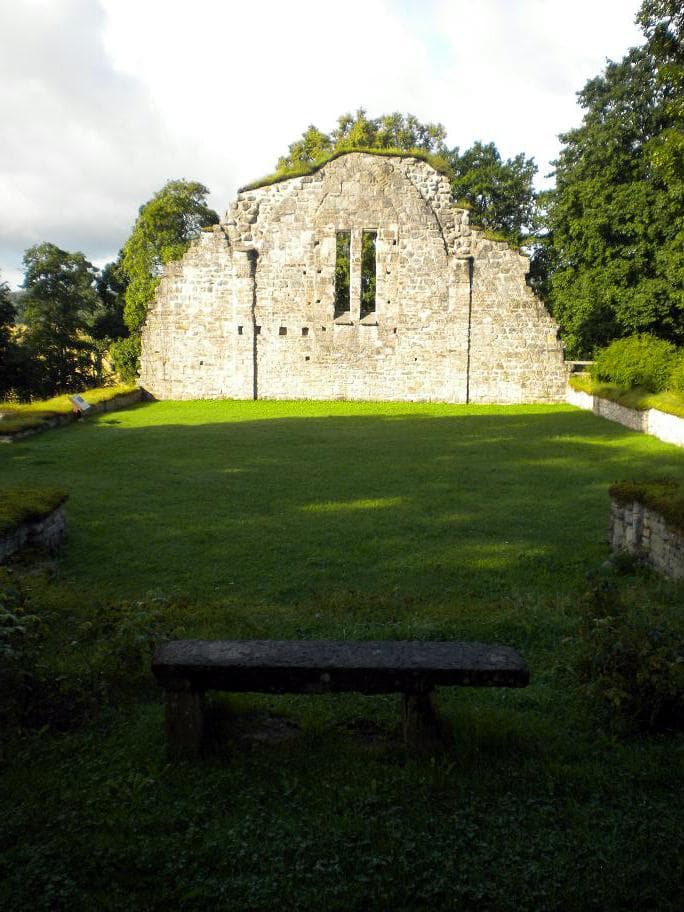
Roma Abbey is a ruined Cistercian abbey and a crown estate located on the Swedish island of Gotland. Founded in 1164, it grew to become an important religious and landholding institution before its lands were confiscated by the Danish Crown during the Reformation. The estate, now owned by the National Property Board of Sweden, includes a manor house built in 1733 and is notable for its unique manorial cultural landscape and the summer theatre performances held among the ruins.
Key Facts
- ›Founded in 1164 by Cistercian monks from Nydala Abbey.
- ›Its Latin name was Sancta Maria de Gutnalia.
- ›Lands were confiscated by the Danish Crown circa 1531 and later became a Swedish Crown estate.
- ›Includes a manor house built in 1733, partially using materials from the abbey.
- ›The manorial cultural landscape surrounding the ruins is unique on Gotland.
- ›Summer theatre performances are held annually among the ruins, attracting many visitors.

Cistercian
- Ruined Abbey Church
- Manor House
- Manorial Cultural Landscape With Avenues and Fields
- Site of Summer Theatre Performances
Roma Kloster
- Founded In 1164 By Cistercian Monks.
- Lands Confiscated By the Danish Crown Circa 1531 During the Reformation.
- Became Property of the Swedish Crown After 1645.
- Manor House Constructed In 1733.
- Military Use of the Manor House and Annexes During World War Ii Until the 1990s.
About Roma Abbey
Roma Abbey, known in Swedish as Roma kloster, is a significant historical site on the island of Gotland, Sweden, comprising the ruins of a Cistercian abbey and a crown estate. Established in 1164 by Cistercian monks from Nydala Abbey, it quickly grew in influence and acquired extensive landholdings. The abbey's Latin designation was Sancta Maria de Gutnalia. Its strategic location in the center of Gotland, an area with ancient cultural traditions and possibly the historical site of the island's thing (assembly), contributed to its importance.
History and Transformation
Following the Reformation, Roma Abbey's lands were confiscated by the Danish Crown around 1531, as Gotland was then under Danish rule. The abbey was converted into the seat of the Danish governor, and many of its non-essential structures were left to decay. After Gotland became Swedish in 1645, the estate passed to the Swedish Crown. In 1733, a manor house, known as Roma kungsgård, was constructed on the estate, partially utilizing building materials salvaged from the ruined abbey. The manorial cultural landscape surrounding the abbey ruins and the manor, characterized by avenues and expansive fields, is considered unique on Gotland. During World War II and its aftermath, the manor house and its outbuildings were utilized by the military until the 1990s, during which time the abbey ruins experienced further neglect.
Architecture and Current Use
Despite centuries of ruin and neglect, the abbey church remains a notable example of Cistercian architecture. It was designed as a basilica with a single nave, flanked by two aisles, and featured a transept with two chapels at its eastern end. The church is characterized by its precise proportions, careful use of materials, and restrained decoration, comparable to the Abbey of Fontenay in France.
Today, Roma Abbey and its associated manor are managed by the National Property Board of Sweden. The site has found a new cultural life, with summer theatre performances being staged among the abbey ruins since 1989. This tradition has become a popular attraction, drawing tens of thousands of visitors annually and ensuring the enduring significance of this historic monastic site.
Source: Wikipedia ↗
Frequently Asked Questions
When was Roma Abbey founded?
Roma Abbey was founded in 1164 by Cistercian monks. This places its establishment in the 12th century.
What is the current status of Roma Abbey?
Roma Abbey is largely a ruin, with the church being the most prominent remaining structure. The estate also includes a manor house and is owned by the National Property Board of Sweden.
What is significant about the location of Roma Abbey?
The abbey is situated in an area with old cultural traditions, possibly where the thing for all of Gotland was located. Its founding on common land may be due to the absence of a strong land-owning aristocracy on Gotland.
What architectural style is Roma Abbey representative of?
Although in ruins, the abbey church is considered a typical representative of Cistercian architecture. It was a basilica with a single nave, two aisles, and a transept with chapels.
What happens at Roma Abbey today?
During the summer, theatre plays are staged among the ruins of Roma Abbey. This tradition, initiated in 1989, attracts a significant number of visitors each year.
Related Monasteries
Riseberga Abbey
Riseberga Abbey was a Cistercian nunnery in Sweden that operated from around 1180 until 1534. It was a significant landowner and held the right to appoint vicars for the local parish. Though the convent was dissolved and its buildings later burnt down, the ruins remain, and its amphitheater is now used as a sylvan theater. The abbey is also associated with the legend of Fair Elisif.

Sko Abbey
Sko Abbey was a Cistercian nunnery in Sweden, operational from approximately 1230 until at least 1588. Founded by Knut Långe, it served as a school for daughters of the nobility and often housed nuns from noble families. Following the Swedish Reformation, its assets were confiscated, and the monastery transitioned into a girls' school and retirement home before its buildings were eventually dismantled to make way for Skokloster Castle.

Herrevad Abbey
Herrevad Abbey was established in 1144 as Denmark's first Cistercian monastery, founded from Cîteaux Abbey with significant support from Archbishop Eskil of Lund. Located near Ljungbyhed in present-day Sweden, it was once a vital religious and economic center, becoming one of the wealthiest monastic houses in Denmark before its secularization during the Protestant Reformation. Today, the site is known as Herrevad Castle and is undergoing restoration, with only remnants of the original abbey remaining.