
Locko Preceptory
Christian·England·Ruins/Site·11th century
Locko Preceptory was a unique establishment of the Military and Hospitaller Order of Saint Lazarus of Jerusalem, functioning as both a preceptory and a leper hospital. Situated north of Spondon in Derbyshire, it was the only recorded Lazarite Preceptory in England, holding significant landholdings and local court responsibilities. Despite destruction by fire and later dissolution, its site is now part of the Locko Park estate.
Key Facts
- ›It was the sole recorded Preceptory of the Order of Saint Lazarus in England.
- ›The site included a leper hospital, a function integral to the Lazarite Order.
- ›The name 'Locko' is derived from the French 'Loques', meaning 'rags' or bandages, relating to its hospital function.
- ›The preceptory and hospital were significantly damaged by the Great Spondon Fire of 1340.
- ›Following dissolution by King Henry VIII, its property was granted to John Dudley.

Leper Hospital, Moated Site, Associated Outbuildings, Fishponds, St Ann's Well
- Domus De La Maudeleyne De Lokhay In Com. Derb. Ordinis Militie Sci. Lazari Jerusalem.
William De Ferrers, 3rd Earl of Derby, King Henry Ii, King John, King Henry Iii, King Edward Iii, Hugh Michel, Thomas De Kirkeby, John Dudley
- Grant of Spondon Church In 1080
- Acquisition of Land In Spondon and Surrounding Hamlets Before the End of King Henry Iii's Reign
- Great Spondon Fire of 1340
- Forfeiture of Income To the Crown During Wars With France
- King Edward Iii's Letters Patent of 1347 Regarding Payments
- Dissolution By King Henry Viii
About Locko Preceptory
Locko Preceptory was a significant, and notably unique, establishment of the Military and Hospitaller Order of Saint Lazarus of Jerusalem. Situated in Derbyshire, just north of the village of Spondon, it held the distinction of being the only recorded Preceptory of this order in England. The site served a dual function, encompassing both a preceptory and an attached leper hospital, reflecting the Order's charitable and military mission.
History and Function
The origins of Locko Preceptory can be traced back to 1080 when William de Ferrers, 3rd Earl of Derby, granted the church of Spondon to the Leper Hospital and Brethren of St. Lazarus. Over time, the brethren acquired substantial land in Spondon and neighboring hamlets, becoming significant landowners and managing local courts. The preceptory's name itself, 'Locko', is thought to derive from the French 'Loques', signifying bandages, a direct link to its role as a hospital for lepers.
Despite its importance, the preceptory faced considerable challenges. Much of the estate was devastated by the Great Spondon Fire in 1340. During periods of conflict between England and France, Locko was deemed an "alien establishment," leading to the forfeiture of its income to the Crown. Later, following the dissolution of monasteries by King Henry VIII, the property at Locko was granted to John Dudley.
Legacy
Little is known about the specific architectural details of the original preceptory and hospital buildings, as they were destroyed by fire. Today, the site of Locko Preceptory is integrated into the Locko Park estate, which features an 18th-century country house. The historical presence of this Lazarite preceptory highlights a specific facet of medieval religious and charitable organization in England.
Source: Wikipedia ↗
Frequently Asked Questions
When was Locko Preceptory founded?
The exact construction date of Locko Preceptory is unclear, but it was built sometime between 1080 and 1266. Its origins trace back to a grant of Spondon church to the Brethren of St. Lazarus in 1080.
What was the purpose of Locko Preceptory?
Locko Preceptory served a dual purpose as a preceptory for the Military and Hospitaller Order of Saint Lazarus of Jerusalem and as a leper hospital. It also managed local courts and held significant landholdings.
What happened to Locko Preceptory?
The preceptory and much of the estate were destroyed by the Great Spondon Fire in 1340. After the Hundred Years' War, its property was likely transferred to Burton Lazars. It was dissolved by King Henry VIII and its lands were granted to John Dudley.
What is at the site of Locko Preceptory today?
The original preceptory buildings are gone. The site is now part of the Locko Park estate, which is occupied by an 18th-century country house. The preceptory itself was located to the rear of the current Hall.
Related Monasteries

Abbotsbury Abbey
Abbotsbury Abbey was a Benedictine monastery founded in the 11th century by Orc and his wife Tola, becoming a significant local power center. Despite periods of misfortune, including the Black Death and coastal raids, the abbey was dissolved in 1539. Today, remnants of the abbey and associated structures like St. Catherine's Chapel are managed by English Heritage.
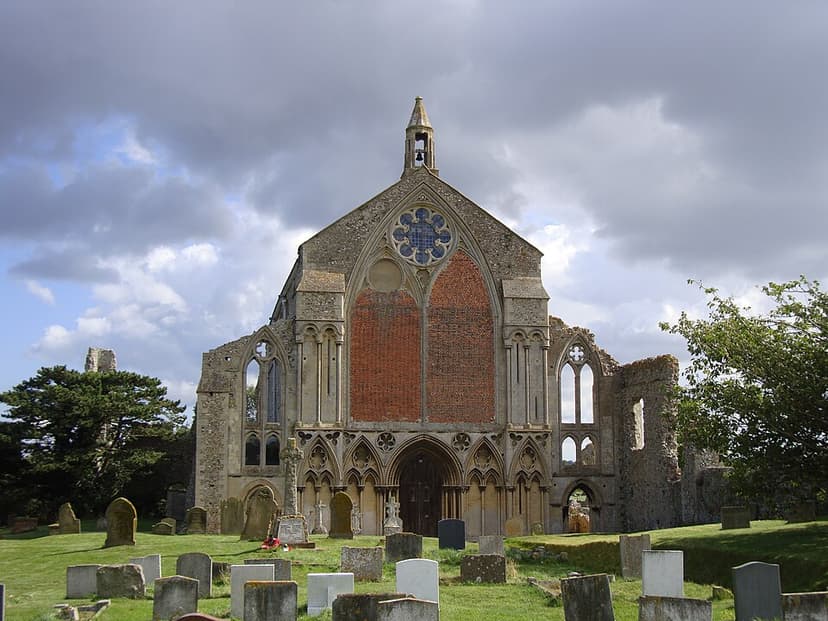
Binham Priory
Binham Priory, officially St Mary's Priory, Binham, was a ruined Benedictine priory in Norfolk, England, founded in 1091. Its history is marked by scandal and unscrupulous priors, culminating in its dissolution and partial destruction in 1539. The surviving nave of its priory church continues to serve as the parish church of St. Mary and the Holy Cross.

Chatteris Abbey
Chatteris Abbey was a Benedictine monastery for nuns founded in 1016 by Eadnoth, Bishop of Dorchester. Despite surviving an early fire and the initial wave of monastic dissolutions, it was ultimately surrendered to the King's commissioners in 1538 and demolished. While a portion of its cloister buildings was incorporated into a later mansion, the abbey site has largely vanished, with only a few wall fragments remaining.