
Liège
Liège is a major city and municipality in Wallonia, Belgium, situated in the Meuse valley and serving as the capital of its eponymous province. Historically, it evolved from a Roman settlement into a significant intellectual and ecclesiastical center under Prince-Bishop Notger, later becoming known for its unique democratic guild system. The city has experienced periods of conflict and destruction, notably during the Liège Wars and World War I, but has also been a hub of industrial development and cultural expression, boasting a rich folklore and vibrant nightlife.
Key Facts
- ›Founded on the Meuse River, where it meets the Ourthe.
- ›Became the capital of a prince-bishopric that lasted from 985 to 1794.
- ›Developed a unique democratic political system in the 14th century where 32 guilds shared control of municipal government.
- ›Was heavily fortified with a chain of twelve forts designed by Henri Alexis Brialmont in the 1880s.
- ›Home to one of the oldest and biggest Christmas Markets in Belgium.
- ›Hosts the start and finish of the LIège–Bastogne–LIège cycling race, one of the oldest monuments of cycling.
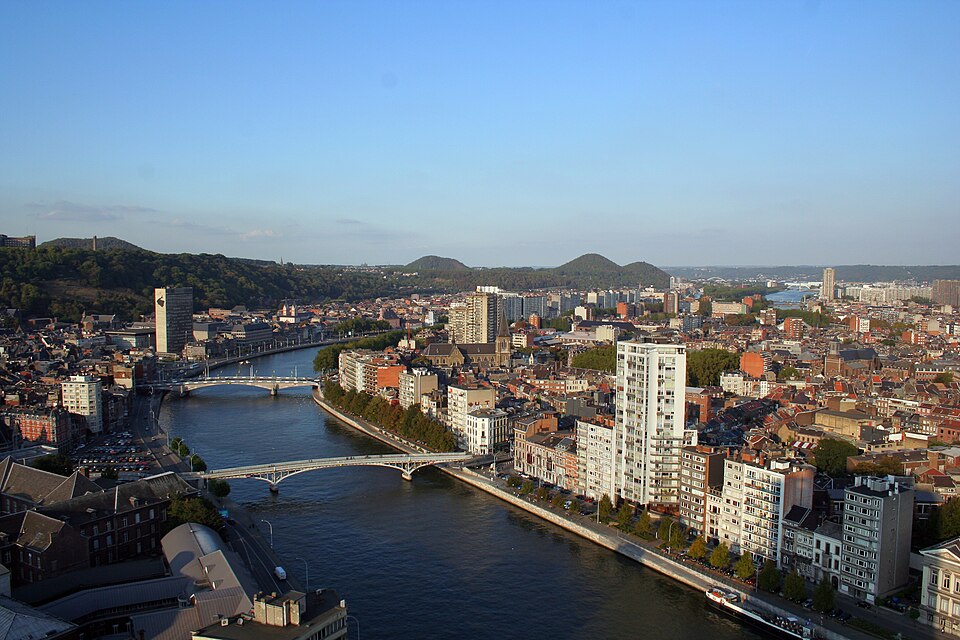
Gothic, Renaissance, Baroque, Art Deco
- Palace of the Prince-Bishops
- Perron of LièGe
- Seven Collegiate Churches
- La Boverie
- Museum of Walloon Life
- Museum of Walloon Art & Religious Art
- Grand Curtius Museum
- Trinkhall Museum
- Historical City Centre
- Hors-ChâTeau Area
- Outremeuse Area
- Parks and Boulevards Along the River Meuse
- Citadel
- Montagne De Bueren Stairway
- MéDiacité Shopping Mall
- Interallied Memorial of Cointe
- LièGe-Guillemins Railway Station
- Largest Pedestrian Zone In the Walloon Region and Meuse-Rhine Euroregion
Vicus Leudicus, Leodicum, Leodium, Ludic, Ludeke, LiéGe, Luik, LüTtich, La Cité Ardente
Saint Lambert of Maastricht, Hubertus, Notger, Pope Clement Vi, Elizabeth of Spalbeek, Christina the Astonishing, Marie of Oignies, Engelbert Iii De La Marck, Charles the Bold of Burgundy, Louis Xi of France, éRard De La Marck, Ernest of Bavaria, Ferdinand of Bavaria, Maximilian Henry of Bavaria, Johann Von Werth, Duke of Marlborough, Menno Van Coehoorn, FrançOis-Charles De VelbrüCk, GéRard Leman, Alexander Von Kluck, André Renard, Ermano Fegatilli, Jean-Marc Bosman, Nordine Amrani
- Murder of Saint Lambert of Maastricht
- Establishment of the Prince-Bishopric of LièGe
- Citizens' Rebellion Against Prince-Bishop Engelbert Iii De La Marck
- Capture and Destruction of the City By Duke Charles the Bold of Burgundy
- Thirty Years' War Siege By Imperial Forces
- Capture By Anglo-Dutch Army
- LièGe Revolution
- French Revolutionary Army Took the City and Destroyed St. Lambert's Cathedral
- Awarded To the United Kingdom of the Netherlands
- Became Part of Independent Belgium
- Walloon Jacquerie
- Battle of LièGe In World War I
- German Occupation In World War I
- German Occupation In World War Ii
- Liberation By the British Second Army
- General Strike Against Leopold Iii of Belgium
- 1960–1961 Winter General Strike
- Bomb Attack On the Courthouse
- Assassination of André Cools
- Grenade and Gun Attack At Place Saint-Lambert
- Shooting Incident On Boulevard D'Avroy
About Liège
Liège: A Historic Belgian City of Culture and Resilience
Liège is a prominent city and municipality located in the Wallonia region of Belgium, serving as the capital of the eponymous province. Situated in the scenic Meuse valley, it lies in eastern Belgium, close to the borders with the Netherlands and Germany. The city is also a key part of the "sillon industriel," the historical industrial backbone of Wallonia, and remains a vital economic and cultural hub for the region.
Early History and Spiritual Significance
While settlements existed in Roman times, the earliest recorded mention of Liège dates back to 558 as Vicus Leudicus. The region's Christianization was significantly advanced by Saint Lambert of Maastricht in the early 8th century, though his martyrdom in Liège underscored the ongoing religious transitions. His successor, Hubertus, established a basilica to house Saint Lambert's relics, which became a foundational nucleus for the city. Later, Liège rose to prominence as the capital of a prince-bishopric that endured from 985 until 1794. Under Prince-Bishop Notger, the city flourished as a major intellectual and ecclesiastical center throughout the Middle Ages, even influencing polyphony in religious music through musicians recruited to the Papal court.
Medieval Governance and Tumultuous Periods
Liège's strategic location made it a frequent target for military campaigns and insurrections. A notable development in its medieval history was the establishment of a unique political system in 1345, where the city's 32 guilds jointly governed the municipality, creating one of the most democratic systems in the Low Countries. This period also saw significant spiritual contributions from women like Elizabeth of Spalbeek, Christina the Astonishing, and Marie of Oignies. The city endured significant destruction in 1468 after a rebellion against Burgundian rule, when Duke Charles the Bold captured and largely devastated it following a prolonged siege. Despite nominal inclusion in the Holy Roman Empire, Liège often maintained a considerable degree of independence.
Modern Transformation and Resilience
The city's history is marked by further conflicts and transformations, including capture by Anglo-Dutch forces in 1702 during the War of the Spanish Succession and the Liège Revolution of 1789, which briefly led to the creation of the Republic of Liège. The French Revolutionary Army took control in 1794, imposing an anticlerical regime and demolishing Saint Lambert's Cathedral. After periods under Dutch and then Belgian rule following the Belgian Revolution of 1830, Liège rapidly industrialized, becoming a major steel-making center. Its strategic importance was highlighted again in World War I, when its formidable chain of twelve forts, designed by Henri Alexis Brialmont, delayed the German advance for twelve days, though the city was subsequently occupied. During World War II, the city was again occupied by the Germans but was later liberated by the British. In the post-war era, Liège faced industrial decline and social tensions, but has shown signs of economic recovery and remains a vibrant cultural center, known for its folk festivals, lively nightlife, and significant contributions to sports, particularly cycling.
Source: Wikipedia ↗
Frequently Asked Questions
What is the origin of the name Liège?
The name Liège is of Germanic origin, reconstructible as *liudik-, from the word *liudiz meaning 'people'. This root is found in various Germanic languages and related forms in Latin and Middle Dutch.
What is the significance of the epithet 'la cité ardente'?
'La cité ardente', meaning 'the fervent city', is an epithet associated with Liège. Originally referring to the city's history of rebellions against Burgundian rule, it was later appropriated to signify its economic dynamism during the Industrial Revolution.
When did Liège become a major intellectual and ecclesiastical center?
Liège transformed into a major intellectual and ecclesiastical center in the Middle Ages, particularly under the first prince-bishop, Notger, starting in 985. The city maintained its cultural importance throughout this period.
What unique political system did Liège develop in the medieval period?
In 1345, Liège developed a unique political system where its 32 guilds shared sole control of the municipal government. Each guild's voice was equal, making it a highly democratic system for the Low Countries at the time.
How did Liège resist the German invasion in World War I?
In 1914, Liège's chain of twelve forts, redesigned by Henri Alexis Brialmont, presented a significant obstacle to the German army. Despite being bombarded by heavy artillery, the Belgian resistance caused a twelve-day delay, contributing to the eventual failure of the German invasion of France.
What is 'Le Quinze Août' celebration?
'Le Quinze Août' is an annual celebration on August 15th in the Outremeuse quarter, honoring the Virgin Mary. It is a large folkloric event featuring a religious procession, flea market, dances, concerts, and traditional games, linked to the folkloric character Tchantchès.
What is Liège known for in terms of sports?
Liège is known for hosting the start and finish of the Liège–Bastogne–Liège cycling race. It is also notable for being the only city to have hosted stages of all three cycling Grand Tours: the Giro d'Italia, Tour de France, and Vuelta a España.
Related Monasteries

Tournai
Tournai is one of Belgium's oldest cities, situated on the river Scheldt and historically significant as the first capital of the Frankish Empire. Its cultural heritage is marked by its Romanesque and Gothic cathedral and its influential role in medieval art and textiles. The city has experienced periods of French, English, and Spanish rule, reflecting its strategic importance throughout European history.
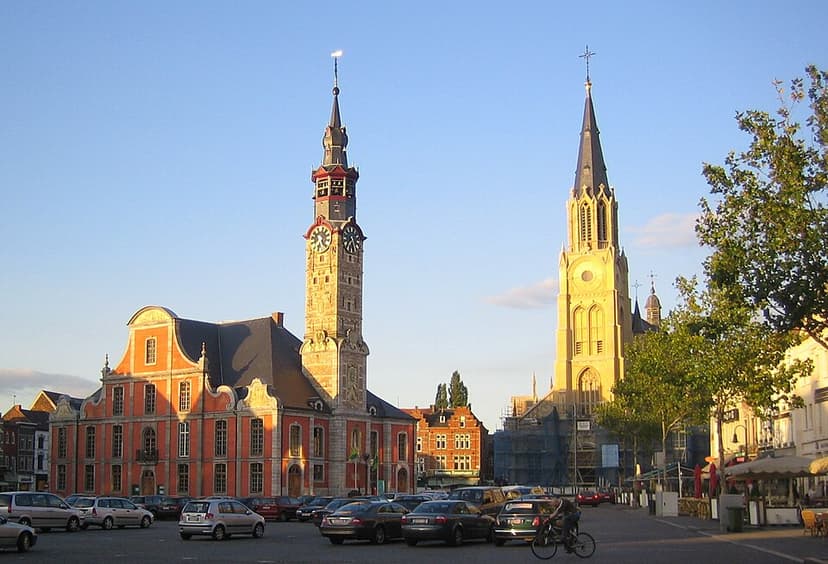
Sint-Truiden
Sint-Truiden is a Belgian city that developed around an abbey founded in the 7th century by St. Trudo. It grew into a significant pilgrimage center and prosperous town known for its linen industry and trade. After a period of decline, the city revitalized as the center of a fruit-producing region and has retained several historical and architectural landmarks.

Sint-Martens-Lierde
Sint-Martens-Lierde is a village in the Flemish Ardennes region of East Flanders, Belgium. Historically, it was the site of the Carthusian priory "Sint-Maartens-Bos," established in 1329. Although the priory was dissolved and largely demolished in the late 18th century, the village retains a connection to its monastic past.