
Le Lieu
Le Lieu is a Swiss municipality located in the canton of Vaud, within the Jura-Nord Vaudois district. First mentioned in 1155 as a place inhabited by a hermit, the area has historical roots tied to religious settlement. Today, it comprises several villages and hamlets, situated on the eastern shore of Lac de Joux, and is recognized for its significant forested and agricultural land.
Key Facts
- ›First mentioned in 1155 as "loco dompni Poncii heremite".
- ›The municipality is located in the Vallée de Joux on the eastern shore of Lac de Joux.
- ›The area is largely covered by forests (59.9%) and agricultural land (34.2%).
- ›Le Lieu consists of the villages of Le Lieu, Les Charbonnières, and Le Séchey, along with multiple hamlets.
- ›The entire village of Le Lieu and the village of Le Séchey are designated as part of the Inventory of Swiss Heritage Sites.
- ›The dominant language spoken is French, with 88.4% of the population using it.
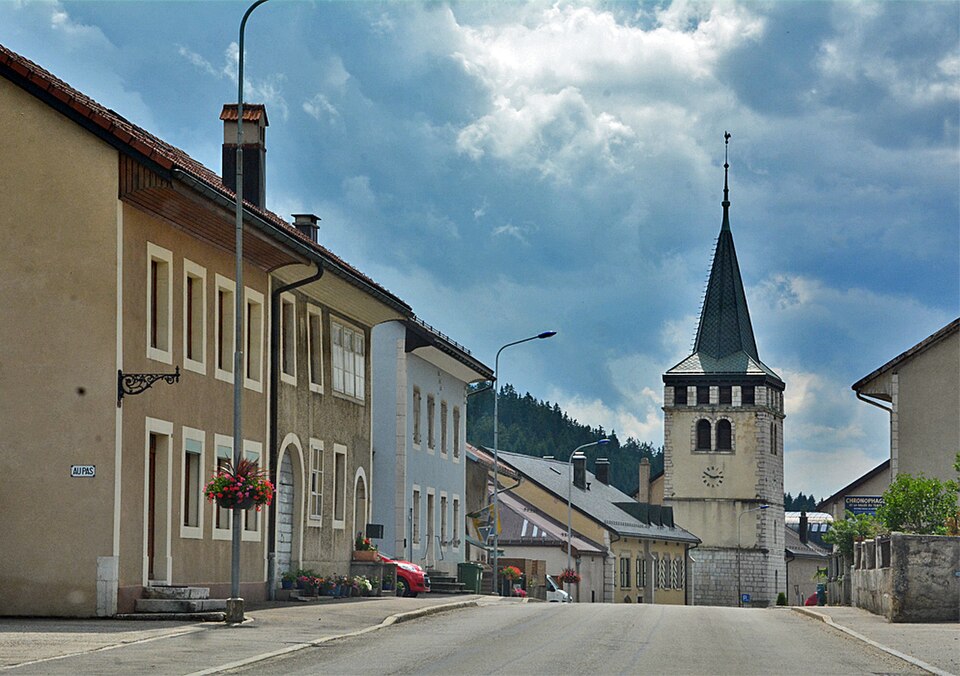
- Lac De Joux
- ValléE De Joux
- Inventory of Swiss Heritage Sites For Le Lieu and Le SéChey
Le Lieu Poncet
Poncius the Hermit
First Mentioned In 1155.
About Le Lieu
Overview
Le Lieu is a municipality nestled in the canton of Vaud, Switzerland, situated within the Jura-Nord Vaudois district and the picturesque Vallée de Joux. Its origins trace back to at least 1155, when it was first mentioned in historical records as "loco dompni Poncii heremite," indicating a place associated with a hermit named Poncius. This early reference suggests a historical connection to religious or contemplative life.
History and Geography
The municipality comprises several distinct settlements, including the main village of Le Lieu, along with Les Charbonnières and Le Séchey, and various smaller hamlets. Geographically, Le Lieu is positioned on the eastern shore of Lac de Joux. The landscape is characterized by extensive forested areas, which cover nearly 60% of its total area, and significant agricultural land, making up about 34.2% of the municipality.
Heritage and Demographics
Le Lieu holds cultural and historical significance, with the entire village of Le Lieu and the village of Le Séchey being designated as part of the Inventory of Swiss Heritage Sites. The population primarily speaks French, with over 88% of residents using it as their main language. While the municipality has a historical connection to a hermit, it is now a modern Swiss municipality with a diverse economic base, including sectors like manufacturing and hospitality.
Source: Wikipedia ↗
Frequently Asked Questions
What is the historical origin of the name Le Lieu?
Le Lieu was first documented in 1155 with the Latin name "loco dompni Poncii heremite," meaning "in the place of lord Poncius the hermit." It was later mentioned as "le Lieu Poncet" in 1408, indicating a historical connection to a hermit named Poncius.
What are the main geographical features of Le Lieu?
Le Lieu is situated on the eastern shore of Lac de Joux in the Vallée de Joux. The municipality's area is predominantly covered by forests, accounting for nearly 60% of its land, with a substantial portion also dedicated to agricultural use.
What villages make up the municipality of Le Lieu?
The municipality of Le Lieu encompasses several distinct settlements. These include the main village of Le Lieu itself, along with the villages of Les Charbonnières and Le Séchey, as well as numerous smaller hamlets.
What is the linguistic makeup of Le Lieu's population?
The primary language spoken in Le Lieu is French, used by approximately 88.4% of its residents according to 2000 census data. German and Italian are spoken by smaller percentages of the population.
Are there any historical designations for parts of Le Lieu?
Yes, the entire village of Le Lieu and the village of Le Séchey are recognized as significant heritage sites. They are designated as part of the Inventory of Swiss Heritage Sites, highlighting their cultural and historical importance.
Related Monasteries

Saxon
Saxon is a municipality in the Valais canton of Switzerland, first mentioned in 1153. It is situated in the Martigny district along the left bank of the Rhone River, with its territory extending from the Pierre-à-Voir mountain down to the river. The municipality encompasses the main village of Saxon, the village of Gottefrey, and several smaller hamlets. Its economy is diverse, with significant employment in agriculture, industry, and services.

Küsnacht
Küsnacht is a municipality situated in the district of Meilen within the Swiss canton of Zürich, located on the Goldküste of Lake Zurich. Its history stretches back to the Stone Age, with evidence of Roman settlement and a name likely derived from a Roman villa. The area was historically governed by local aristocrats and later by Zürich, transforming into a suburban center with the advent of the railway.

Kranenburg
Kranenburg is a historic municipality in Germany with roots tracing back to the 13th century, founded by the Baron of Kleve. It evolved from a medieval fortified town and pilgrimage site into a modern commuter town for the nearby Dutch city of Nijmegen. The area has a rich history marked by medieval fortifications, religious developments, and significant events like Operation Veritable during World War II.