
Kranenburg
Kranenburg is a historic municipality in Germany with roots tracing back to the 13th century, founded by the Baron of Kleve. It evolved from a medieval fortified town and pilgrimage site into a modern commuter town for the nearby Dutch city of Nijmegen. The area has a rich history marked by medieval fortifications, religious developments, and significant events like Operation Veritable during World War II.
Key Facts
- ›Founded in the 13th century by the Baron of Kleve.
- ›Became a town in 1294 and a pilgrimage site in 1308 due to the discovery of 'the Miraculous Trinity'.
- ›Experienced significant development in the first half of the 15th century, including the construction of the Gothic St. Peter und Paul church.
- ›Was a focal point of heavy fighting during World War II as part of Operation Veritable.
- ›Has become a commuter town for Nijmegen, Netherlands, since 1992, experiencing significant population growth from Dutch migrants.

Gothic
St. Peter Und Paul Church, Remnants of Medieval Fortifications, Site of the 'Miraculous Trinity' Pilgrimage
Baron of Kleve, Dietrichs Luf Von Kleve, Alexander Von Spaen
Founding of the Town and Castle, Discovery of 'the Miraculous Trinity', Construction of Town Fortifications, Kranenburger Treaty Signed, Operation Veritable
About Kranenburg
Kranenburg is a municipality in the district of Cleves, located in the German state of North Rhine-Westphalia. Situated close to the Dutch border, it lies approximately 12 kilometers southeast of Nijmegen and 11 kilometers west of Cleves. The town's history is deeply intertwined with its geographical proximity to the Netherlands, with Dutch being the local language until the late 19th century.
History and Development
The origins of Kranenburg date back to the 13th century when it was founded by the Baron of Kleve. The initial castle, built in 1270, was soon followed by the first church. By 1294, Kranenburg had grown into a town, and in 1308, the discovery of 'The Miraculous Trinity' transformed it into a significant pilgrimage destination. Medieval prosperity led to the construction of substantial stone fortifications and the large, Gothic St. Peter und Paul church in the first half of the 15th century. The town also saw the relocation of the St. Martins Priory and the establishment of the Augustinian nunnery Katharinenhof Kranenburg during this period.
Subsequent centuries brought challenges, including fires and floods that diminished its prosperity. The Duchy of Cleves, and thus Kranenburg, came under the rule of Brandenburg-Prussia in the early 17th century. By the mid-17th century, a reformed congregation was established. The town hall was destroyed by fire in 1789, and derelict town gates were demolished around 1800.
During the Napoleonic Wars, Kranenburg served as a northernmost point of the Napoleonic Empire but lost its town privileges. Following the Vienna Convention, its administrative community was formed. The 19th and 20th centuries saw Kranenburg remain primarily an agricultural community.
World War II and Modern Era
Kranenburg was heavily impacted by fighting during the winter of 1944-1945, finding itself in the midst of Operation Veritable, also known as the Battle of the Reichswald. This major Allied operation aimed to secure the west bank of the Rhine.
In the modern era, Kranenburg has evolved into a commuter town for Nijmegen. Since 1992, economic factors have led to a significant increase in Dutch residents, transforming the community's demographic landscape and raising questions about integration and cultural cohesion. The administrative community of Kranenburg was expanded after World War II and underwent a communal reformation in 1969, incorporating several surrounding villages.
Source: Wikipedia ↗
Frequently Asked Questions
When was Kranenburg first established?
Kranenburg was founded in the 13th century by the Baron of Kleve. The first castle was built in 1270, and the village achieved town status in 1294.
What is the significance of 'The Miraculous Trinity'?
In 1308, 'The Miraculous Trinity' was discovered in Kranenburg, establishing it as a place of pilgrimage. Legend states it is linked to a priest who experienced a divine revelation and was miraculously given two additional legs.
What historical events have impacted Kranenburg?
Kranenburg's history includes the construction of fortifications in the 14th century, the signing of the Kranenburger Treaty in 1457, and heavy fighting during World War II, particularly Operation Veritable in the surrounding Reichswald.
How has Kranenburg's relationship with the Netherlands evolved?
Historically, Kranenburg's local language was Dutch until the 19th century, and it has always focused on Nijmegen. Since 1992, it has become a commuter town for Nijmegen, attracting a significant influx of Dutch residents.
What was Kranenburg's status during World War II?
During the winter of 1944-1945, Kranenburg was situated in the midst of intense fighting, as part of Operation Veritable, a major Allied offensive to secure the west bank of the Rhine.
Related Monasteries
Dahlem
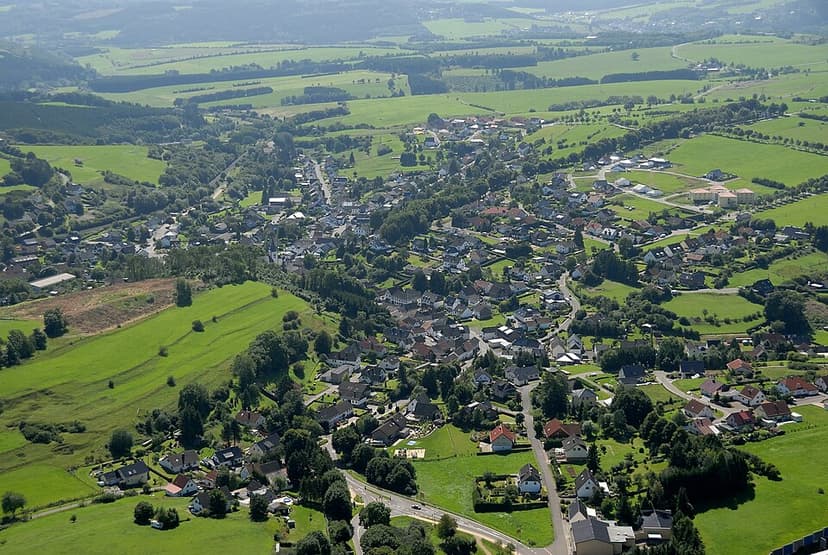
Dahlem is a municipality situated in the district of Euskirchen, within the German state of North Rhine-Westphalia. It is distinguished by having the lowest population density and the smallest population among all municipalities in the state. Located in the Eifel hills, it encompasses the small medieval town of Kronenburg and lies within the High Fens – Eifel Nature Park.

Eschweiler
Eschweiler is a German municipality located in the district of Aachen, North Rhine-Westphalia, situated on the river Inde. Historically, it has roots dating back to Celtic and Roman times, with its first mention by Einhard in 828. The town's development was significantly shaped by coal mining, industrialization, and its administrative affiliations, first with the Duchy of Jülich, then France, and finally Prussia, before becoming part of modern Germany. Eschweiler is recognized for its rich mining history, carnival traditions, and several historical castles and churches.
Gramzow
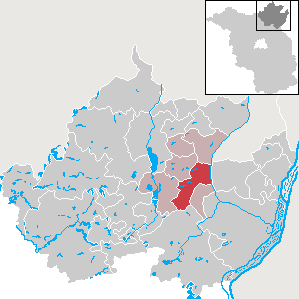
Gramzow is a municipality located in the Uckermark district of Brandenburg, Germany. While historical details are limited in available records, its significance lies in its geographical placement within the Uckermark region. The municipality's current status and defining characteristics are primarily administrative and local, with no specific monastic traditions or founding dates readily documented.