
Eschweiler
Eschweiler is a German municipality located in the district of Aachen, North Rhine-Westphalia, situated on the river Inde. Historically, it has roots dating back to Celtic and Roman times, with its first mention by Einhard in 828. The town's development was significantly shaped by coal mining, industrialization, and its administrative affiliations, first with the Duchy of Jülich, then France, and finally Prussia, before becoming part of modern Germany. Eschweiler is recognized for its rich mining history, carnival traditions, and several historical castles and churches.
Key Facts
- ›First mentioned in 828 by Einhard, biographer of Charlemagne.
- ›Coal mining was first documented in 1394 and was a significant industry until the last mine flooded in 1944.
- ›Suffered heavy destruction in World War II.
- ›Home to numerous historical castles and manors, including Castle of Eschweiler and Castle of Kinzweiler.
- ›A prominent center for Rhineland carnival, hosting one of Germany's longest carnival processions.
- ›Known for its industrial heritage, particularly in chemicals and lignite power generation.

Leather Pietà From 1360, Artificial Lake Blausteinsee, Old Townhall, Castle of Eschweiler, Castle of Kambach, Castle of Kinzweiler, Castle of Weisweiler
Eischwiele
Einhard, Franz Reuleaux, Wilhelm Lexis, August Thyssen, Joseph Thyssen, GöTz Briefs, Gerhard Fieseler, Heinrich Boere, Martin Stevens, Theo Altmeyer, Willibert Kauhsen, JóZsef áCs, Johannes BüNdgens, Martin Schulz, Karl-Heinz Smuda, Claus Killing-GüNkel, Andreas Gielchen, Ralf Souquet, Michaela Schaffrath, Markus Daun, Susanne Kasperczyk, Sascha Klein, Kevin Kratz, Anna Sorokin
- First Mentioned By Einhard
- Coal Mining First Mentioned
- Part of the Duchy of JüLich For Centuries
- Completely Destroyed Except One House and the Leather Pietà
- Given To France
- Became Capital of the Canton of Eschweiler
- Given To Prussia
- Foundation of Eschweiler Bergwerksverein
- Heavily Destroyed In World War Ii
- Last Coal Mine Flooded
- Reorganization of Administration In North Rhine-Westphalia
- Loss of Seven Quarters Due To Brown-Coal Opencast Mining
About Eschweiler
Eschweiler is a municipality in the district of Aachen, located in the German state of North Rhine-Westphalia. Situated on the river Inde, it lies near the border with the Netherlands and Belgium, approximately 15 kilometers east of Aachen. The town's history stretches back to Celtic and Roman settlements, with its first documented mention by Einhard, the biographer of Charlemagne, in 828.
History and Development
Eschweiler's historical narrative is deeply intertwined with its natural resources and strategic location. Coal mining, first recorded in 1394, became a cornerstone of its economy, leading to the establishment of the Eschweiler Bergwerksverein (EBV) in 1838, the first joint-stock company in the Kingdom of Prussia. The town has endured significant destruction, notably in 1678 and again during World War II in 1944, which also led to the flooding of its last coal mine. Its administrative history includes periods under the Duchy of Jülich, France, and Prussia, before becoming part of modern Germany. Major urban development, including the modernization of its downtown and flood prevention measures for the Inde river, occurred in the 1960s, followed by significant administrative reorganizations in the 1970s.
Sights and Culture
Eschweiler boasts a number of historical and cultural points of interest. Among its main sights are the remains of several castles and manors, including the Castle of Eschweiler and the Castle of Kinzweiler, as well as the Old Townhall. Religious sites include two pilgrim churches and the parish church of St. Peter und Paul, which houses the significant Leather Pietà from 1360. Culturally, Eschweiler is a vibrant center for Rhineland carnival, renowned for its extensive carnival clubs and one of Germany's longest carnival processions. The town also hosts the annual Eschweiler Music Festival (EMF) and is known for its regional culinary specialties.
Source: Wikipedia ↗
Frequently Asked Questions
When was Eschweiler first mentioned in historical records?
Eschweiler was first mentioned in historical records in the year 828. This mention was made by Einhard, who was a biographer of Charlemagne.
What is the historical significance of coal mining in Eschweiler?
Coal mining was a significant industry in Eschweiler, first being mentioned in 1394. The Eschweiler Bergwerksverein, the first joint-stock company in Prussia, was founded in 1838. The last coal mine was flooded and closed during World War II in 1944.
What historical events have significantly impacted Eschweiler?
Eschweiler has experienced several destructive events, including being completely destroyed in 1678, with only one house and a valuable Pietà surviving. It was heavily damaged again during World War II in 1944. The regulation of the Inde river in the 1960s was undertaken to prevent regular flooding.
What are some of the main historical sights in Eschweiler?
Key historical sights include the Old Townhall, the main parish church of St. Peter und Paul which houses the Leather Pietà from 1360, and the former Cistercian nunnery of St. Jöris. Several castles and manors are also present, such as Castle of Eschweiler and Castle of Kinzweiler.
What are Eschweiler's notable cultural traditions?
Eschweiler is a major center for Rhineland carnival, boasting over 20 active carnival clubs and holding the third-longest carnival procession in Germany. The town also hosts the Eschweiler Music Festival (EMF) annually.
Related Monasteries
Dahlem
Dahlem is a municipality situated in the district of Euskirchen, within the German state of North Rhine-Westphalia. It is distinguished by having the lowest population density and the smallest population among all municipalities in the state. Located in the Eifel hills, it encompasses the small medieval town of Kronenburg and lies within the High Fens – Eifel Nature Park.
Gramzow
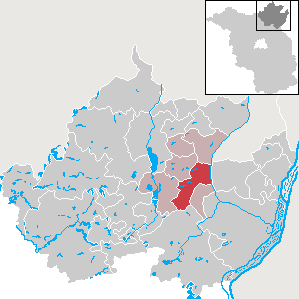
Gramzow is a municipality located in the Uckermark district of Brandenburg, Germany. While historical details are limited in available records, its significance lies in its geographical placement within the Uckermark region. The municipality's current status and defining characteristics are primarily administrative and local, with no specific monastic traditions or founding dates readily documented.

Kranenburg
Kranenburg is a historic municipality in Germany with roots tracing back to the 13th century, founded by the Baron of Kleve. It evolved from a medieval fortified town and pilgrimage site into a modern commuter town for the nearby Dutch city of Nijmegen. The area has a rich history marked by medieval fortifications, religious developments, and significant events like Operation Veritable during World War II.