
Latton Priory
Christian·England·Ruins/Farm site·13th century
Latton Priory was a small Augustinian priory located in Essex, England, founded before 1292. It featured a moated site and a church rebuilt in the 14th century, forming a quadrangle with other monastic buildings around the cloisters. The priory was abandoned in 1534 and subsequently functioned as a farm, with remnants of the church incorporated into farm buildings.
Key Facts
- ›Founded before 1292 as a community of Augustinian Canons Regular.
- ›Located on a moated site approximately 1 km south of modern Harlow, Essex.
- ›The church was rebuilt in the 14th century.
- ›The priory was abandoned in 1534, prior to the Dissolution of the Monasteries.
- ›The site has largely functioned as a farm since its abandonment.
- ›Remains of the church are a Grade II* listed building incorporated into farm structures.
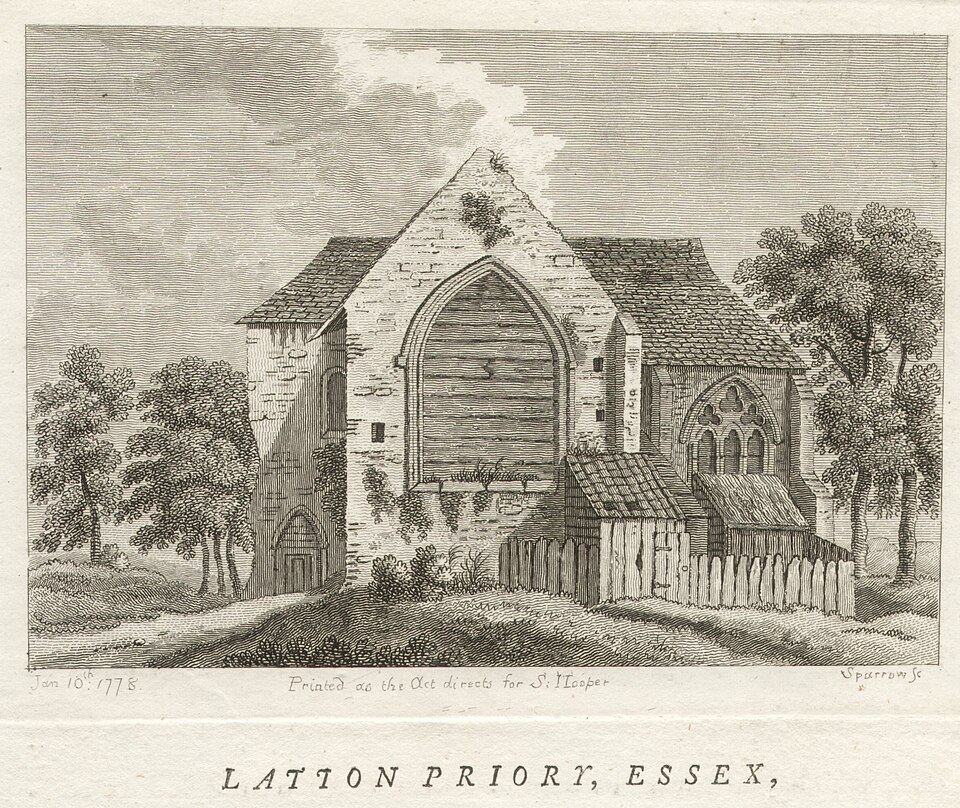
Moated Site, Remains of 14th-Century Church
Thomas Shaa
Founded Before 1292, Church Rebuilt In the 14th Century, Abandoned In 1534, Dissolution of the Monasteries, Site Incorporated Into Farm Holdings
About Latton Priory
Latton Priory was a small religious institution belonging to the Augustinian Canons Regular, situated in Essex, England. Its foundation predates 1292, established by an ancestor of Thomas Shaa on a moated site. The priory's structures included a church, which was rebuilt in the 14th century, along with a dormitory, refectory, and cellarer's range, all arranged around a central cloister.
Historical Context and Dissolution
The monastic life at Latton Priory came to an end in 1534, just before the wider Dissolution of the Monasteries under King Henry VIII. Following its abandonment, the property was granted to Sir Henry Parker in 1536 and subsequently became integrated with the Latton Hall estate by 1556. By 1562, it formed part of the Mark Hall estate, which eventually sold the land to a tenant after the Second World War. Throughout much of this period, the priory site has been utilized as a farm. The current farmhouse is believed to occupy the location of the former refectory, and the surviving remains of the priory church, now a Grade II* listed building, have been incorporated into farm structures.
Modern Significance
While Latton Priory no longer functions as an active monastic community, its historical site holds archaeological and architectural interest. In 2013, proposals were put forward for the development of housing on the former priory grounds, highlighting the ongoing presence of this historical location within a developing landscape.
Source: Wikipedia ↗
Frequently Asked Questions
When was Latton Priory founded?
Latton Priory was founded before the year 1292. The exact date of its establishment is not precisely recorded, but it was in existence by this time.
What religious order was Latton Priory part of?
Latton Priory was established as a community of Augustinian Canons Regular. This order followed the Rule of Saint Augustine.
What happened to Latton Priory after it was abandoned?
Following its abandonment in 1534, the site of Latton Priory was granted to Sir Henry Parker and later united with the Latton Hall estate. For much of its history since then, the priory site has functioned as a farm.
Are there any surviving structures from Latton Priory?
Yes, the remains of the church at Latton Priory are still present. They are designated as a Grade II* listed building and have been incorporated into existing farm buildings on the site.
Where is Latton Priory located?
Latton Priory is situated in Essex, England. Its historical site is located approximately 1 kilometer south of the outskirts of the modern town of Harlow.
Related Monasteries
Ashridge Priory
Ashridge Priory was a medieval college of Austin canons, established in 1283 by Edmund of Almain. It was known as the "Brothers of Penitence" or the "Boni Homines" and gained wealth through donations, particularly a phial of Christ's blood. After its dissolution, it served as a royal residence and later became a private estate before being demolished.

Beeston Regis Priory
Beeston Regis Priory was an Augustinian priory founded in 1216 by Lady Isabel de Cressey. Dissolved in 1538, its remains, particularly the priory church nave and transept, are a Grade I listed ruin. The priory's suppression is believed to have influenced the founding of Gresham's School, and its cloister garden is now part of Priory Farm.

Beverley Blackfriars
Beverley Blackfriars, also known as The Old Friary, originated as a Dominican priory established around 1240. Despite a devastating fire in 1449 and its dissolution in 1539, parts of the priory, particularly the guesthouse, survived. After centuries of varied private ownership and near demolition, significant preservation efforts led to its current status as a Grade II* listed building, housing a youth hostel since 1984.