
La Grande Chartreuse
La Grande Chartreuse is the head monastery of the Carthusian religious order, founded in 1084 by Saint Bruno and his followers. Located in the French Alps, it has a rich history marked by reconstructions, expulsions during the French Revolution, and a significant role in the production of the Chartreuse liqueur. While visitors are not permitted on the monastery grounds, a museum dedicated to the Carthusian order is situated nearby.
Key Facts
- ›Founded in 1084 by Saint Bruno and his followers.
- ›Head monastery of the Carthusian religious order.
- ›Central to the production of the Chartreuse liqueur, with a perfected recipe from 1605.
- ›Current building erected in 1688 after numerous casualties and reconstructions.
- ›Monks were expelled during the French Revolution and reauthorized in 1838.
- ›Visitors are not permitted on the monastery grounds.

Chartreuse Liqueur Production, Carthusian Museum Nearby
Saint Bruno, Saint Hugh, FrançOis Annibal D'EstréEs
Founding of the Carthusian Order, Receipt of Liqueur Recipe, Expansion of Distillery, Expulsion of Monks During French Revolution, Reauthorization of Monks, Closure Due To Association Law, Reopening Under Petain Regime, Used As A Hospital By Allied Forces
About La Grande Chartreuse
La Grande Chartreuse is the principal monastery of the Carthusian religious order, a contemplative order founded in 1084 by Saint Bruno and his six companions at the behest of Saint Hugh, Bishop of Grenoble. Nestled within the rugged Chartreuse Mountains, north of the city of Grenoble in France, the monastery has faced numerous challenges throughout its long history, including severe damage, reconstructions, and periods of closure.
History and Development
The original site was gifted by the See of Grenoble to Saint Bruno, establishing the foundational community. The monastery's architectural fabric has been significantly altered over centuries, with the current main building dating from 1688. A pivotal moment in its history was the acquisition of a recipe for an elixir from Marshal François Annibal d'Estrées in 1605, which the monks spent over a century perfecting into the renowned Chartreuse liqueur. The success of this liqueur led to the expansion of their distillery in 1764, though it was later moved to more remote locations due to safety concerns.
During the French Revolution in 1790, the monks were expelled from La Grande Chartreuse, and their valuable collection of manuscripts and printed documents was confiscated, now residing in Grenoble's library. The community was eventually reauthorized to return to the premises in 1838. The monastery faced another closure in 1901 following the establishment of the Association Law, which banned religious associations. While some monks found refuge abroad and continued liqueur production, the Grande Chartreuse was eventually sold in 1927 and the monks were invited back. The monastery reopened in 1940 and was utilized as a hospital by Allied Forces at the end of World War II.
Current Status and Accessibility
La Grande Chartreuse continues to function as the head monastery for the Carthusian order, housing an active monastic community. However, access to the monastery itself is restricted, and visitors are not permitted on its grounds. Motor vehicles are also prohibited on the surrounding roads. A museum dedicated to the Carthusian order, its history, and the lives of its monks and nuns, is located approximately two kilometers from the main monastery. The order's activities, including the production of Chartreuse liqueur, continue to support its operational needs and charitable endeavors, with significant proceeds from liqueur sales financing the order and its projects.
Source: Wikipedia ↗
Frequently Asked Questions
When was La Grande Chartreuse founded?
La Grande Chartreuse was founded in 1084 by Saint Bruno and his followers. This marked the beginning of the Carthusian religious order.
Where is La Grande Chartreuse located?
The monastery is situated in the Chartreuse Mountains, north of the city of Grenoble, in the commune of Saint-Pierre-de-Chartreuse in the Isère department of France.
Can visitors go to La Grande Chartreuse?
No, visitors are not permitted on the grounds of La Grande Chartreuse. A museum dedicated to the Carthusian order is located about two kilometers away.
What is the significance of La Grande Chartreuse in liqueur production?
La Grande Chartreuse is famously associated with the production of Chartreuse liqueur. The recipe, said to have been given to the monks in 1605, has been perfected over centuries and supports the order and its charity projects.
What happened to La Grande Chartreuse during the French Revolution?
During the French Revolution in 1790, the monks were expelled from the monastery. Their extensive library collection was also seized and is now preserved in Grenoble.
Is La Grande Chartreuse still an active monastery?
Yes, La Grande Chartreuse remains the head monastery of the Carthusian order and houses an active monastic community. The monks were reauthorized on the premises in 1838 after their expulsion.
Related Monasteries
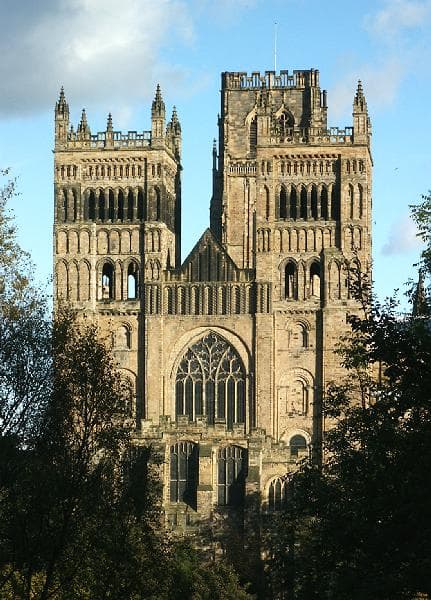
Durham Cathedral Priory
Durham Cathedral Priory, originally the Cathedral Church of Christ, Blessed Mary the Virgin and St Cuthbert of Durham, is a significant Church of England cathedral with a history rooted in Anglo-Saxon monasticism. It succeeded Lindisfarne Priory, becoming a Benedictine monastery until its dissolution in 1541, after which it transitioned to a secular chapter. The current structure is a prime example of Norman Romanesque architecture, notable for its early ribbed vaulting, and houses the shrines of Saints Cuthbert and Bede, making it a long-standing pilgrimage site.

Linköping
Linköping is a historic city in southern Sweden, renowned for its prominent cathedral, which serves as the episcopal see for the Diocese of Linköping. Historically significant as an early diocese and a site for important diets, the city has evolved into a modern hub for higher education and high-technology industries. Its development accelerated significantly after the establishment of the Saab aircraft industry and Linköping University, positioning it as a vibrant center for innovation and culture.

11th Century
The 11th century marked a pivotal period in global history, characterized by significant shifts in power, religious developments, and advancements in science and culture. In Europe, it initiated the High Middle Ages, witnessing the formal schism between the Roman Catholic and Eastern Orthodox churches, the rise of Norman influence, and the beginnings of the Crusades. Meanwhile, Song dynasty China and the classical Islamic world reached their scientific and cultural peaks, and various empires and kingdoms across Asia, Africa, and the Americas experienced periods of flourishing and conflict.