
11th Century
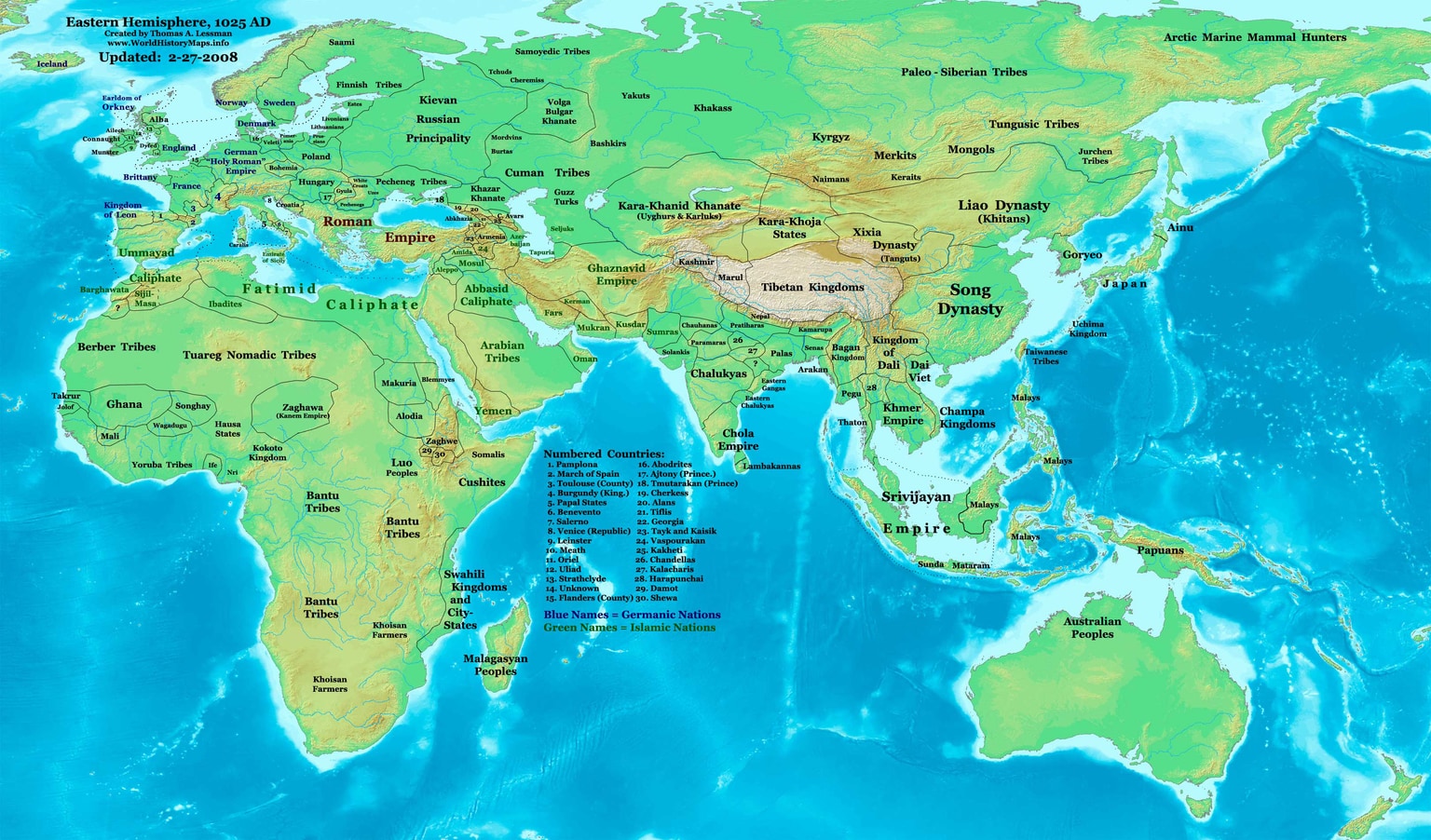
The 11th century marked a pivotal period in global history, characterized by significant shifts in power, religious developments, and advancements in science and culture. In Europe, it initiated the High Middle Ages, witnessing the formal schism between the Roman Catholic and Eastern Orthodox churches, the rise of Norman influence, and the beginnings of the Crusades. Meanwhile, Song dynasty China and the classical Islamic world reached their scientific and cultural peaks, and various empires and kingdoms across Asia, Africa, and the Americas experienced periods of flourishing and conflict.
Key Facts
- ›The 11th century is considered the early part of the High Middle Ages in Europe.
- ›The Great Schism of 1054 formalized the split between the Roman Catholic and Eastern Orthodox churches.
- ›Song dynasty China and the Islamic world experienced a high point in classical science and technology.
- ›The Turkic Seljuk dynasty rose to power in Western Asia.
- ›The first Crusades were waged towards the close of the century.
- ›Significant empires and dynasties such as the Fatimids, Ghaznavids, Cholas, and Western Chalukyas reached their zenith.
Chinese Pagoda
Development of Scholasticism, Gregorian Reforms, Peace and Truce of God Movements
Emperor Shenzong of Song, Wang Anshi, Sima Guang, Su Song, Shen Kuo, Pope Gregory Vii, Alp Arslan, Rajaraja Chola I, Rajendra Chola I, William the Conqueror, Harold Godwinson
Great Schism of 1054, Norman Conquest of England, First Crusades, Battle of Manzikert, Investiture Controversy
About 11th Century
Overview
The 11th century represents a dynamic and transformative era in global history, often regarded as the dawn of the High Middle Ages in Europe. This period was marked by profound religious, political, and cultural shifts that would shape the course of subsequent centuries.
In Europe, the century witnessed the formalization of the Great Schism in 1054, a pivotal event that solidified the division between the Roman Catholic Church in the West and the Eastern Orthodox Church in the East, a separation that persists to this day. The papacy and the Church underwent significant reforms, including the Gregorian Reforms, and movements like the Peace and Truce of God emerged, seeking to mitigate endemic violence. Politically, the century saw the ascendancy of the Holy Roman Emperors in Germany, the transformative Norman conquest of England in 1066, and the rise of powerful magnates in France. Towards its close, the seeds of the Crusades were sown, indicating a new engagement with the wider world.
Beyond Europe, the 11th century was a period of remarkable achievement and significant geopolitical change. Song dynasty China experienced a peak in its classical civilization, marked by advancements in science, technology, and arts, although internal political factionalism created court strife. The Islamic world, particularly under the classical Islamic scientific tradition, also reached a high point in science, philosophy, and literature. The Turkic Seljuk dynasty rose to prominence in Western Asia, altering the regional power balance. In India, the Chola dynasty achieved its zenith in naval power, extending its influence across Southeast Asia. Across the Americas, civilizations such as the Toltec and Mixtec flourished.
The century was also characterized by significant military and territorial shifts. The Norman conquest of Southern Italy, the Seljuk expansion, and the Ghaznavid invasions of India reshaped political boundaries. The decline of some powers, like the Fatimid Caliphate and the Byzantine Empire, occurred alongside the rise of others, demonstrating a constant flux in the global order. The era also saw the development of early forms of organized capitalism in Northern Italian cities and the emergence of intellectual movements like Scholasticism in Europe.
Source: Wikipedia ↗
Frequently Asked Questions
What were the major religious developments of the 11th century?
The most significant religious event was the Great Schism of 1054, which formally divided the Western (Roman Catholic) and Eastern Orthodox churches. This schism, which had been developing over centuries, continues to this day. The century also saw the emergence of the Peace and Truce of God movements and the Gregorian Reforms in Europe, aimed at revitalizing the church and papacy.
What was the political landscape like in Europe during the 11th century?
Europe experienced a rise in Norman domination across much of the continent. In Germany, the Holy Roman Emperors reached a high point under the Salians. Britain underwent significant transformation with the unification of Scotland and the Norman conquest of England in 1066. France saw the monarchy at a low point while powerful magnates, particularly in Aquitaine and Normandy, flourished.
Which regions experienced scientific and cultural advancements in the 11th century?
The 11th century was a golden age for classical Chinese civilization, science, and technology under the Song dynasty, with notable figures like Su Song and Shen Kuo, and the maturation of Chinese pagoda architecture. The classical Islamic world also reached a zenith in science, philosophy, technology, and literature. In Japan, the Fujiwara clan dominated politics, and the Goryeo Kingdom in Korea flourished and defended against external threats.
What were some key military and territorial shifts of the 11th century?
The Turkic Seljuk dynasty rose to power in Western Asia, fragmenting the Abbasid realm. The first Crusades were launched towards the end of the century. In India, the Chola dynasty achieved its peak naval power, while the Ghaznavids invaded northwest India. The Western Chalukya Empire also rose to prominence. In Southeast Asia, the Pagan Kingdom and Khmer Empire were powerful, and in Africa, the Fatimid Empire reached its zenith before declining.
Were there any notable collapses or declines of empires in the 11th century?
Yes, the Fatimid Caliphate in Egypt, after reaching its zenith, began to face steep decline. Similarly, the Byzantine Empire experienced a decline in power in the first half of the century, culminating in a significant defeat at the Battle of Manzikert in 1071. In South America, the Tiwanaku Empire collapsed in the first half of the century.
Related Monasteries
15th Century
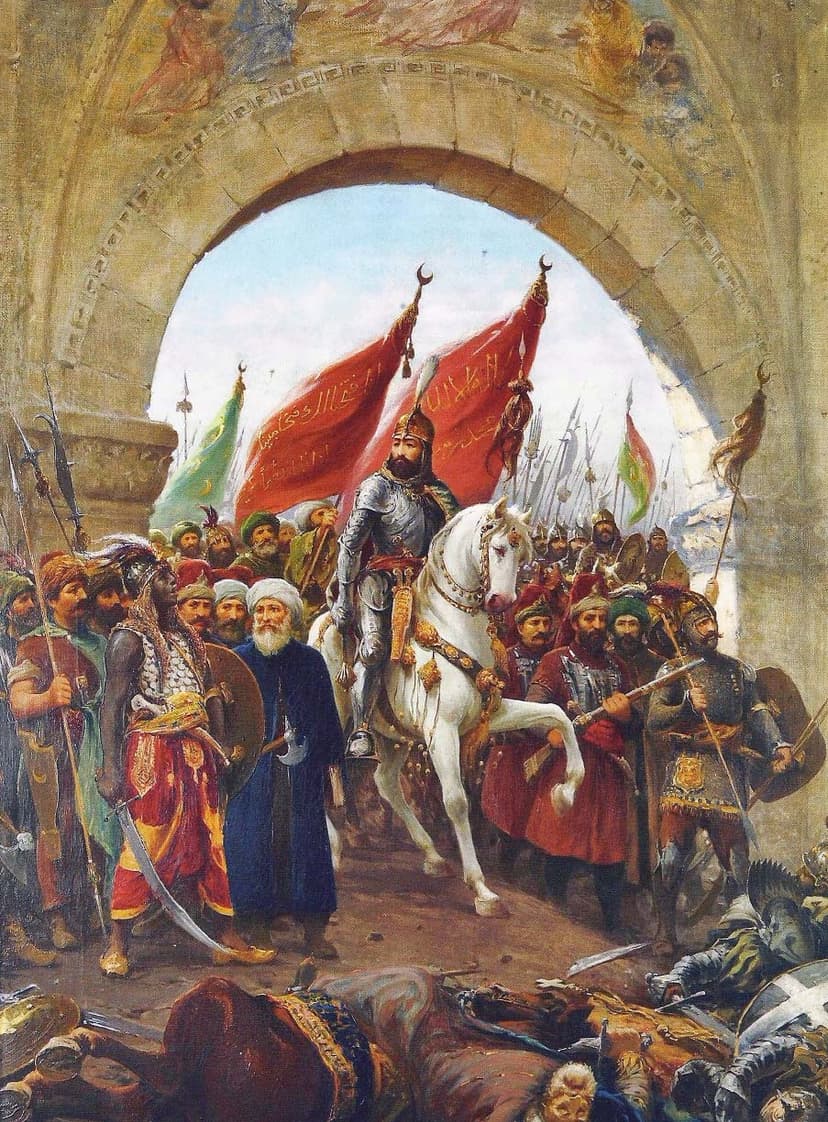
The 15th century was a period of immense transformation in Europe and across the globe, marking the transition from the Late Middle Ages to the Early Renaissance and early modern period. Key developments included advancements in banking, accounting, and the perfection of linear perspective in art. This era witnessed the end of major conflicts like the Hundred Years' War and the Byzantine Empire, alongside significant technological innovations such as the printing press, which profoundly impacted the spread of knowledge and culture.
12th Century
The 12th century, spanning from 1101 to 1200, is recognized as a pivotal period within the High Middle Ages in European history. This era is particularly significant for the flourishing "Golden Age" of the Cistercians, a prominent monastic order. Concurrently, the Islamic world experienced substantial intellectual and cultural advancements, especially in Islamic Spain, while various empires and dynasties across Asia and Africa underwent periods of growth, conflict, and transformation.

La Grande Chartreuse
La Grande Chartreuse is the head monastery of the Carthusian religious order, founded in 1084 by Saint Bruno and his followers. Located in the French Alps, it has a rich history marked by reconstructions, expulsions during the French Revolution, and a significant role in the production of the Chartreuse liqueur. While visitors are not permitted on the monastery grounds, a museum dedicated to the Carthusian order is situated nearby.