
Koenigsbruck Abbey
Koenigsbruck Abbey was a significant Cistercian nunnery located in the Forest of Haguenau, Alsace, France. Founded around 1140 by Duke Frederick II of Swabia, it became one of the wealthiest religious houses in Alsace. Despite suffering damage and periods of abandonment during conflicts like the German Peasants' War and the Thirty Years' War, the abbey was reconstructed in the 18th century before its dissolution during the French Revolution in 1793.
Key Facts
- ›Founded in or around 1140 by Duke Frederick II of Swabia for Cistercian nuns.
- ›Was one of the wealthiest religious houses in Alsace.
- ›Suffered plundering during the German Peasants' War (1525) and the Thirty Years' War (1621).
- ›Nuns relocated to Haguenau between 1621 and 1673 due to wartime instability.
- ›Reconstructed in the 18th century, with the abbey church built by Peter Thumb.
- ›Dissolved during the French Revolution in 1793.
HôTel De Koenigsbruck, Remains of Altars In Roeschwoog Church
KöNigsbrüCk Abbey, Abbaye De Koenigsbruck
Frederick Ii, Duke of Swabia
German Peasants' War, Thirty Years' War, French Revolution
About Koenigsbruck Abbey
Koenigsbruck Abbey: A Cistercian Nunnery in Alsace
Koenigsbruck Abbey, also known as Königsbrück Abbey, was a prominent Cistercian nunnery situated in the Forest of Haguenau, near Leutenheim in Alsace, France. Its establishment is attributed to Duke Frederick II of Swabia, who founded it in or around 1140, with some accounts suggesting 1152 as a possible founding year. Under the Cistercian order, the abbey flourished and became one of the wealthiest religious institutions in the Alsace region, even holding privileges such as customs immunity for a ship on the Rhine.
History and Challenges
The history of Koenigsbruck Abbey was marked by periods of both prosperity and significant hardship. The abbey faced destruction and plunder during major conflicts, notably the German Peasants' War in 1525 and the Thirty Years' War in 1621. The latter conflict forced the nuns to abandon the abbey and relocate to Haguenau, where they remained from 1621 until 1673. Following these disturbances, the abbey underwent reconstruction in the 18th century. A notable contribution to this rebuilding was the construction of the abbey church by Peter Thumb. However, the abbey's existence came to an end with its dissolution during the French Revolution in 1793, after which the nuns sought refuge at Lichtenthal Abbey.
Architectural Legacy and Present State
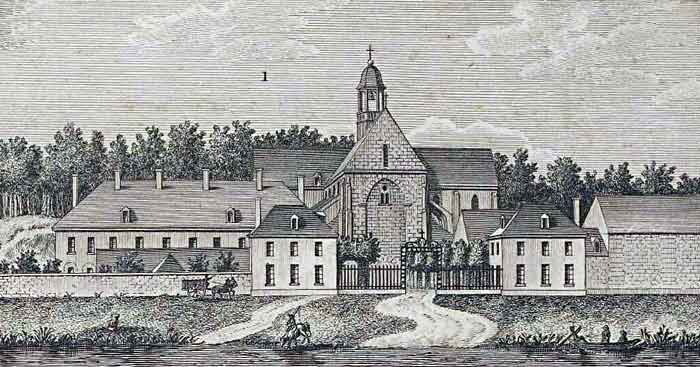
Today, Koenigsbruck Abbey exists primarily as ruins, with few visible remains of its original structures. Apart from a mill, only a few foundation walls near the inn Au Vieux Couvent are discernible. Some altars that were once part of the abbey church have been relocated and are now housed in the church of Roeschwoog. The abbey's former town house in Haguenau, the Hôtel de Koenigsbruck, built in 1748 and recognized for its intricate wrought iron work, still stands and was designated a monument historique in 1930, serving as a tangible link to the abbey's past.
Source: Wikipedia ↗
Frequently Asked Questions
When was Koenigsbruck Abbey founded?
Koenigsbruck Abbey was founded in or around 1140. Some sources suggest a possible founding date of 1152.
What religious order was Koenigsbruck Abbey part of?
Koenigsbruck Abbey was a Cistercian nunnery, belonging to the Cistercian order.
What happened to Koenigsbruck Abbey during the French Revolution?
The abbey was dissolved during the French Revolution in 1793. The nuns subsequently moved to Lichtenthal Abbey near Baden-Baden.
Are there any visible remains of Koenigsbruck Abbey?
Apart from a mill, there are no extensive visible remains of the abbey buildings. A few foundation walls near the inn Au Vieux Couvent are present, and some former altars are now in the church of Roeschwoog.
Is the former town house of Koenigsbruck Abbey still standing?
Yes, the abbey's former town house in Haguenau, known as the Hôtel de Koenigsbruck, remains. Built in 1748, it is notable for its wrought iron work and was listed as a monument historique in 1930.
Related Monasteries

Abbaye Blanche
The Abbaye Blanche was a Benedictine nunnery founded in 1112 in Mortain, France, by Saint Vitalis. It was established for women with his sister, Adelina, as its first abbess. The community followed a strict interpretation of the Rule of Saint Benedict and later joined the Cistercian order in 1147. Though much has been lost to time, remnants of its Romanesque and Early Gothic architecture endure.
Barbeau Abbey
Barbeau Abbey was a Cistercian monastery founded in 1147 by King Louis VII of France. Located in Fontaine-le-Port, Seine-et-Marne, it was a site of royal burial and experienced periods of prosperity and destruction throughout its history, including the Hundred Years' War and the French Revolution. Today, few original structures remain, with a riding school occupying the former site.

Bellevaux Abbey
Bellevaux Abbey was a Cistercian monastery established in 1120 in Franche-Comté, France, by Pons de Morimond. It was a significant religious house, connected to local nobility and notable figures like Burchard of Bellevaux and Peter of Tarentaise. Though suppressed in 1790 and largely demolished shortly after, its history includes periods of destruction and rebuilding, with the final structures erected by Abbot Louis Albert de Lezay-Marnésia. The site later housed a Trappist community before being sold to private owners.