
Kilcooly Abbey
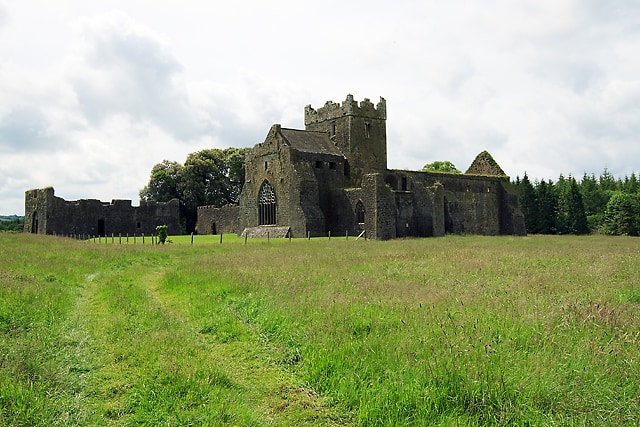
Kilcooly Abbey is a historic Cistercian monastery located in County Tipperary, Ireland, founded in 1182 by Donal Mor O’Brien. Dedicated to the Virgin Mary and St. Benedict, it is known for its Cistercian architecture, sharing similarities with Jerpoint Abbey and Holy Cross Abbey. The abbey, which passed through various hands after the Reformation, is now open to the public and offers a glimpse into monastic life with its preserved structures and intricate carvings.
Key Facts
- ›Founded in 1182 by Donal Mor O’Brien of Thomond.
- ›Dedicated to the Virgin Mary and St. Benedict.
- ›Features Cistercian architecture similar to Jerpoint Abbey and Holy Cross Abbey.
- ›Contains notable structures such as a carved baptismal font, stone tombs, and a sacristy with intricate carvings.
- ›The nave of the church is still roofed, while other parts are open to the elements.
- ›Was used as a filming location for the movie 'Excalibur'.
Cistercian
Carved Baptismal Font, Stone Tombs, Sacristy With Intricate Carvings, Beehive-Shaped Ruin, Infirmary, Pyramid Structure On Grounds
Donal Mor O’Brien, Piers Fitz Oge Butler, Rory O Tunney, Sir Jerome Alexander, Elizabeth Alexander, John Boorman
- Founded In 1182
- Passed Into Possession of the Earl of Ormond After the Reformation
- Granted To Sir Jerome Alexander In the 1630s
- Used As A Filming Location For 'Excalibur'
About Kilcooly Abbey
Kilcooly Abbey is a significant Cistercian monastic site situated near Gortnahoe in County Tipperary, Ireland. Its origins date back to 1182 when Donal Mor O’Brien, the King of Thomond, granted lands for its establishment. The abbey was constructed around the year 1200 and is dedicated to the Virgin Mary and St. Benedict. Its architectural style is characteristic of the Cistercian order, bearing resemblances to other prominent Irish abbeys like Jerpoint Abbey and Holy Cross Abbey.
Historical Context and Structures
Following the Reformation and the dissolution of monasteries, Kilcooly Abbey came under the ownership of the Earl of Ormond before being granted to the English judge Sir Jerome Alexander in the 1630s. The main surviving structures of the abbey include an entrance chamber with a carved baptismal font, the church (partially roofed with carved windows), and a sacristy. The sacristy features a carved archway with detailed reliefs, including a crucifixion scene and a mermaid, with some scholars suggesting it may mark the entrance to a private Butler chapel.
The chancel contains stone tombs, notably that of Piers Fitz Oge Butler, which records his death in 1526 and features carvings of apostles by Rory O Tunney. Although the cloisters are largely gone, their layout remains visible. Other preserved elements include the parlour, chapter house, calefactory, and the refectory, though most of these lack roofs and access is restricted.
Notable Features and Legacy
Outside the main abbey complex, a unique beehive-shaped ruin exists, likely serving as a dove-cote. The infirmary also remains in relatively good condition. Kilcooly Abbey has also gained recognition for its role in popular culture, having been used as a filming location for John Boorman's 1981 film 'Excalibur'. The abbey is currently open to the public, offering a valuable insight into medieval monastic architecture and history.
Source: Wikipedia ↗
Frequently Asked Questions
When was Kilcooly Abbey founded?
Kilcooly Abbey was founded in 1182 when Donal Mor O’Brien, the King of Thomond, granted lands to the Cistercians for the construction of an abbey.
What is the architectural style of Kilcooly Abbey?
The abbey exhibits Cistercian architecture, sharing stylistic similarities with other notable Irish abbeys such as Jerpoint Abbey and Holy Cross Abbey. The structures feature carved elements and tomb effigies.
Is Kilcooly Abbey open to the public?
Yes, Kilcooly Abbey is open to the public, allowing visitors to explore its grounds and remaining structures.
What notable features can be seen at Kilcooly Abbey?
Visitors can see a carved baptismal font, stone tombs (including one belonging to Piers Fitz Oge Butler, carved by Rory O Tunney), a sacristy with detailed carvings depicting scenes like the crucifixion and a mermaid, and a beehive-shaped ruin outside the main abbey.
Has Kilcooly Abbey been used in films?
Yes, Kilcooly Abbey was used as a filming location for John Boorman's 1981 film 'Excalibur', which is based on the legend of King Arthur.
Related Monasteries

Dunbrody Abbey
Dunbrody Abbey is a former Cistercian monastery located in County Wexford, Ireland, founded in 1182. Its cross-shaped church, built in the 13th century and featuring a 15th-century tower, was one of the longest in Ireland. Though dissolved under Henry VIII in 1536, the abbey's ruins remain a significant historical site, now featuring a visitor center with one of Ireland's two full-sized hedge mazes.

Jerpoint Abbey
Jerpoint Abbey is a ruined Cistercian monastery located in County Kilkenny, Ireland, founded in the latter half of the 12th century. It was dedicated to the Blessed Virgin and became known for its intricate stone carvings, including tomb effigies. The abbey flourished for centuries until its dissolution by King Henry VIII, after which it became a significant burial site for local noble families. Today, it is a national monument maintained by the Office of Public Works, featuring extensive ruins and a visitor center.

Monasteranenagh
Monasteranenagh Abbey is a medieval friary and national monument in County Limerick, Ireland, founded in 1148 by Toirdelbhach mac Diarmaida Ua Briain for Cistercians from Mellifont. The name signifies "Monastery of the Fair." Despite its dissolution in 1540, the site endured significant destruction during the Second Desmond Rebellion in 1580 when English soldiers massacred the monastic community. Today, its ruins primarily consist of the church and an early Gothic chapter house.