
Kidwelly Priory
Benedictine·Wales·Ruins/Remnant (St. Mary's Church)·12th century
Kidwelly Priory was a Benedictine monastic house established in Kidwelly, Carmarthenshire, Wales, around 1110 by Roger, Bishop of Salisbury. It served as a religious institution following the Norman Conquest of Wales, with its lands granted by Bishop Roger to Sherborne Abbey. The priory was dissolved in 1539 during the reign of Henry VIII, and today only the parish church of St Mary's remains as a remnant.
Key Facts
- ›Founded in approximately 1110 by Roger, Bishop of Salisbury.
- ›Was a Benedictine monastic house.
- ›Located in Carmarthenshire, Wales, on the south side of the Gwendraeth Fach River.
- ›Its lands were granted to Sherborne Abbey in Dorset.
- ›Dissolved by Henry VIII in 1539.
- ›The only extant remnant is the parish church of St Mary's, dating to the 14th century.
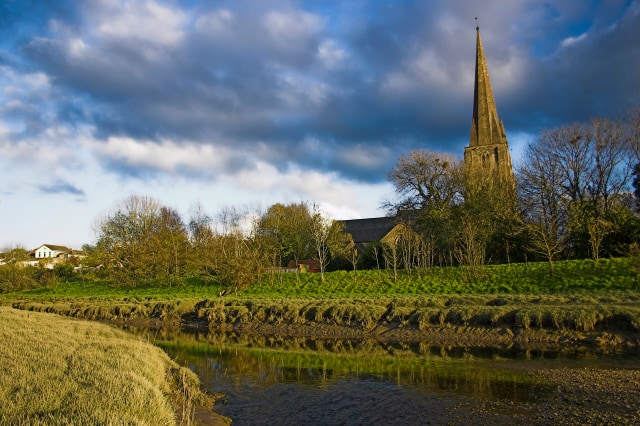
St. Mary's Church
Roger, Bishop of Salisbury, King Henry I, Matilda of Scotland, William De Londres, Maurice De Londres, Thomas De Londres, King Henry Iv, Blanche of Lancaster, King Henry Viii
Norman Conquest of Wales, Dissolution of the Monasteries
About Kidwelly Priory
Kidwelly Priory was a Benedictine monastic house situated in Kidwelly (Cydweli), Carmarthenshire, Wales. Its establishment in approximately 1110 was initiated by Roger, the Bishop of Salisbury, who was a close confidant of King Henry I of England. The priory's foundation followed the Norman Conquest of Wales, and its lands were formally granted to Sherborne Abbey in Dorset by Bishop Roger for the establishment of this religious community.
Site and Holdings
Physically, the priory was located on the south side of the Gwendraeth Fach River, with the contemporary Kidwelly Castle and town situated on the opposite bank. Historical evidence suggests that areas once known as "the priory fields" now constitute the gardens in Lady Street, Kidwelly. The size of the monastic community was always modest, indicated by the limited number of residents recorded.
Historical Context
The history of Kidwelly Priory is intertwined with the Norman expansion into Wales. Bishop Roger, a significant figure in King Henry I's administration, was granted the commotes of Cydweli and Carnwyllion, which he used to create the marcher lordship of Kidwelly. The land for the priory was granted to Sherborne Abbey around 1110, with boundaries described from a mill to a river and extending to the sea, including a hill named Solomon. This donation was made for the spiritual benefit of King Henry I, his queen Matilda, their sons, and Roger's own family and himself.
Following King Henry I's death and the subsequent civil war known as the Anarchy, Bishop Roger fell out of favor with King Stephen. This led to the confiscation of his lands, including Kidwelly, which then passed to Maurice de Londres. The priory continued its existence through various changes in lordship until its dissolution.
Dissolution and Legacy
Kidwelly Priory was dissolved in 1539 by order of King Henry VIII as part of the wider Dissolution of the Monasteries. Today, the parish church of St Mary's, Kidwelly, which dates to circa 1320, is recognized as the sole surviving remnant of the priory's historical presence. While the church itself is a later construction, it stands as a physical link to the priory's past.
Source: Wikipedia ↗
Frequently Asked Questions
When was Kidwelly Priory founded?
Kidwelly Priory was founded in about 1110. The founding was undertaken by Roger, who was the bishop of Salisbury at the time.
Who founded Kidwelly Priory?
The priory was founded by Roger, bishop of Salisbury. He was a trusted supporter of King Henry I of England.
What religious order was Kidwelly Priory affiliated with?
Kidwelly Priory was a Benedictine house. It was established following the Norman Conquest of Wales.
What remains of Kidwelly Priory today?
The only remaining structure identified as an extant remnant of Kidwelly Priory is the parish church of St Mary's. However, this church dates to around 1320, significantly later than the priory's founding.
When was Kidwelly Priory dissolved?
Kidwelly Priory was dissolved in 1539. This dissolution occurred during the reign of King Henry VIII.
Related Monasteries
Goldcliff Priory
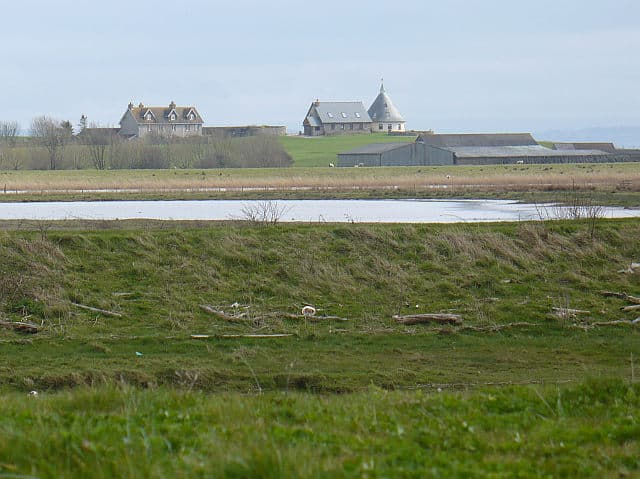
Goldcliff Priory was a Benedictine monastery founded in 1113 by Robert de Chandos near Newport, South Wales. Originally a subsidiary of the Abbey of Bec in Normandy, it was later made a cell of Tewkesbury Abbey. Despite its significant monastic population by the 13th century, the priory eventually passed into the ownership of Eton College following the Dissolution of the Monasteries, and today only remnants of its structure remain.

Aberconwy Abbey
Aberconwy Abbey was a significant Cistercian monastery, initially founded near Caernarfon in 1186 before moving to Conwy. It rose to prominence as the most important abbey in North Wales during the 13th century, largely due to the patronage of Llywelyn the Great, who was buried there. The abbey was later forcibly relocated by King Edward I to Maenan to make way for Conwy Castle and was eventually suppressed in 1537.

Basingwerk Abbey
Basingwerk Abbey, located near Holywell in Flintshire, Wales, was a ruined Cistercian monastery founded in 1132. It played a strategic role in medieval Welsh history and maintained extensive lands, notably in Derbyshire. Following its dissolution in 1536, the abbey's assets were dispersed, and its buildings fell into ruin, though parts were later repurposed. Today, the site is managed by Cadw and is a Grade I listed ruin within Greenfield Valley Heritage Park.