
Kamenny Monastery
Spas-Kamenny Monastery, the first stone monastery of the Russian North, was established on a small island in Kubensky Lake. Founded in 1269, it became a significant spiritual center, known for adopting the coenobitic rule of Mount Athos and for its historical struggle against paganism. Despite periods of decline and destruction, including fires and Soviet closure, the monastery has seen a recent revival with plans for restoration.
Key Facts
- ›First stone monastery of the Russian North.
- ›Located on a small island in Kubensky Lake.
- ›Founded in 1269 after Prince Gleb of Beloozero was shipwrecked.
- ›Adopted the coenobitic rule of Mount Athos under Abbot Dionisius.
- ›Suffered destruction by fire multiple times, including in 1476 and 1857.
- ›Closed by the Soviet government in 1925 and reopened in 2017.

Russian Orthodox
First Stone Monastery of the Russian North, Island Location In Kubensky Lake, Stone Ramparts For Erosion Control, Church-Belltower From the 1540s
Spas-Kamenny Monastery
Prince Gleb of Beloozero, Dionisius, Paisiy Yaroslavov, Andrey Menshoy, Ivan Neronov
- Prince Gleb of Beloozero Shipwrecked and Reportedly Funded First Cathedral
- Adoption of Coenobitic Rule of Mount Athos
- Monastery Burnt Down
- Stone Cathedral Built
- Works By Artist Dionisius May Have Perished In A Fire
- Monastery Declined and Became A Place of Exile
- Exile Set Monastery On Fire
- Monks Transferred To Vologda For 26 Years
- Monks Returned To Island and Cathedral Restored With Five Domes
- Closed By Soviet Government
- Reopened By Holy Synod
About Kamenny Monastery
Spas-Kamenny Monastery
Spas-Kamenny Monastery, also known as Kamenny Monastery, holds the distinction of being the first stone monastery constructed in the Russian North. It was situated on a diminutive island, aptly named Kamenny Island, in the heart of Kubensky Lake, Vologda Oblast. The island's small size, measuring just 120 by 70 meters, necessitated the monks' construction of stone ramparts around its perimeter to combat erosion from the lake's notoriously inclement weather.
History and Development
Historical accounts suggest the monastery's origins date back to 1269, when Prince Gleb of Beloozero was purportedly cast ashore during a storm and encountered a small monastic community. He is credited with providing funds for the construction of the first timber cathedral on the isle. Under the abbacy of Dionisius, a Greek monk, the monastery adopted the strict coenobitic rule of Mount Athos, emphasizing communal living, shared meals, and the renunciation of private property. Female animals were also banned from the island to maintain purity.
The monastery reached a significant zenith under Paisiy Yaroslavov, a prominent cleric and former hegumen of the Trinity Lavra. Yaroslavov authored "The Tale of the Kamenny Monastery," detailing its history and the monks' efforts to combat local paganism. A major setback occurred in 1476 when the monastery was consumed by fire. Subsequently, Andrey Menshoy, brother of Ivan III, commissioned a stone, four-pillared cathedral, completed in 1481 by artisans from Rostov. The monastery later housed notable figures, including the Old Believer Ivan Neronov, who was exiled there. Another fire in 1774 led to the monks' temporary relocation to Vologda for 26 years.
Closure and Revival
In 1925, the Soviet government ordered the closure of Spas-Kamenny Monastery, evacuating its brethren. The monastic buildings were repurposed as a penal colony for young delinquents, a venture that proved unsuccessful. By 1937, the island was abandoned, and the oldest structure was demolished for building materials. As of 2015, the only surviving post-medieval building was the 1540s church-belltower, which was undergoing repairs by enthusiasts. In a significant turn of events, the Holy Synod of the Russian Orthodox Church officially decided to reopen Spas-Kamenny Preobrazhensky monastery in October 2017, with Dionysius (Vozdvizhenskiy) appointed as its hegumen, marking a new chapter for this historic site.
Source: Wikipedia ↗
Frequently Asked Questions
When was Spas-Kamenny Monastery founded?
The monastery is believed to have been founded in 1269. This date is associated with Prince Gleb of Beloozero, who reportedly found a monastic community on the island during a storm.
What is unique about Kamenny Island?
Kamenny Island is very small, measuring only 120 by 70 meters. It is named for the stone ramparts the monks built to prevent erosion from the frequent storms on Kubensky Lake.
What monastic rule was followed at Kamenny Monastery?
Under Abbot Dionisius, the monastery adopted the coenobitic rule of Mount Athos. This rule involved monks living communally, eating together in the refectory, and possessing no private property.
What happened to the monastery during the Soviet era?
The Soviet government closed the monastery in 1925 and its brethren were evacuated. The buildings were used to house a penal colony, and later the oldest building was demolished for construction materials.
Is the monastery currently active?
Yes, in October 2017, the Holy Synod of the Russian Orthodox Church officially decided to reopen Spas-Kamenny Preobrazhensky monastery. Dionysius (Vozdvizhenskiy) was appointed as its hegumen.
What architectural styles are present at the monastery?
The original cathedral was timber, but a stone cathedral was built in 1481 in a four-pillared style. A church-belltower of curious architecture was added in the 1540s. The cathedral was later restored with five domes.
Related Monasteries

Danilov Monastery
Danilov Monastery, also known as Svyato-Danilov Monastery, is a historic Russian Orthodox monastery located in Moscow. Traditionally founded in the late 13th century by Prince Daniel of Moscow, it has a complex history involving periods of decline, rebuilding, and significant damage. Since 1983, it has served as the spiritual and administrative headquarters of the Russian Orthodox Church and the official residence of the Patriarch of Moscow and all Rus'.
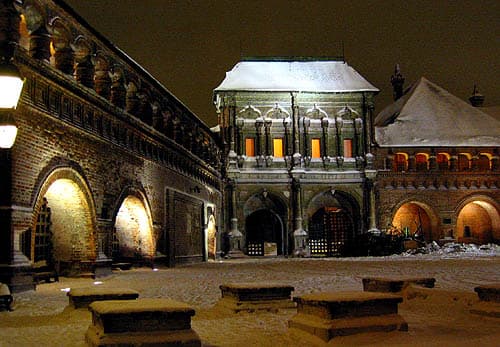
Krutitsy
Krutitsy Metochion is an active ecclesiastical estate of the Russian Orthodox Church located in Moscow, Russia, established in the late 13th century. It features historical buildings from the late 17th century, erected on earlier foundations, and experienced a period of prosperity before being shut down by imperial authorities in the 1780s. After serving as a military warehouse for nearly two centuries, it was restored by Petr Baranovsky and gradually reopened to the public, eventually being returned to the Church in the 1990s.

Antonievo-Siysky Monastery
The Antonievo-Siysky Monastery is a historic Russian Orthodox monastery located in the Arkhangelsk Oblast of Russia. Founded in 1520 by Saint Antonius of Siya, it grew significantly, becoming a prominent spiritual and economic center in the Russian North, particularly known for its salt trade and rich library. The monastery played a role in Russian history, notably as a place of exile for Feodor Romanov, who later became Patriarch of Moscow and whose son founded the Romanov dynasty.