
Joseph-Volokolamsk Monastery
Orthodox Christian·Russia·Museum (historically), Churches restored·15th century
The Joseph-Volokolamsk Monastery, founded in 1479 by Joseph Volotsky, was a prominent Russian Orthodox monastery that rivaled the Trinity Lavra in authority and wealth during the 15th and 16th centuries. It served as a center for Joseph Volotsky's disciples, known as Josephinians, and played a significant role in the political and ecclesiastical life of 16th-century Russia, acting as a stronghold against heresy and a prison for dissenters. Although extensively damaged during World War II and its bell tower destroyed, the monastery's churches have since been restored.
Key Facts
- ›Founded in 1479 by Joseph Volotsky.
- ›Rivaled the Trinity Lavra as a leading Russian monastery in the 15th and 16th centuries.
- ›Served as a center for the Josephinian movement and a stronghold against heresy.
- ›Its vaults were used as a prison for notable dissenters like Maximus the Greek.
- ›Was one of the largest landowners in Russia by the 1560s.
- ›Suffered significant damage during World War II, including the destruction of its bell tower.
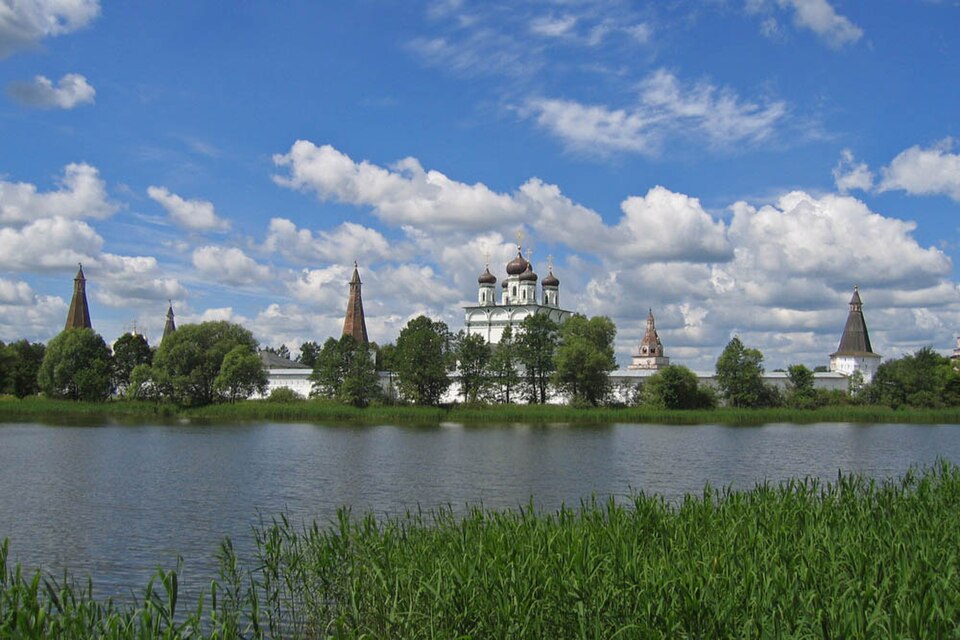
Naryshkin Style, Brick
Octagonal Bell-Tower, Assumption Cathedral, Refectory, Three Ponds, Vaults Used As A Prison
Volotsky Uspensky Iosifov Monastery, иосифо-волоколамский монастырь, волоцкий успенский иосифов монастырь
Joseph Volotsky, Maximus the Greek, Vassian Patrikeyev, Feodor Kuritsyn, Feodosii, Archbishop of Novgorod, Metropolitan Daniel, Tsar Basil Iv, Malyuta Skuratov, Dionisius, Ivan Bolotnikov, Roman RożYńSki
- Founding of the Monastery
- Dispute Over Jurisdiction With Archbishop Serapion I of Novgorod
- Role In the Political and Ecclesiastical Life of 16th-Century Russia
- Imprisonment of Dissenters
- Siege By Ivan Bolotnikov's Rebels
- Siege By Polish Hetman Roman RożYńSki
- Reconstruction In Naryshkin Style
- Conversion Into A Museum After the October Revolution
- Damage During World War Ii
About Joseph-Volokolamsk Monastery
The Joseph-Volokolamsk Monastery is a historically significant men's monastery located northeast of Volokolamsk in Moscow Oblast, Russia. Founded in 1479 by Joseph Volotsky, it rose to prominence in the 15th and 16th centuries, rivaling the Trinity Lavra as one of the most influential and wealthy monastic institutions in Russia. It was frequently referred to as a lavra, though this status was not officially confirmed.
History and Significance
The monastery quickly became the spiritual and intellectual center for the Josephinians, disciples of Joseph Volotsky. It played a crucial role in the political and ecclesiastical landscape of 16th-century Russia, serving as a bulwark against religious dissent and advocating for the church's right to own land. Its vaults famously served as a prison for prominent figures who opposed the established order, including the scholar Maximus the Greek and the churchman Vassian Patrikeyev.
By the 1560s, Joseph-Volokolamsk Monastery was a vast landowner, possessing over 30,000 desyatinas of arable land and several dependent priories. Architecturally, it boasted significant structures, including the Assumption Cathedral embellished with frescoes by the renowned icon-painter Dionisius and an enormous octagonal bell-tower, which was at the time the tallest structure in Russia and predated the Ivan the Great Bell Tower in the Moscow Kremlin.
During the Time of Troubles, the monastery actively supported the government against rebels, and in 1611, it withstood a siege by Polish forces, capturing cannons that were later used for celebratory fireworks. At the close of the 17th century, the monastery underwent a significant reconstruction in the Naryshkin style, featuring new stone walls with sharp-coned towers and gilded domes.
Recent History and Legacy
Following the October Revolution of 1917, the Joseph-Volokolamsk Monastery was transformed into a museum, with Soviet authorities confiscating most of its icons and destroying its bells. The monastery suffered further extensive damage during World War II, notably the destruction of its iconic bell-tower by Nazi forces. While the churches have since been restored, the loss of the bell-tower remains a significant blow to Russian art and architecture.
Source: Wikipedia ↗
Frequently Asked Questions
When was the Joseph-Volokolamsk Monastery founded?
The Joseph-Volokolamsk Monastery was founded in 1479 by Joseph Volotsky. This marked the beginning of its significant presence in Russian religious and political history.
What was the historical significance of the Joseph-Volokolamsk Monastery?
In the 15th and 16th centuries, it was one of the most authoritative and wealthy monasteries in Russia, rivaling the Trinity Lavra. It was a major center for the Josephinian movement and played a key role in combating heresy and dissent.
Who were some notable figures associated with the monastery?
The monastery was founded by Joseph Volotsky and became the center for his disciples. Notable inmates imprisoned within its vaults included Maximus the Greek and Vassian Patrikeyev. Many significant figures, including Malyuta Skuratov, are buried within its walls.
What happened to the monastery during World War II?
During World War II, the Nazi army inflicted serious damage upon the cloister. The famous octagonal bell-tower, which was once the tallest structure in Russia, was blown up by the Nazi forces.
Is the monastery still active today?
After the October Revolution, the monastery was converted into a museum. While its churches have been restored, the text does not explicitly state if an active monastic community currently resides there, though it was historically a men's monastery.
What architectural styles are present at the monastery?
The monastery features constructions from various periods. The Assumption Cathedral was built in brick in 1486, an octagonal bell-tower was constructed in the 1490s, and at the end of the 17th century, it was reconstructed in the Naryshkin style with new walls and a golden-domed church.
Related Monasteries
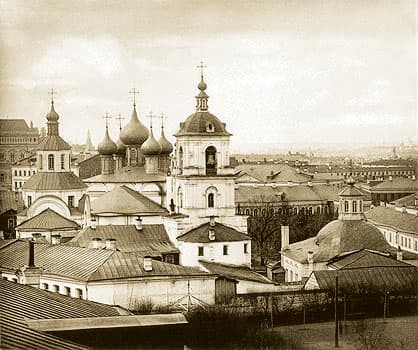
Chrysostom Monastery
The Chrysostom Monastery was a significant religious institution in Moscow, first mentioned in the early 15th century and consecrated to Saint John Chrysostom. Throughout its history, it endured multiple destructions by fire and conflict, including during the Crimean Khan's attack in 1571 and the Time of Troubles. The monastery was a recipient of noble patronage and royal visits, eventually being secularized and dismantled by the Soviets in 1933, with its former site redeveloped.

Yelizarov Monastery
The Yelizarov Monastery, also known as Yeleazarov Convent, was founded in 1447 by a local peasant named Eleazar. It gained significant prominence in the mid-16th century under the learned hegumen Philotheus of Pskov, becoming known for its icon-painting school and the propagation of the "Third Rome" prophecy. After a period of neglect during the Soviet era, it was revived as a nunnery with patronage from prominent figures.

Epiphany Monastery
Epiphany Monastery, also known as Bogoyavlensky Monastyr, is the oldest male Orthodox monastery in Moscow, located in the Kitai gorod district near the Kremlin. Traditionally founded around 1296 by Prince Daniel of Moscow, it has a long history marked by royal patronage, significant fires, and periods of both prosperity and closure. The monastery's surviving Epiphany Cathedral is a notable example of Muscovite Baroque architecture.