
Chrysostom Monastery
Orthodox Christian·Russia·Ruins (buildings dismantled)·15th century
The Chrysostom Monastery was a significant religious institution in Moscow, first mentioned in the early 15th century and consecrated to Saint John Chrysostom. Throughout its history, it endured multiple destructions by fire and conflict, including during the Crimean Khan's attack in 1571 and the Time of Troubles. The monastery was a recipient of noble patronage and royal visits, eventually being secularized and dismantled by the Soviets in 1933, with its former site redeveloped.
Key Facts
- ›First mentioned in 1412.
- ›Grand Prince Ivan III rebuilt the wooden cathedral in stone in 1478.
- ›Suffered damage from fires in 1571, 1611, and 1737.
- ›Received donations from noble families like the Apraksins and Rumyantsevs.
- ›Visited by Empress Elizabeth in 1742.
- ›Dismantled by the Soviets in 1933.
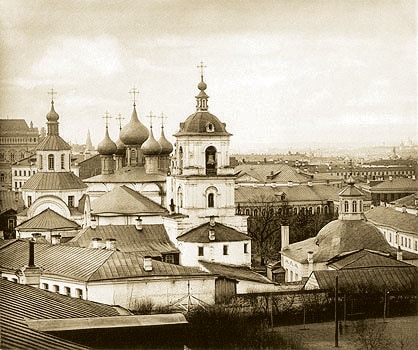
Stone Cathedral Rebuilt In 1478, Five-Domed Cathedral, Church of Saint Elizabeth, Monastic Cells
Zlatoustovskiy Monastyr'
Ivan Iii, Devlet I Giray, Empress Elizabeth, Paul I, Matvei Apraksin, Fyodor Apraksin, Alexander Rumyantsev, Ivan Akimovich Senyavin
Burial of Novgorod Archdeacon, Rebuilding of Wooden Cathedral To Stone, Attack and Burning By Devlet I Giray, Damage During the Time of Troubles, Burning of Stone Cathedral and Replacement, Fire and Restoration, Visit and Donation By Empress Elizabeth, Damage By French During Patriotic War of 1812, Restoration After 1812 Damage, Dismantling By Soviets
About Chrysostom Monastery
The Chrysostom Monastery, known in Russian as Zlatoustovskiy monastyr', was a historical monastery situated in Moscow, east of Kitai-gorod. Consecrated to Saint John Chrysostom, its origins trace back to at least 1412, when it was first recorded as a burial site. The monastery underwent significant rebuilding and expansion over centuries, notably when Grand Prince Ivan III had its wooden cathedral replaced with a stone structure in 1478.
Throughout its existence, the Chrysostom Monastery faced numerous adversities, including destruction by fire in 1571 and damage during the tumultuous Time of Troubles in 1611. It was also affected by a fire in 1737 and sustained damage during the French occupation in 1812, though it was subsequently restored. The monastery relied on the patronage of local noble families, such as the Apraksins and Rumyantsevs, who also used it as a burial ground for some of their members. Empress Elizabeth visited the monastery in 1742, contributing to its upkeep.
In the early 20th century, the monastery housed an archimandrite, several monks, and novices, and featured a parish school on its grounds. However, in 1933, the Soviet authorities ordered the demolition of the monastery's buildings under the guise of dilapidation. The site was subsequently redeveloped with constructivist architecture, and the graves of notable Russian naval figures were desecrated. Despite the destruction of the main complex, the monastic cells, built in 1862, remain standing in Maly Zlatoustinsky Lane, Moscow.
Source: Wikipedia ↗
Frequently Asked Questions
When was the Chrysostom Monastery first mentioned?
The Chrysostom Monastery was first mentioned in historical records in 1412. At that time, it served as the burial place for a Novgorod archdeacon.
What significant historical events affected the monastery?
The monastery was destroyed by fire during the 1571 attack by Crimean Khan Devlet I Giray and again damaged in 1611 during the Time of Troubles. It also suffered from a major fire in 1737 and was damaged by the French during the Patriotic War of 1812, though it was restored after each incident.
Who were some notable figures associated with the Chrysostom Monastery?
The monastery received donations from noble families such as the Counts Apraksin and Rumyantsev. Several members of these families, including Matvei and Fyodor Apraksin, and Alexander Rumyantsev, were buried there.
What happened to the Chrysostom Monastery buildings?
In 1933, the Soviet authorities dismantled the buildings of the Chrysostom Monastery, claiming they were dilapidated. A constructivist building was erected on its former site, and the graves of Russian naval leaders were desecrated.
Can any parts of the Chrysostom Monastery still be seen today?
While the main monastery buildings were dismantled, the monastic cells of the Chrysostom Monastery, constructed in 1862, are still standing. They can be found in Maly Zlatoustinsky Lane in Moscow.
Related Monasteries
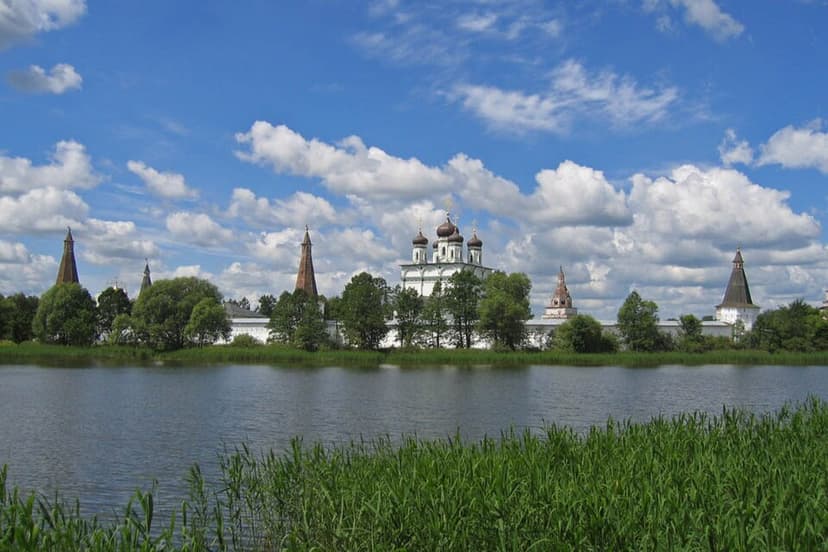
Joseph-Volokolamsk Monastery
The Joseph-Volokolamsk Monastery, founded in 1479 by Joseph Volotsky, was a prominent Russian Orthodox monastery that rivaled the Trinity Lavra in authority and wealth during the 15th and 16th centuries. It served as a center for Joseph Volotsky's disciples, known as Josephinians, and played a significant role in the political and ecclesiastical life of 16th-century Russia, acting as a stronghold against heresy and a prison for dissenters. Although extensively damaged during World War II and its bell tower destroyed, the monastery's churches have since been restored.

Yelizarov Monastery
The Yelizarov Monastery, also known as Yeleazarov Convent, was founded in 1447 by a local peasant named Eleazar. It gained significant prominence in the mid-16th century under the learned hegumen Philotheus of Pskov, becoming known for its icon-painting school and the propagation of the "Third Rome" prophecy. After a period of neglect during the Soviet era, it was revived as a nunnery with patronage from prominent figures.

Epiphany Monastery
Epiphany Monastery, also known as Bogoyavlensky Monastyr, is the oldest male Orthodox monastery in Moscow, located in the Kitai gorod district near the Kremlin. Traditionally founded around 1296 by Prince Daniel of Moscow, it has a long history marked by royal patronage, significant fires, and periods of both prosperity and closure. The monastery's surviving Epiphany Cathedral is a notable example of Muscovite Baroque architecture.