
Inchcolm Abbey
Augustinian canons regular·Scotland·Ruins·12th century
Inchcolm Abbey is a medieval Augustinian priory and later abbey situated on Inchcolm island in Scotland's Firth of Forth. Founded in the 12th century, its history is intertwined with royal patronage and periods of conflict, leading to its abandonment during the Scottish Reformation. The abbey boasts the most complete surviving remains of any Scottish monastic house, including its cloisters and chapter house, and is now managed by Historic Environment Scotland.
Key Facts
- ›Founded in the 12th century during the episcopate of Gregoir, Bishop of Dunkeld.
- ›Later tradition attributes its founding to King Alexander I seeking shelter on the island in 1123.
- ›Originally a priory of Augustinian canons regular, it became a full abbey in 1235.
- ›Suffered attacks from the English starting in 1296 and was abandoned in 1560 due to the Scottish Reformation.
- ›Possesses the most complete surviving monastic remains in Scotland.
- ›The Inchcolm Antiphoner, a 14th-century manuscript with rare Celtic Plainchant, is named after the abbey.

Complete Cloisters, Chapter House, Warming House, Refectory, Inchcolm Antiphoner Manuscript
Gregoir, Bishop of Dunkeld, King Alexander I of Scotland, Walter Bower
- King Alexander I Took Shelter On the Island During A Storm In 1123.
- Attacked By the English From 1296 Onwards.
- Abandoned As A Result of the Scottish Reformation In 1560.
About Inchcolm Abbey
Inchcolm Abbey stands as a significant medieval monastic site located on the island of Inchcolm in Scotland's Firth of Forth. Its origins trace back to the 12th century, with its founding attributed to Gregoir, Bishop of Dunkeld. Later traditions associate its establishment with King Alexander I, who is said to have sought refuge on the island during a storm in 1123, spending three days with a hermit there.
The abbey initially served as a priory for Augustinian canons regular before officially becoming a full abbey in 1235. Its strategic location in the Firth of Forth made it a target, particularly during conflicts with England, with attacks recorded from 1296 onwards. The monastic community was ultimately abandoned in 1560 following the Scottish Reformation.
Architectural Significance and Current State
Inchcolm Abbey is renowned for possessing the most complete surviving remains of any Scottish monastic house. The architectural remnants include largely intact cloisters, a chapter house, a warming house, and a refectory. While the monastic church is less well-preserved, the overall complex offers a substantial glimpse into medieval monastic life.
The ruins are maintained by Historic Environment Scotland, which also operates a visitor centre to facilitate public access. The site's importance is underscored by a Latin inscription above the entrance, a hopeful declaration of its enduring structure.
Associated Manuscript and Cultural References
The abbey lends its name to the 14th-century Inchcolm Antiphoner, a manuscript notable for containing rare examples of Celtic Plainchant. Among the historical figures associated with Inchcolm Abbey is Walter Bower, a 15th-century chronicler who served as abbot. The abbey's historical presence has also found its way into literature, notably being referenced by William Shakespeare in his play Macbeth.
Source: Wikipedia ↗
Frequently Asked Questions
When was Inchcolm Abbey founded?
The abbey was founded in the 12th century during the episcopate of Gregoir, Bishop of Dunkeld. Later traditions suggest a founding during the reign of King Alexander I (1107–1124).
What religious order was Inchcolm Abbey part of?
Inchcolm Abbey was initially a priory for Augustinian canons regular. It officially became a full abbey in 1235.
What is the current status of Inchcolm Abbey?
Inchcolm Abbey is now a ruin but its remains are well-preserved and cared for by Historic Environment Scotland. It operates as a historical site with a visitor centre.
Why was Inchcolm Abbey abandoned?
The abbey was abandoned as a result of the Scottish Reformation in 1560. The island had also faced attacks from the English from 1296 onwards.
What makes Inchcolm Abbey significant architecturally?
Inchcolm Abbey has the most complete surviving remains of any Scottish monastic house, with its cloisters, chapter house, warming house, and refectory being largely intact.
Is the Inchcolm Antiphoner related to the abbey?
Yes, the 14th-century manuscript known as the Inchcolm Antiphoner is named after the abbey. It contains significant examples of Celtic Plainchant.
Related Monasteries
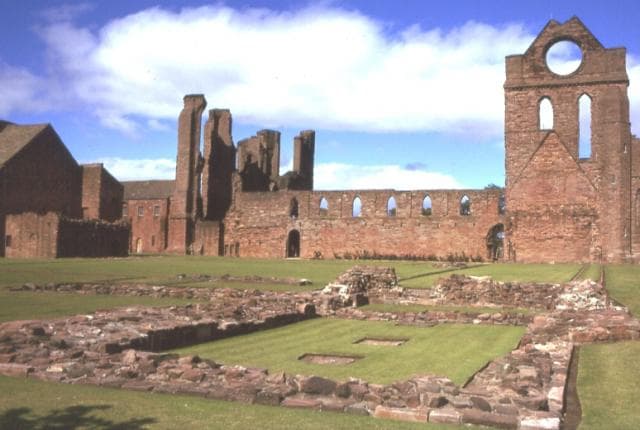
Arbroath Abbey
Arbroath Abbey, a ruined Cistercian monastery located in Arbroath, Scotland, was founded in 1178 by King William the Lion. It is renowned as the site where the Declaration of Scottish Independence was likely drafted in 1320. The Abbey, once the wealthiest in Scotland, is now managed by Historic Environment Scotland and is a popular tourist attraction, notable for its distinctive red sandstone ruins.
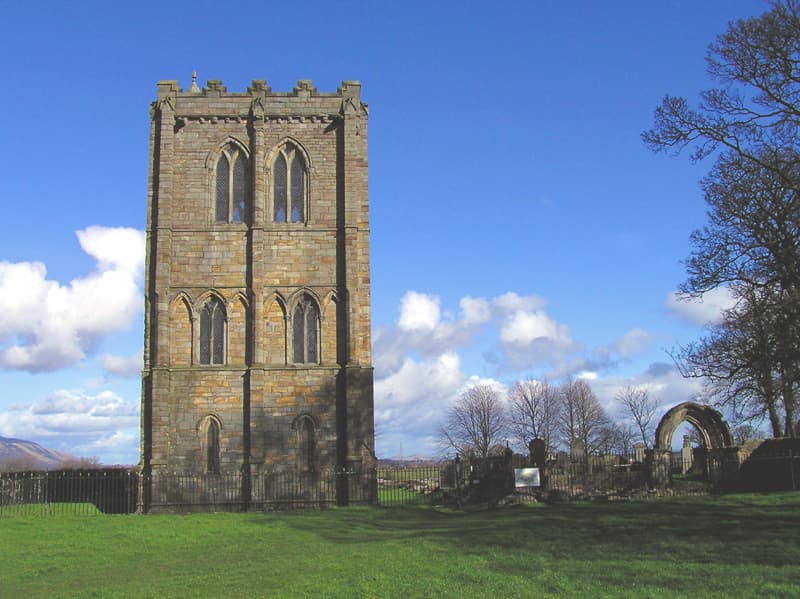
Cambuskenneth Abbey
Cambuskenneth Abbey, established around 1140 by King David I of Scotland, was a significant provostry of Canons Regular and the only Scottish house of the French Arrouaise Order. Situated by a meander of the River Forth near Stirling, it played a crucial role in Scottish public life, hosting parliaments and royal events, and was the burial site for King James III and Queen Margaret of Denmark. Although largely reduced to its foundations today, its 13th-century bell tower remains intact, and the site is managed by Historic Scotland and open to visitors.
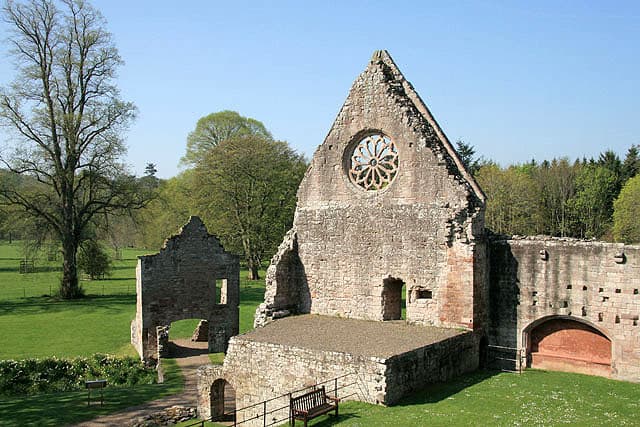
Dryburgh Abbey
Dryburgh Abbey, situated near the River Tweed in the Scottish Borders, was founded in 1150 by Premonstratensian canons. Despite significant destruction from English raids in the 14th and 16th centuries, the abbey experienced periods of restoration and flourished in the 15th century. Today, it stands as a designated scheduled monument, with its grounds serving as the final resting place for notable figures like Sir Walter Scott and Douglas Haig.