
Inch Abbey
Inch Abbey is a ruined Cistercian monastery located near Downpatrick, County Down, Northern Ireland. Founded in the 12th century by John de Courcy and his wife Affreca, it was established as a penance for de Courcy's earlier destruction of Erenagh Abbey. The abbey, initially populated with monks from Furness Abbey, was dissolved in 1541 and has since fallen into ruin.
Key Facts
- ›Founded in the 12th century by John de Courcy and his wife Affreca.
- ›Established as a Cistercian monastery.
- ›Dissolved in 1541.
- ›Features a standard Cistercian cruciform architectural shape.
- ›Contains an un-aisled chauncel with triple pointed lancet windows and an aisled nave.
- ›A 12th-century Romanesque carved stone fragment survives at the site.
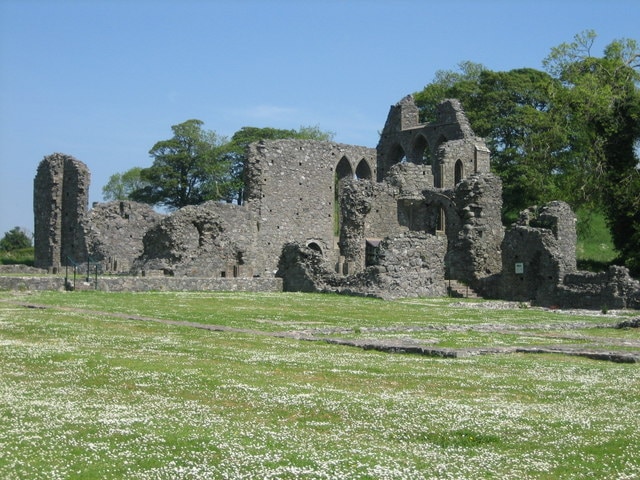
Cistercian, Romanesque
- Cruciform Architectural Plan
- Un-Aisled Chauncel With Triple Pointed Lancet Windows
- Aisled Nave
- Projecting Transepts
- 12th-Century Romanesque Carved Stone Fragment
Inis Cumhscraighn
John De Courcy, Affreca, Jocelyn of Barrow-In-Furness, Sitric, King of the Danes, Gerald, Earl of Kildare
- Sacked By Vikings In 1002.
- Plundered By the Irish In 1149.
- Site Became Defunct By 1150.
- Founded By John De Courcy and Affreca In the 12th Century.
- Monks Accused of Hunting the Irish In 1318.
- Dissolved In 1541.
About Inch Abbey
Inch Abbey is a significant ruined Cistercian monastery situated on the outskirts of Downpatrick, County Down, in Northern Ireland. The history of monastic life at this location predates the Cistercian foundation, with a monastery called Inis Cumhscraighn existing by the year 800.
History and Foundation
This earlier monastery faced considerable turmoil, being sacked by Vikings led by Sitric, King of the Danes, in 1002. It was also plundered by Irish forces in 1149, leading to the site becoming defunct by 1150. The present-day Cistercian ruins owe their existence to the Anglo-Norman John de Courcy and his wife Affreca. They established the abbey in the 12th century as an act of penance for de Courcy's destruction of Erenagh Abbey around 1177. To populate the new foundation, de Courcy brought monks from Furness Abbey and commissioned one of them, Jocelyn of Barrow-in-Furness, to document the legends of Saint Patrick.
The abbey maintained a strong English influence from its inception due to the Furness monks. Historical accounts suggest a degree of insularity, as the monks reportedly refused entry to Irish men and were later accused of hunting them with spears in 1318.
Inch Abbey met its end as a monastic institution in 1541 when it was dissolved and its site granted to Gerald, Earl of Kildare. Today, the ruins stand as a testament to its historical importance and architectural heritage.
Architecture
The architectural design of Inch Abbey follows the standard cruciform layout characteristic of Cistercian buildings. The surviving structures include an un-aisled chauncel featuring triple pointed lancet windows to the east, and an aisled nave situated to the west. Two projecting transepts extend north and south from the main body of the building. A notable surviving artifact is a 12th-century Romanesque style carved stone fragment, offering a glimpse into the abbey's early artistic and structural elements.
Source: Wikipedia ↗
Frequently Asked Questions
When was Inch Abbey founded?
Inch Abbey was founded in the 12th century by John de Courcy and his wife Affreca. This was established as a Cistercian monastery.
What is the architectural style of Inch Abbey?
The abbey was constructed in a cruciform shape, typical for Cistercian buildings. Surviving elements include a chauncel with triple pointed lancet windows and an aisled nave, with one 12th-century Romanesque carved stone fragment present.
What happened to Inch Abbey?
Inch Abbey was dissolved in 1541. The site was subsequently granted to Gerald, Earl of Kildare, and the abbey has since fallen into ruin.
Is Inch Abbey still an active monastery?
No, Inch Abbey is a ruined monastery. It ceased to be an active monastic community after its dissolution in 1541.
Related Monasteries
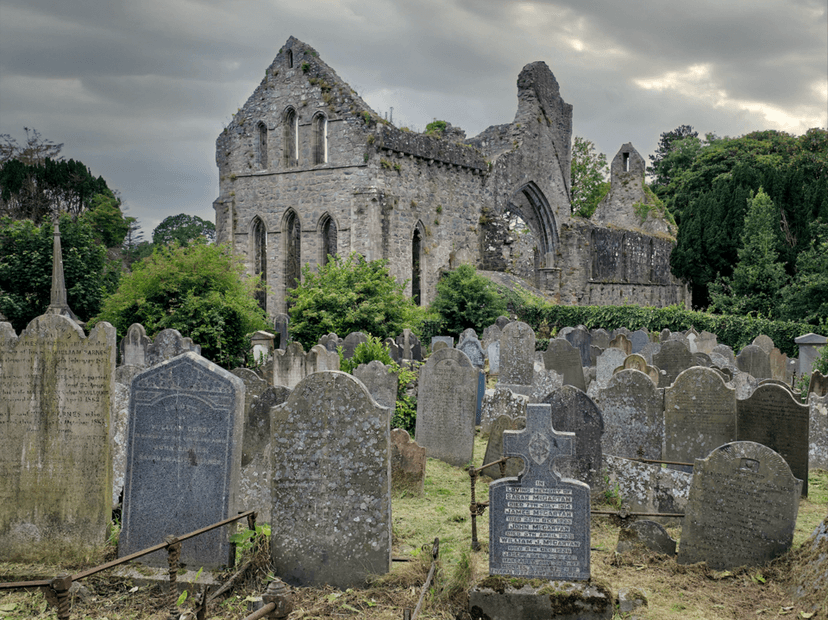
Grey Abbey
Grey Abbey is a ruined Cistercian priory located in Greyabbey, County Down, Northern Ireland. Founded in 1193 by Affreca, wife of John de Courcy, it holds historical significance as a rare example of a Cistercian site with a female patron. The abbey's architecture features early examples of Gothic style in Ireland, particularly in its pointed arches.

Erenagh Abbey
Erenagh Abbey, also known as Abbey of Carryke or Carrig, was a significant early monastic foundation in Ireland, established in 1127. It holds the distinction of being one of the first abbeys of a recognized religious order in Ireland following the Synod of Ráth Breasail. Although no physical remains are known to survive, the site has been recently identified by archaeologists, revealing early European cloister-style architecture. The abbey was destroyed in 1177 by John de Courcy but its legacy is tied to its role in introducing Cistercian practices to Ireland.

Alvastra Abbey
Alvastra Abbey was a significant Cistercian monastery established in 1143 by French monks from Clairvaux Abbey, on land donated by King Sverker I of Sweden. For nearly four centuries, it flourished and even established another monastery at Varnhem. The abbey was dissolved during the Protestant Reformation and is now known as a ruin, notable for containing the graves of several Swedish monarchs and queens.