
Grey Abbey
Grey Abbey is a ruined Cistercian priory located in Greyabbey, County Down, Northern Ireland. Founded in 1193 by Affreca, wife of John de Courcy, it holds historical significance as a rare example of a Cistercian site with a female patron. The abbey's architecture features early examples of Gothic style in Ireland, particularly in its pointed arches.
Key Facts
- ›Founded in 1193 by Affreca, wife of John de Courcy.
- ›Unique among Cistercian sites for having a female patron.
- ›Features some of the earliest examples of Early Gothic architecture in Ireland.
- ›Located in the townland of Rosemount, County Down, Northern Ireland.
- ›Currently maintained by the Northern Ireland Environment Agency.
- ›Ruined priory, designated as a monument in state care.
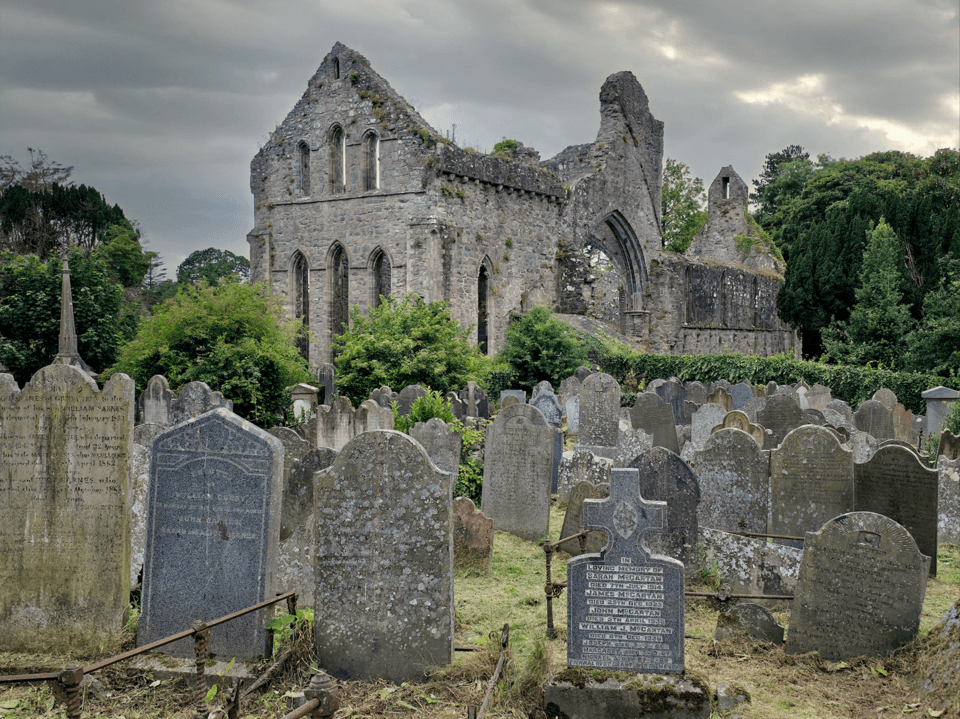
Early Gothic
Pointed Arches On Lancet Windows, Early Examples of Gothic Architecture
An Mhainistir Liath
Affreca, John De Courcy
About Grey Abbey
Grey Abbey, known in Irish as An Mhainistir Liath, is a significant ruined Cistercian priory located in Greyabbey, County Down, Northern Ireland. Founded in 1193 by Affreca, the wife of John de Courcy, it holds a unique place in history as one of the few Cistercian sites with a female patron.
Architectural Significance
The priory is noted for its architectural features, particularly its pointed arches on the lancet windows. These elements represent some of the earliest examples of Early Gothic architecture found on the island of Ireland, and specifically the earliest known instance in what is now Northern Ireland.
Current Status and Preservation
Today, Grey Abbey stands as a ruin, maintained by the Northern Ireland Environment Agency. It is recognized as a monument in state care, preserving its historical and architectural importance for future generations. The site is situated in the townland of Rosemount, on the eastern edge of the village of Greyabbey.
Source: Wikipedia ↗
Frequently Asked Questions
When was Grey Abbey founded?
Grey Abbey was founded in the year 1193. This date marks its establishment as a Cistercian priory.
Who founded Grey Abbey?
The priory was founded by Affreca, the wife of John de Courcy. This makes Grey Abbey unique among Cistercian sites for having a female patron.
What is architecturally significant about Grey Abbey?
Grey Abbey contains some of the earliest examples of Early Gothic architecture on the island of Ireland. The pointed arches found in its lancet windows are particularly notable.
What is the current status of Grey Abbey?
Grey Abbey is now a ruined priory. It is maintained by the Northern Ireland Environment Agency and is a monument in state care.
Where is Grey Abbey located?
Grey Abbey is situated in Greyabbey, County Down, Northern Ireland. Specifically, it is located in the townland of Rosemount on the eastern edge of the village of Greyabbey.
Related Monasteries
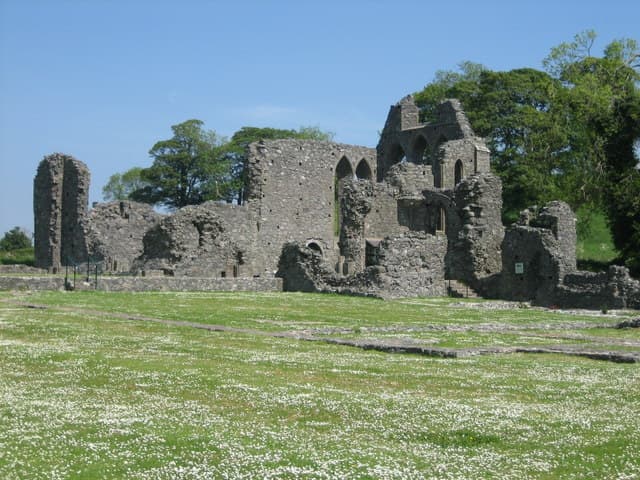
Inch Abbey
Inch Abbey is a ruined Cistercian monastery located near Downpatrick, County Down, Northern Ireland. Founded in the 12th century by John de Courcy and his wife Affreca, it was established as a penance for de Courcy's earlier destruction of Erenagh Abbey. The abbey, initially populated with monks from Furness Abbey, was dissolved in 1541 and has since fallen into ruin.

Erenagh Abbey
Erenagh Abbey, also known as Abbey of Carryke or Carrig, was a significant early monastic foundation in Ireland, established in 1127. It holds the distinction of being one of the first abbeys of a recognized religious order in Ireland following the Synod of Ráth Breasail. Although no physical remains are known to survive, the site has been recently identified by archaeologists, revealing early European cloister-style architecture. The abbey was destroyed in 1177 by John de Courcy but its legacy is tied to its role in introducing Cistercian practices to Ireland.

Baltinglass Abbey
Baltinglass Abbey, a ruined medieval Cistercian monastery in County Wicklow, Ireland, was founded in 1148 by Diarmait Mac Murchada. It served as a daughter house of Mellifont Abbey and later became the mother house of Jerpoint Abbey. The abbey was suppressed in 1536 during the Dissolution of the Monasteries and is now a National Monument.