
Holme Eden Abbey
Christianity·England·Apartments·19th century
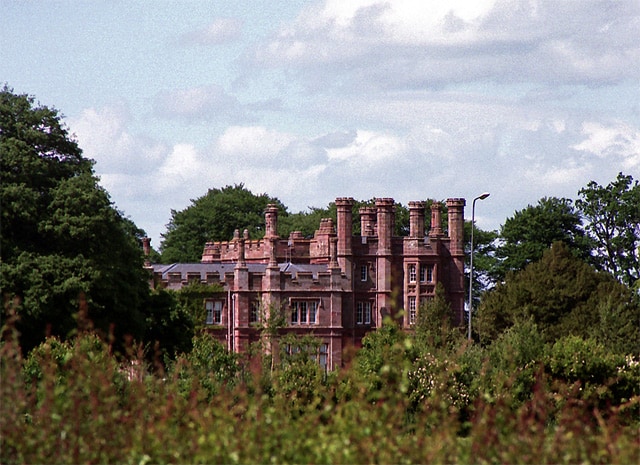
Holme Eden Abbey is a Grade II* listed house in Cumbria, England, built on the site of a former abbey. Constructed between 1833 and 1837, it was designed by John Dobson for cotton mill owner Peter Dixon and is notable for its symbolic calendar house design. The property later served as a Benedictine nunnery and subsequently as an exclusive retirement home before its conversion into apartments.
Key Facts
- ›Current building constructed between 1833 and 1837.
- ›Designed by architect John Dobson.
- ›Features a symbolic 'Calendar House' design with 365 windows, 52 doors, and 7 entrances.
- ›Served as a Benedictine nunnery from 1921 to 1983.
- ›Converted into twelve apartments after functioning as a retirement home.
Calendar House Design, Walled Garden
John Dobson, Peter Dixon, William Watson, Sir Maurice Douglas Warburton Elphinstone
- Death of Sir Maurice Douglas Warburton Elphinstone On 5 December 1995.
About Holme Eden Abbey
Holme Eden Abbey is a significant Grade II* listed building located in Cumbria, England, constructed on the historical site of an earlier abbey. The present house was designed by John Dobson and built between 1833 and 1837 for Peter Dixon, a prosperous cotton mill owner. The architectural design is notably symbolic, featuring a 'Calendar House' arrangement with 365 windows, 52 chimney pots, and seven entrances, reputedly reflecting the days, weeks, and entrances of the year.
History and Use
The property underwent changes in ownership and function over the decades. In 1875, it was acquired by William Watson. A significant period of its history began in 1921 when it became a Benedictine nunnery, serving this purpose until 1983. Following its time as a religious institution, Holme Eden Abbey was repurposed as an exclusive retirement home. More recently, it has been redeveloped into an award-winning complex featuring twelve apartments, with the former walled garden also being utilized for residential development.
Source: Wikipedia ↗
Frequently Asked Questions
What is Holme Eden Abbey?
Holme Eden Abbey is a house in Cumbria, England, built on the location of a former abbey. The current structure, dating from 1833-1837, is a Grade II* listed building.
Who designed Holme Eden Abbey?
The house was designed in 1833 by John Dobson of Newcastle. He designed it for Peter Dixon, a cotton mill owner.
What is unique about Holme Eden Abbey's design?
The house is said to have been built in the manner of a Calendar House, featuring 365 windows, 52 chimney pots, and seven entrances, symbolically representing the days, weeks, and entrances of a year.
What was the history of Holme Eden Abbey after its construction?
After its construction, it was sold in 1875 to William Watson. From 1921 to 1983, it served as an abbey for Benedictine nuns. It then became an exclusive old persons home before being converted into apartments.
Related Monasteries
Beeleigh Abbey
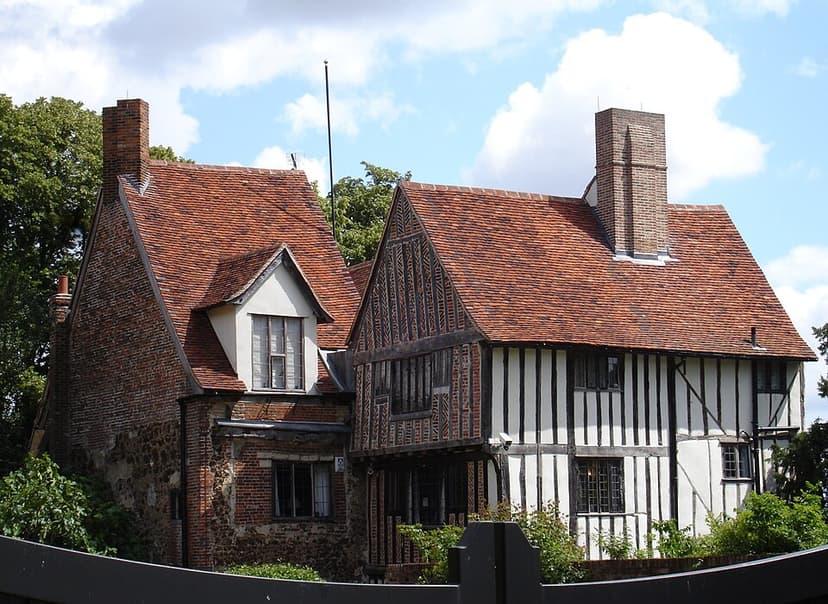
Beeleigh Abbey, established in 1180 near Maldon, Essex, was a Premonstratensian (White Canons) monastery. It gained significance as a pilgrimage site due to the burial of the heart of Roger Niger, Bishop of London, and was later granted to Sir John Gate after the Dissolution of the Monasteries. Following periods as a public house and falling into ruin, it underwent significant restoration in the 20th century and is now a private residence with accessible gardens.

Canterbury Cathedral Priory
Canterbury Cathedral Priory, formally known as the Priory of Christ Church, Canterbury, was a Benedictine monastic community intrinsically linked to the seat of the Archbishop of Canterbury. Founded in 597 AD, it underwent significant rebuilding and expansion throughout its history, notably after fires in 1174 and a major reconstruction in the Gothic style. Its importance was amplified by its role as a major pilgrimage site, particularly for the shrine of Thomas Becket, which significantly funded its later architectural developments.
Churchill Monastery
This document is a reference for monastic houses located in Devon, England, detailing various types of religious establishments including alien houses, cells, granges, and camerae of military orders. It aims to provide a comprehensive list with historical context for these sites, many of which are no longer extant.