
Holme Abbey
Cistercian·Denmark·Castle and estate with a private chapel·12th century
Holme Abbey, later known as Brahetrolleborg, was a Cistercian monastery founded in 1172 and settled from Herrevad Abbey. Initially built on a lake, it was destroyed by fire and rebuilt on a new site. Following the Reformation, it became crown property, eventually transitioning into a secular estate and castle under various noble families, most notably the Reventlows since 1722. The site now encompasses a castle, a former monastery church, and extensive grounds.
Key Facts
- ›Founded in 1172 as a daughter house of Herrevad Abbey.
- ›Original location was directly on a lake, reflected in its Latin name 'Insula Dei' (Island of God).
- ›The abbey was destroyed by fire in 1243 and subsequently moved to its current location.
- ›After the Reformation, it became crown property and was later developed into a castle and estate.
- ›The site has been owned by the Reventlow family since 1722.
- ›The former monastery church, dating to the 13th century, is now the chapel of Brahetrolleborg.
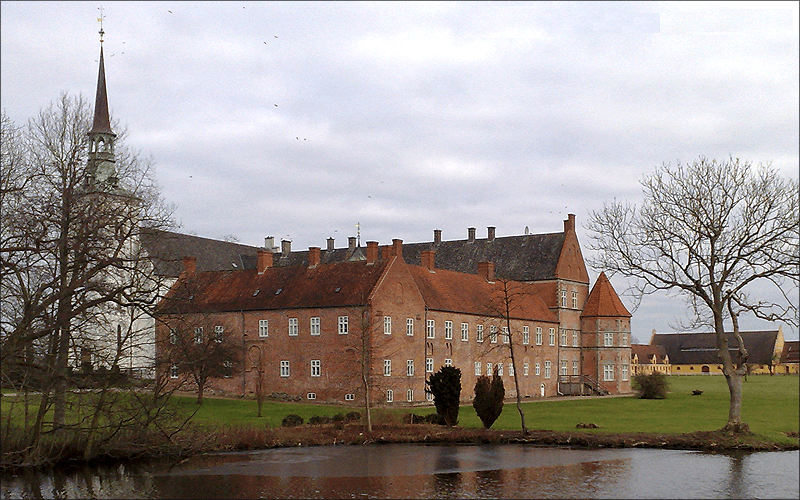
Gothic, Baroque
- Former Cistercian Church
- Three-Winged Main Building of the Castle
- Adjacent Three-Winged Home Farm
- Heritagelisted Buildings and Places
- Memorial Obelisk In Honor of Johan Ludvig Reventlow
Holme Kloster, Insula Dei, Rantzausholm, Brahetrolle Castle
- Heinrich Rantzau
- Breide Rantzau
- Kai Rantzau
- Frands Lykke
- Kai Lykke
- Christoffer Gabel
- Birgitte Trolle
- Frederik Trolle
- Niels Trolle
- Christian Detlev Reventlow
- Conrad Ditlev Reventlow
- Johan Ludvig Reventlow
- Ditlev Christian Ernst Reventlow
- Ferdinand Otto Carl Reventlow
- Christian-Einar Ferdinand Ludvig Eduard Reventlow
- Catharina Reventlow-Mourier
- Fire Destroyed Original Buildings In 1243.
- Privileges Confirmed and Expanded In 1288, 1324, and 1414.
- Became Crown Property After the Reformation.
- Transferred To Various Noble Families and Eventually Became Brahetrolleborg Estate.
- Church Passed Into Private Ownership In 1979.
About Holme Abbey
Holme Abbey, also known by its Latin name Insula Dei ('Island of God') and later as Brahetrolleborg, was a significant Cistercian monastery located on the Danish island of Fyn. Founded in 1172, it was established as a daughter house of Herrevad Abbey in Scania. The monastery's initial construction was situated directly on the lake of Nørresø, highlighting its 'island' designation. However, a destructive fire in 1243 necessitated a relocation to the site of the present-day Brahetrolleborg castle.
History and Transformation
Throughout the Middle Ages, Holme Abbey held a distinguished position, though much of its early archive has been lost, limiting detailed historical accounts. Following the Danish Reformation, the monastery, like other religious properties, was transferred to the Danish crown. The property was leased to various individuals and families, undergoing significant changes. It was eventually purchased by Jakob Hadenberg in 1540, and after a period of reacquisition by the crown, it was sold in 1568 to Heinrich Rantzau. This marked the beginning of its transformation into a secular estate, Rantzausholm, and later its current name, Brahetrolleborg.
Architectural Legacy and Ownership
The former monastery church, dating from the 13th century, remains a key feature and now serves as the chapel of Brahetrolleborg. Constructed between approximately 1250 and 1325, it exhibits architectural elements consistent with Cistercian planning. The main structure of Brahetrolleborg castle incorporates parts of the original monastery, with older sections dating from the 14th and 15th centuries. The estate has been continuously owned by the Reventlow family since 1722, with Catharina Reventlow-Mourier currently holding ownership as the 9th generation. The combined estate, along with the neighboring Brændegård property, covers a substantial area, much of which is forested.
Source: Wikipedia ↗
Frequently Asked Questions
When was Holme Abbey founded?
Holme Abbey was founded and settled in 1172. It was established as a daughter house of the Cistercian Herrevad Abbey in Scania.
What was the original location of Holme Abbey?
The abbey was initially constructed directly on the lake of Nørresø, possibly on a small island. This is reflected in its Latin name, 'Insula Dei', meaning 'Island of God'.
What happened to Holme Abbey after the Reformation?
Following the Reformation in Denmark, the monastery became the property of the crown. It was leased to various individuals before being purchased by Jakob Hadenberg in 1540. After a period of reacquisition by the crown, it was eventually sold and transformed into a secular estate known as Rantzausholm.
Who currently owns the estate that was once Holme Abbey?
The estate, now known as Brahetrolleborg, has been owned by the Reventlow family since 1722. It is currently owned by Catharina Reventlow-Mourier, who represents the 9th generation of the family.
What is the architectural significance of the former monastery church?
The former Cistercian church, now the chapel of Brahetrolleborg, was constructed between approximately 1250 and 1325. It is notable for its layout, which follows the plan of Saint Bernard, and it houses a crucifix sculpted by Claus Berg around 1500.
Related Monasteries
Tvis Abbey
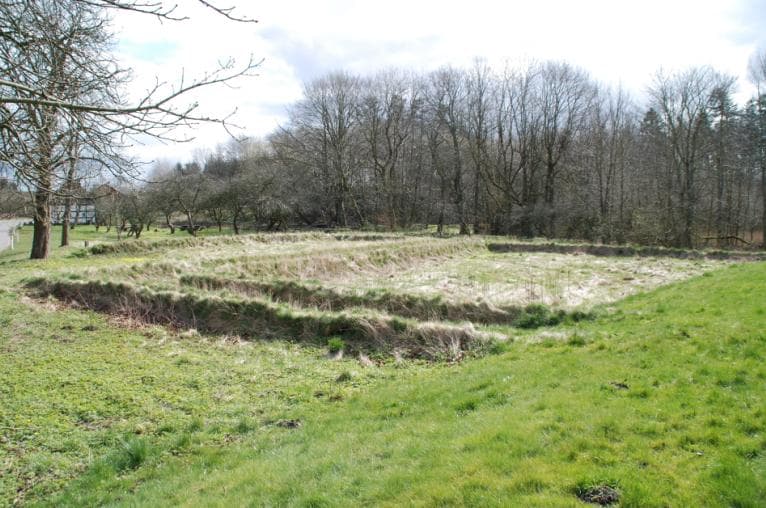
Tvis Abbey was a former Cistercian monastery located in Jutland, Denmark, founded in 1163 by Prince Buris Henriksson. Situated on an island between two rivers near Holstebro, it was a daughter house of Herrevad Abbey. The monastery was dissolved during the Reformation, likely in 1547, and most of its structures, including the abbey church, were later demolished, leaving only the foundations visible today.
Vitskøl Abbey
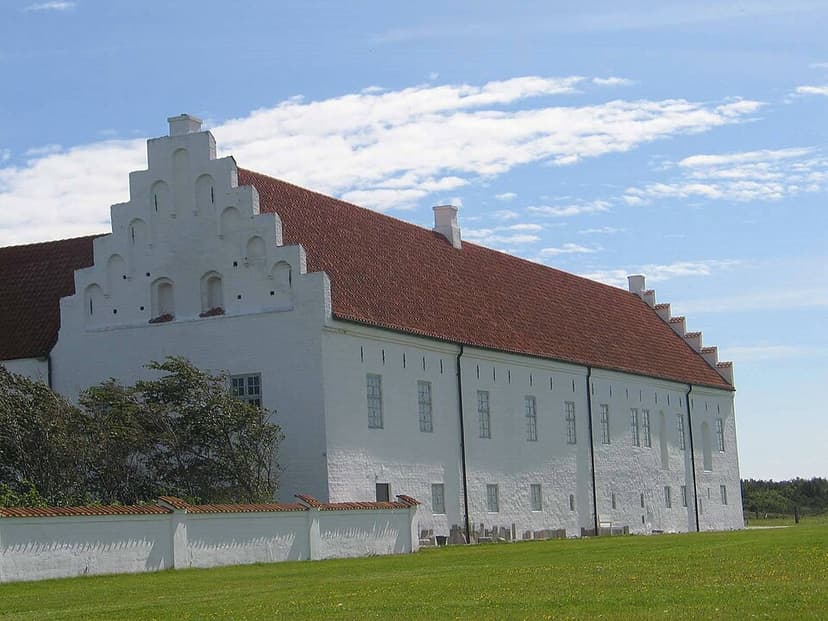
Vitskøl Abbey, originally known as Vitae Schola, was a prominent Cistercian monastery active from the mid-12th century until 1563. Founded on land granted by King Valdemar I, it was intended to house the largest church in Scandinavia and became a significant landowner, cultural center, and educational institution. Following the Reformation, it became crown property, and its monastic community dissolved in 1563.

Antvorskov
Antvorskov Monastery was the principal Scandinavian headquarters of the Catholic Order of Saint John of Jerusalem, established in 1165 by King Valdemar the Great. It played a significant role as a major landowner in Denmark and a center for charitable activities, particularly for pilgrims and the sick. Following the Reformation, it transitioned into a royal residence and was later dismantled, with its materials repurposed and its lands sold off, leaving behind ruins that later became a subject of archaeological interest.