
Hinton Priory
Christian·England·Ruins (partially standing structures incorporated into private residence)·13th century
Hinton Priory was a Carthusian monastery founded in 1232 in Somerset, England, and existed until its suppression in 1539. It was originally established in Gloucestershire in 1222 but relocated to a more secluded site in Somerset at the request of the monks. Today, parts of the priory, including its chapter house and refectory, survive and are incorporated into a 16th-century country house, though the site is privately owned and not open to the public.
Key Facts
- ›Founded in 1232 as a Carthusian monastery.
- ›Relocated from Hatherop, Gloucestershire, due to a desire for greater solitude.
- ›Known by the Latin name 'Locus Dei' (God's Place).
- ›Suppressed on March 31, 1539, during the dissolution of the monasteries.
- ›Surviving structures include the chapter house, refectory, and earthworks of the great cloister.
- ›The site is a Scheduled Ancient Monument and is listed as 'Poor' condition on the Heritage at Risk Register.

Medieval
Chapter House With Library and Dovecote, Refectory, Earthworks of the Great Cloister, Site of the Former 'Lower House'
Locus Dei
William Longspee, Earl of Salisbury
- Suppression During the Dissolution of the Monasteries
About Hinton Priory
Hinton Priory was a significant Carthusian monastery located in northeast Somerset, England, operational from its founding in 1232 until its dissolution in 1539. The priory's establishment in Somerset marked a relocation from its initial site in Hatherop, Gloucestershire, initiated in 1222 by William Longspee, Earl of Salisbury. The monks' desire for a more secluded environment led to their petition for a new location, which ultimately resulted in the consecration of the new house in May 1232. The priory was known by the Latin name 'Locus Dei,' meaning 'God's Place,' reflecting its monastic purpose.
History and Establishment
The priory was one of ten medieval Carthusian houses in England. Following William Longspee's death in 1226, his countess granted the monks her manors of Hinton and Norton St Philip in Somerset. This new site, approximately 0.6 miles (1 km) northeast of the village of Hinton (now Hinton Charterhouse), provided the desired solitude. A separate 'lower house' for lay brothers was established near Freshford, close to the River Frome, though it fell out of use by the 14th century. In 1529, Hinton Priory acquired the land and property of the smaller Longleat Priory. The monastery was ultimately suppressed on March 31, 1539, as part of the dissolution of the monasteries, at which point it housed the Prior, sixteen monks, and six lay brothers.
Surviving Structures and Current Status
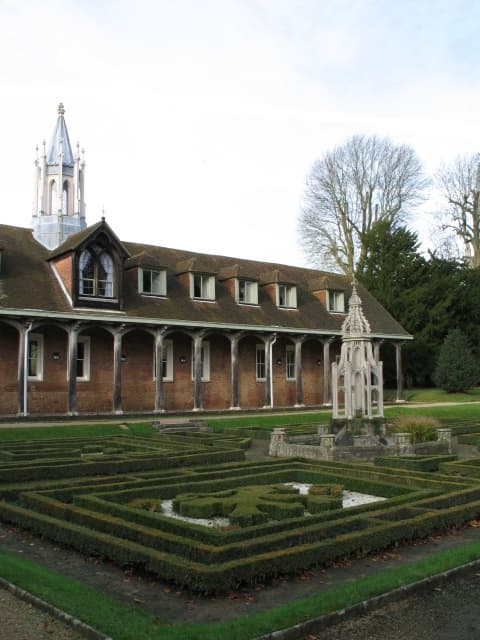
Today, Hinton Priory exists primarily as a historic site with notable surviving structures. The chapter house, which originally included a library and a dovecote above, remains and was designated Grade I listed in 1956. The refectory also stands, forming part of a former stable yard that incorporates earlier stonework and is also Grade I listed. These structures are now part of a 16th-century country house, also known as Hinton Priory, which itself is a Grade I listed building. Visible earthworks from the great cloister can be seen in an orchard and paddocks. The entire site has been designated a Scheduled Ancient Monument. Despite its historical importance, the priory is in private ownership, and there is no public access. The condition of the site is noted as 'Poor' on the Heritage at Risk Register, with some areas requiring assessment.
Source: Wikipedia ↗
Frequently Asked Questions
When was Hinton Priory founded?
Hinton Priory was founded in 1232. It was originally established at Hatherop, Gloucestershire, in 1222 before relocating to its Somerset site.
What religious order was Hinton Priory part of?
Hinton Priory was a Carthusian monastery. The Carthusians are a Catholic religious order known for their contemplative life and austerity.
What remains of Hinton Priory today?
The chapter house with a library and dovecote above, and the refectory, still stand. Earthworks from the great cloister are also visible in an orchard and paddocks. These surviving structures are incorporated into a 16th-century country house on the site.
Is Hinton Priory open to the public?
No, Hinton Priory is in private ownership and there is no public access to the site.
What was the purpose of the 'lower house' mentioned in the history?
A 'lower house' was established near Freshford for lay brothers. This separate site ceased to be used, likely in the 14th century, and the lay brothers were then accommodated with the main community.
Related Monasteries
Ashridge Priory
Ashridge Priory was a medieval college of Austin canons, established in 1283 by Edmund of Almain. It was known as the "Brothers of Penitence" or the "Boni Homines" and gained wealth through donations, particularly a phial of Christ's blood. After its dissolution, it served as a royal residence and later became a private estate before being demolished.

Beeston Regis Priory
Beeston Regis Priory was an Augustinian priory founded in 1216 by Lady Isabel de Cressey. Dissolved in 1538, its remains, particularly the priory church nave and transept, are a Grade I listed ruin. The priory's suppression is believed to have influenced the founding of Gresham's School, and its cloister garden is now part of Priory Farm.

Beverley Blackfriars
Beverley Blackfriars, also known as The Old Friary, originated as a Dominican priory established around 1240. Despite a devastating fire in 1449 and its dissolution in 1539, parts of the priory, particularly the guesthouse, survived. After centuries of varied private ownership and near demolition, significant preservation efforts led to its current status as a Grade II* listed building, housing a youth hostel since 1984.