
Gruchet-le-Valasse
Gruchet-le-Valasse is a commune in the Seine-Maritime department of Normandy, France, known for its historical sites including a 12th-century abbey and a 14th-century church. Situated in the Pays de Caux region, it is a village historically engaged in forestry, farming, and light industry. The commune also features several 16th-century houses and a 19th-century town hall.
Key Facts
- ›Located in the Seine-Maritime department of Normandy, France.
- ›Home to the 12th-century Abbey de Gruchet-le-Valasse.
- ›Features the Church of St-Thomas, dating back to the 14th century.
- ›Contains several houses from the 16th century.
- ›The 19th-century Hôtel de Ville (town hall) is also a point of interest.

12th Century Abbey, 14th Century Church, 16th Century Houses, 19th Century Town Hall
About Gruchet-le-Valasse
Gruchet-le-Valasse is a commune located in the Seine-Maritime department of the Normandy region in northern France. Historically a village sustained by forestry, farming, and associated light industry, it is situated within the Pays de Caux area, approximately 15 miles east of Le Havre. The commune is notable for its collection of historical buildings, offering a glimpse into its past.
Places of Interest
The architectural heritage of Gruchet-le-Valasse includes several structures of significant historical and aesthetic value. The Abbey de Gruchet-le-Valasse, dating from the 12th century, lends its name to the Valasse Cross and stands as a testament to medieval monastic life. The Church of St-Thomas, originating from the 14th century, is another prominent religious edifice. The commune also preserves numerous houses built in the 16th century, providing examples of residential architecture from that period. Completing the list of notable sites is the Hôtel de Ville (town hall), constructed in the 19th century.
Source: Wikipedia ↗
Frequently Asked Questions
What is the historical significance of Gruchet-le-Valasse?
Gruchet-le-Valasse is historically significant for its surviving medieval religious and residential architecture. The 12th-century abbey and the 14th-century church are key landmarks, reflecting the area's past religious and community life. The presence of 16th-century houses further adds to its historical appeal.
What are the main points of interest in Gruchet-le-Valasse?
Visitors can explore the 12th-century Abbey de Gruchet-le-Valasse and the 14th-century Church of St-Thomas. The commune also boasts several well-preserved 16th-century houses and the 19th-century Hôtel de Ville (town hall).
Where is Gruchet-le-Valasse located?
Gruchet-le-Valasse is situated in the Seine-Maritime department of the Normandy region in northern France. It is part of the Pays de Caux area, approximately 15 miles east of Le Havre.
What economic activities were historically associated with Gruchet-le-Valasse?
The village has traditionally been involved in forestry and farming. Associated light industry also played a role in its economy over time.
Related Monasteries
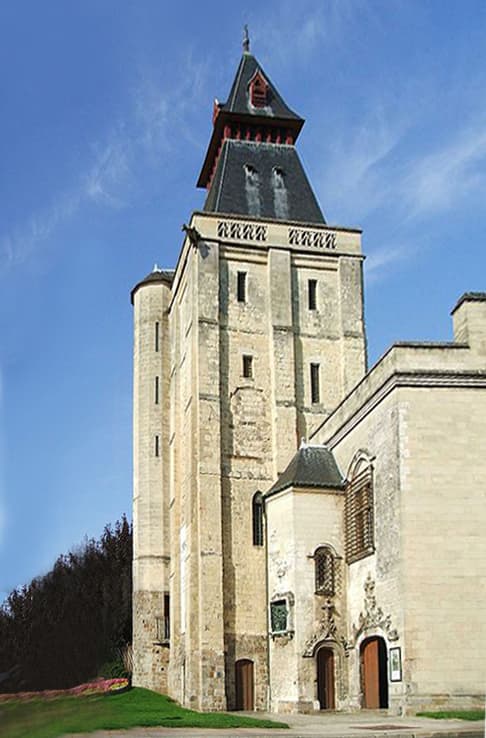
Abbeville
Abbeville is a historic commune in northern France, located on the Somme River and serving as the historical capital of the County of Ponthieu. Its strategic location made it a significant crossing point and trading port throughout history, experiencing periods of both prosperity and conflict during the Middle Ages and beyond. The town is also notable for its connection to early prehistory due to the discovery of Paleolithic stone tools.

Abbey of la Pierre-qui-Vire
The Abbey of la Pierre-qui-Vire is a Benedictine monastery founded in 1850 in the Morvan forests of France. Named after a large, historically mobile stone, the abbey was established by Father Jean-Baptiste Muard and became part of the Subiaco Congregation. Despite periods of exile due to anti-clerical legislation, the community was re-established and is today known for its cheese production and its publishing house, Éditions Zodiaque, which specializes in Romanesque art.
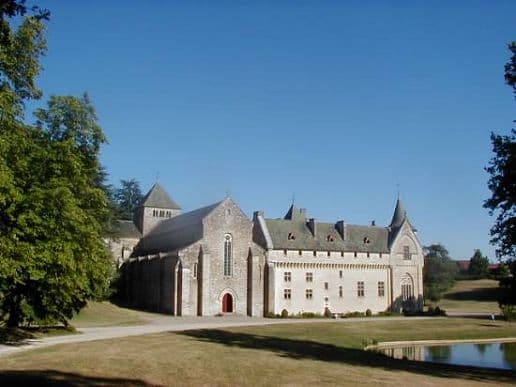
Abbey of Loc-Dieu
Abbey of Loc-Dieu is a Cistercian abbey situated in Aveyron, France, founded in 1123 on a site historically known as "devil's place" before being renamed "place of God" by its monastic inhabitants. Despite facing destruction and rebuilding, it became a significant Gothic architectural site and, during World War II, served as a safe haven for artworks from the Louvre, including the Mona Lisa. Today, the abbey and its park are open to the public.