
Gradište Monastery
Gradište Monastery, located in Buljarica, Montenegro, originated as a medieval inn of the old Serbian Empire and later became affiliated with Visoki Dečani Monastery. Founded in 1116, it comprises three churches and a dormitory, with its current structures dating from various periods, including the early 16th to mid-19th centuries. The monastery is noted for its historical frescoes and unique iconography.
Key Facts
- ›Founded in 1116
- ›Originally a medieval inn of the old Serbian Empire
- ›Affiliated with Visoki Dečani Monastery
- ›Comprises three churches and a dormitory
- ›Frescoes in the Assumption of the Holy Mother of God church date from the 1620s
- ›Church of St Nicholas features frescoes from 1619-1620 depicting the life of St George

- Frescoes Dating From the 1620s In the Assumption of the Holy Mother of God Church
- Frescoes From 1619-1620 Depicting the Life of St George In the Church of St Nicholas
- Iconostasis Painted By Nicholas Aspiotis In Saint Sava Church
- Unusual Painting of St Christopher With An Animal Head In Saint Sava Church
King Milutin, Veljko đUrić, Bojan Popović, Aleksandar čIlikov, Nicholas Aspiotis
- Mentioned In A Document From the Time of King Milutin In 1307
- Frescoes In the Church of St Nicholas Were Cleaned and Studied After An Earthquake
About Gradište Monastery
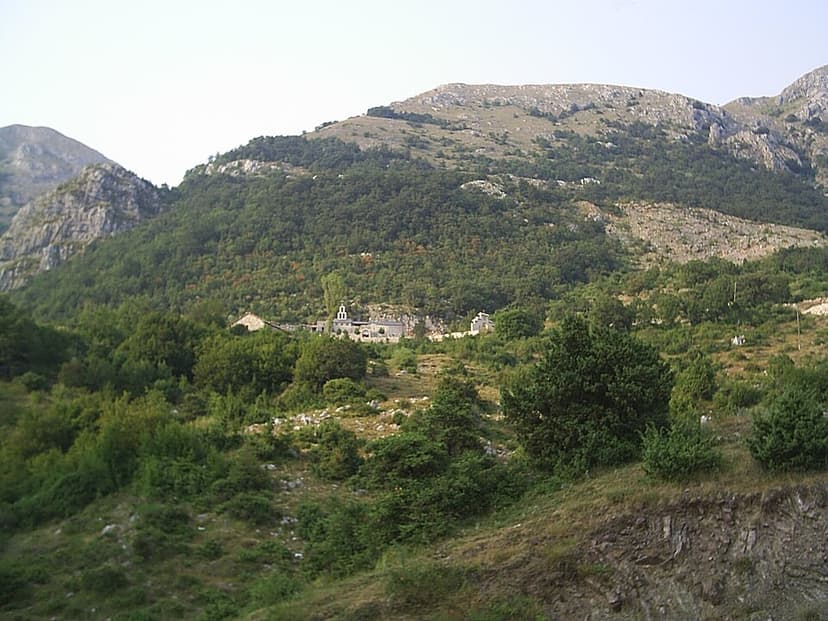
Gradište Monastery is situated in Buljarica, Montenegro, in proximity to Petrovac na Moru. Its origins trace back to 1116, when it began as a medieval inn within the old Serbian Empire's territory of Zeta. The monastery later developed affiliations with the prominent Visoki Dečani Monastery in Kosovo. Today, Gradište Monastery comprises a dormitory building and three distinct churches, each with its own historical layers and artistic contributions.
History and Development
The monastery's establishment in 1116 marks it as a significant historical site. Historical records, including a document from the era of King Milutin in 1307, attest to its early presence. The structures visible today reflect a long period of development and renovation. The complex includes the Church of St Nicholas, constructed in 1610, and the Assumption of the Holy Mother of God church, notable for its frescoes dating from the 1620s. The Saint Sava's church was initially built in the early 1500s and later underwent rebuilding in 1855.
Artistic and Architectural Significance
The churches within Gradište Monastery are distinguished by their rich fresco cycles and unique iconography. The Church of St Nicholas features frescoes painted between 1619 and 1620 that depict, among other scenes, the historiography of Saint George. These frescoes were subject to cleaning and study, which revealed further details. In the Saint Sava Church, an iconostasis was painted by the Greek icon painter Nicholas Aspiotis in 1864. This church also houses an unusual painting of Saint Christopher, depicted with an animal head, adding a layer of unique artistic interest to the monastery's collection.
Source: Wikipedia ↗
Frequently Asked Questions
When was Gradište Monastery founded?
Gradište Monastery was founded in 1116. It is mentioned in a document from the time of King Milutin in 1307, indicating its existence in the early medieval period.
What is the architectural makeup of Gradište Monastery?
The monastery complex consists of a dormitory building and three churches. The churches include St. Nicholas' (built 1610), the Assumption of the Holy Mother of God (with frescoes from the 1620s), and Saint Sava's (built in the early 1500s and renovated in 1855).
What are some notable features of the churches at Gradište Monastery?
The Church of St Nicholas contains frescoes from 1619-1620 that narrate the life of St George. The Saint Sava Church houses an iconostasis painted in 1864 by Nicholas Aspiotis and an unusual depiction of St Christopher with an animal head.
What was the original purpose of Gradište Monastery?
Gradište Monastery originally served as a medieval inn for the old Serbian Empire, specifically within the region of Zeta. It later developed into a monastic complex.
Related Monasteries
Stanjevići Monastery
Stanjevići Monastery, located north of Budva in Montenegro, holds significant historical importance as the site where Montenegro's judicial administration and legal code were promulgated in 1798. Founded by Nikola Stanjević, it also served as a cultural center for the Paštrovići region.

Cetinje Monastery
Cetinje Monastery is a significant Serbian Orthodox monastery located in Cetinje, Montenegro, serving as the seat of the Metropolitanate of Montenegro and the Littoral. Founded around 1484 by Prince Ivan Crnojević, it was initially the cathedral monastery of the Eparchy of Zeta. Although devastated multiple times, notably in 1692, it was rebuilt and has remained a vital center of spiritual, cultural, and political life throughout Montenegro's history.
Dajbabe Monastery
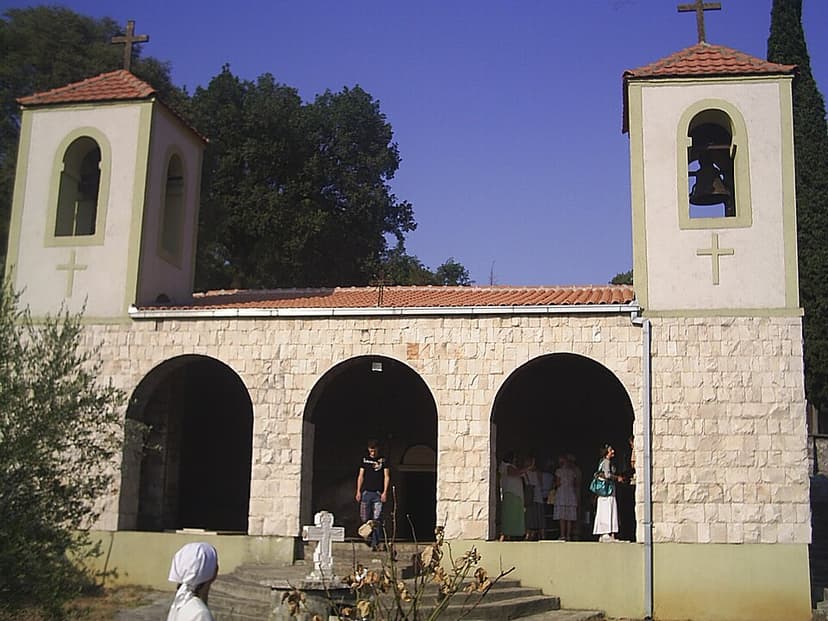
The Dajbabe Monastery is a Serbian Orthodox monastery located in a cave on Dajbabe Hill near Podgorica, Montenegro. Founded in 1897 and dedicated to the Assumption of the Theotokos, it initially utilized the cave as a sanctuary before plans for expansion. A notable feature is its reliquary containing the relics of St. Simeon Dajbabe.