
Glanfeuil Abbey
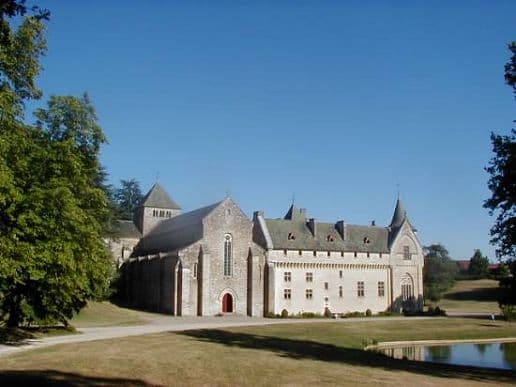
Glanfeuil Abbey, also known as the Abbey of St Maurus, was a significant Benedictine monastery in Gaul, traditionally founded by Saint Maurus himself. Despite its early importance, historical records are sparse, with much of the early accounts relying on hagiography. The monastery faced periods of decline and restoration, ultimately being suppressed during the French Revolution and later refounded, only to be dispersed again due to anti-clerical laws. Today, the former abbey premises serve as a holiday and residential center.
Key Facts
- ›Traditionally considered the original Benedictine foundation in Gaul.
- ›Founded in the village of Saint-Maur-sur-Loire, now Le Thoureil.
- ›Excavations suggest it was built on the ruins of a Roman villa.
- ›Suppressed in 1790 during the French Revolution.
- ›Refounded in 1890 by Abbot Louis-Charles Couturier of Solesmes Abbey.
- ›Monks were forced to leave France in 1901 due to anti-clerical laws.

- Possible Merovingian Monastery On Roman Villa Ruins
- Supposed Remains of Saint Maurus Discovered Around 845
Abbey of St Maurus, Abbey of Saint-Maur De Glanfeuil, Abbey of Saint-Maur-Sur-Loire
Saint Maurus, Faustus, Bertrand, Bishop of Mans, Harradeus, Odo of Glanfeuil, Gaidulf of Ravenna, Rorgon I, Count of Maine, Bilichilde, Gausbert, Ebroin, Ingelbert of Saint-Pierre-Des-FosséS, Pippin of Aquitaine, Emperor Louis the Pious, Gauslin, Charles the Bald, Geoffrey, Louis-Charles Couturier
- Traditional Founding By St. Maurus
- Grant To Gaidulf of Ravenna In the 8th Century
- Restoration By Rorgon I and Bilichilde Around 830
- Confirmation of Ebroin's Family's Possession By Charles the Bald In 847
- Discovery of Supposed Remains of St. Maurus Around 845
- Flight of Monks Due To Norman Threats In 862
- Suppression In 1790
- Refounding In 1890
- Expulsion of Monks In 1901
- Dissolution and Founding of A New Monastery In Clervaux, Luxembourg In 1908
About Glanfeuil Abbey
Glanfeuil Abbey, also known in various French forms as Abbaye de Glanfeuil, Abbaye Saint-Maur de Glanfeuil, and Abbaye de Saint-Maur-sur-Loire, is a historic Benedictine monastery located in the village of Saint-Maur-sur-Loire, now part of Le Thoureil in Maine-et-Loire, France.
Traditional Founding and Early History
The traditional account, largely based on the hagiography of Saint Maurus, posits that Glanfeuil Abbey was the original Benedictine foundation in Gaul. According to this narrative, Saint Maurus, sent from Monte Cassino by Saint Benedict, established the monastery. While the accuracy of this hagiography has been debated, excavations at the site have revealed evidence of a Merovingian monastery potentially built upon the ruins of a Roman villa, suggesting an early medieval origin.
Periods of Decline and Restoration
Historical records indicate that the abbey faced significant challenges. In the mid-eighth century, a grant from King Pepin the Short led to its resources being depleted by Gaidulf of Ravenna, reducing the monastery to a ruin. By approximately 830, Rorgon I, Count of Maine, and his wife Bilichilde undertook to restore the abandoned site. The monastery later came under the influence of the family of Ebroin, with Charles the Bald confirming their hereditary rights of possession in 847. It was during the abbacy of Gauslin, Ebroin's nephew, that the supposed remains of Saint Maurus were discovered around 845.
Later History and Legacy
In 862, under threat from Norman raids, Abbot Odo and the monks evacuated Glanfeuil, taking the relics of Saint Maurus with them. The original monastery was eventually rebuilt and continued to flourish until it was suppressed in 1790 during the French Revolution. The site was refounded in 1890 by Abbot Louis-Charles Couturier of Solesmes Abbey, but the community was compelled to leave France in 1901 due to anti-clerical laws. After a period of seeking a new home, the monks established a new monastery in Clervaux, Luxembourg. The former Glanfeuil Abbey premises have since been used by various organizations, including the Assumptionists and the Apprentis d'Auteuil, before being acquired by the departmental council of Maine-et-Loire. Currently, the site is managed by the O.V.A.L. association for educational and holiday purposes. The building has been recognized as a monument historique since 1958.
Source: Wikipedia ↗
Frequently Asked Questions
When was Glanfeuil Abbey founded?
The traditional founding account attributes its establishment to Saint Maurus, who was sent from Monte Cassino. While specific founding dates are debated and rely on hagiography, excavations have uncovered evidence of a Merovingian monastery potentially built on Roman ruins, suggesting an early medieval origin.
What is the traditional story of Glanfeuil Abbey's founding?
According to tradition, Saint Maurus, dispatched by Saint Benedict from Monte Cassino along with eleven other monks, established Glanfeuil Abbey. This account is primarily found in the hagiography of Saint Maurus, which was later copied and edited by Abbot Odo of Glanfeuil.
What happened to Glanfeuil Abbey during the French Revolution?
Glanfeuil Abbey was suppressed in 1790 in the aftermath of the French Revolution. The religious upheaval of the era led to the dissolution of many monastic institutions across France.
Was Glanfeuil Abbey ever refounded?
Yes, the monastery was refounded in 1890 by Abbot Louis-Charles Couturier of Solesmes Abbey as part of a broader revival of monasticism. However, this community was again forced to disperse in 1901 due to anti-clerical laws.
What is the current use of the former Glanfeuil Abbey site?
After various ownership changes, the former abbey premises are now run by the O.V.A.L. association. It is utilized for residential courses for schools and operates as a holiday center during non-term times.
Related Monasteries

Abbey of La Chaise-Dieu
The Abbey of La Chaise-Dieu, established in 1043 by Robert de Turlande, is a former Benedictine abbey renowned for its Gothic architecture and significant historical associations, including a visit from Pope Urban II and the patronage of Pope Clement VI. It served as the headquarters of the Casadean order and is celebrated for its library, workshop for liturgical books, the Danse Macabre, and a music festival initiated in 1966.
Abbey of Loc-Dieu
Abbey of Loc-Dieu is a Cistercian abbey situated in Aveyron, France, founded in 1123 on a site historically known as "devil's place" before being renamed "place of God" by its monastic inhabitants. Despite facing destruction and rebuilding, it became a significant Gothic architectural site and, during World War II, served as a safe haven for artworks from the Louvre, including the Mona Lisa. Today, the abbey and its park are open to the public.

Abbey of Saint-Acheul
The Abbey of Saint-Acheul was a monastery of Canons Regular located in Amiens, France, founded in the 11th century on the site of an ancient church. Suppressed during the French Revolution in 1790, its 18th-century buildings were later occupied by a college entrusted to the Jesuits and are now part of the private Lycée Saint-Riquier. The abbey church, which has a classical sober stone architecture, continues to function as a parish church and is protected as a historic monument.