
Fontenay Abbey
Christian·France·Active (partially, as a museum and private residence)·12th century
The Abbey of Fontenay, founded by Saint Bernard of Clairvaux in 1118, is one of Europe's oldest and most complete Cistercian abbeys. Located in Marmagne, France, it exemplifies Romanesque architecture with its well-preserved original buildings, including the church, dormitory, cloister, and chapter house. Recognized as a UNESCO World Heritage Site in 1981, Fontenay Abbey provides an exceptional glimpse into 12th-century Cistercian monastic life and architecture.
Key Facts
- ›Founded by Saint Bernard of Clairvaux in 1118.
- ›One of the oldest and most complete Cistercian abbeys in Europe.
- ›Designated a UNESCO World Heritage Site in 1981.
- ›Primarily built in the Romanesque architectural style.
- ›Almost all original buildings remain intact, excluding the refectory.
- ›Served as a paper MILL during the French Revolution before restoration.

Romanesque, Early Gothic
- Intact Original Monastic Buildings
- Church With Flattened Apse and Rectangular Chapels
- Cloister
- Chapter House
- Dovecote
- So-Called 'Forge'
- Absence of A Bell Tower For Austerity
Saint Bernard of Clairvaux, Saint Robert of Molesme, Pope Eugene Iii, King Louis, King Edward Iii of England, Montgolfier Brothers, Edouard Aynard
- Founded By Saint Bernard of Clairvaux
- Bishop of Norwich Fled To the Abbey and Helped Finance Construction
- Church Consecrated By Pope Eugene Iii
- Monastic Complex Complete and Able To Serve 300 Monks
- Exempted From Taxes By King Louis
- Became A Royal Abbey
- Pillaged By Armies of King Edward Iii of England
- Suffered Damage During the Wars of Religion
- Refectory Destroyed
- Monks Left Due To Dechristianization During the French Revolution
- Site Turned Into A Paper Mill
- Bought and Restoration Commenced By Edouard Aynard
- Restoration Complete
- Became A Unesco World Heritage Site
About Fontenay Abbey
The Abbey of Fontenay, situated in the commune of Marmagne near Montbard in France's Côte-d'Or department, stands as a remarkable testament to 12th-century Cistercian monasticism. Founded in 1118 by Saint Bernard of Clairvaux, it was established with a profound commitment to austerity and the strict observance of the Rule of Saint Benedict. This dedication to simplicity and self-sufficiency shaped its architecture and its role in the broader European religious landscape.
History and Significance
The Cistercian monks relocated to Fontenay Abbey in 1130. The construction of its church was significantly aided by the Bishop of Norwich, who sought refuge there and contributed financially. The church itself was consecrated in 1147 by Pope Eugene III. By the year 1200, the monastic complex was fully developed, capable of housing up to 300 monks. The abbey enjoyed royal patronage, being exempted from taxes by King Louis in 1259 and subsequently becoming a royal abbey. Despite periods of hardship, including pillaging during the Hundred Years' War and damage during the Wars of Religion, much of its original structure has survived. After the French Revolution, it briefly served as a paper mill before being purchased and meticulously restored in the early 20th century by Edouard Aynard. Its exceptional preservation and historical importance led to its designation as a UNESCO World Heritage Site in 1981.
Architecture and Features
Fontenay Abbey is a prime example of Romanesque architecture, with its design reflecting the Cistercian ethos of simplicity and functionality. The original complex included a church, dormitory, cloister, chapter house, caldarium, refectory, dovecote, and a structure often identified as a forge, though architectural comparisons suggest it may have been a brewery or bakehouse. All these buildings remain largely intact, with the exception of the refectory, which was destroyed in 1745. The church, built in a Latin cross shape, features massive walls, sturdy piers, and groin vaults characteristic of the Romanesque style, but also incorporates elements that bridge towards Gothic architecture, such as the pointed arches in its vaults. Notably, the abbey lacks a bell tower, in line with Bernard of Clairvaux's emphasis on austerity. The interior, though undecorated, emphasizes light and proportion, with window designs derived from musical ratios. The cloister, a central space for monastic life, is divided by pillars into small galleries, creating a serene environment for reading, work, and prayer.
Source: Wikipedia ↗
Frequently Asked Questions
When was Fontenay Abbey founded?
Fontenay Abbey was founded in 1118 by Saint Bernard of Clairvaux. It was established as a Cistercian monastery with a strict adherence to the Rule of Saint Benedict.
What is the architectural style of Fontenay Abbey?
The Abbey of Fontenay is primarily built in the Romanesque style. Its architecture is characterized by simplicity, conservatism, and utilitarian design, typical of Cistercian churches.
What remains of the original monastic complex?
Of the original complex, the church, dormitory, cloister, chapter house, caldarium, dovecote, and the so-called 'forge' all remain intact and are well-maintained. The refectory is the only original building that has been destroyed.
Why is Fontenay Abbey considered significant?
Fontenay Abbey is significant as one of the oldest and most complete Cistercian abbeys in Europe. It offers a unique and well-preserved insight into the architecture and lifestyle of 12th-century Cistercian monasticism.
Is Fontenay Abbey a UNESCO World Heritage Site?
Yes, the Abbey of Fontenay was designated a UNESCO World Heritage Site in 1981. This recognition highlights its outstanding universal value as a testament to Cistercian architecture and monastic history.
What happened to Fontenay Abbey after the monks left?
Following the French Revolution, the abbey was dechristianized and subsequently turned into a paper mill in 1791. It was later purchased and restored starting in 1906 by Edouard Aynard.
Related Monasteries
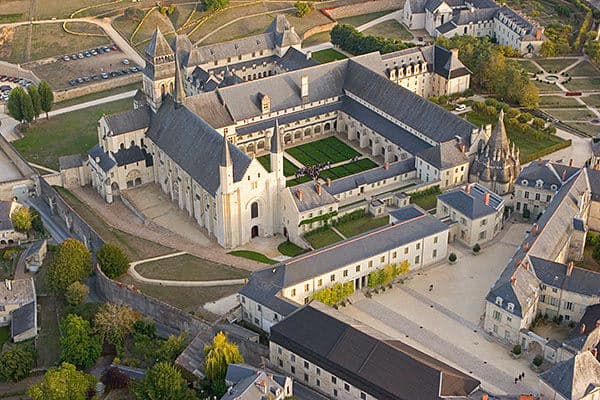
Fontevrault Abbey
The Royal Abbey of Fontevraud was a pivotal monastery founded in 1101 by Robert of Arbrissel, establishing a unique monastic order composed of double monasteries where men and women lived under the authority of an Abbess. It became a significant royal necropolis, housing the tombs of King Henry II, Eleanor of Aquitaine, and King Richard the Lionheart. After its disestablishment during the French Revolution, the complex later served as a prison before being transformed into a cultural center and heritage site.

Abbey of Saint-Sernin
The Abbey of Saint-Sernin, located in Toulouse, France, is a former abbey church noted for its significance as a pilgrimage site and its exceptional Romanesque sculpture. Originally built on the site of a 4th-century basilica containing the relics of Saint Saturnin, the current structure evolved over centuries, with major construction phases in the 11th and 12th centuries. Its architectural plan, featuring an ambulatory and radiating chapels, became influential, and it was recognized as a UNESCO World Heritage Site in 1998 as part of the Routes of Santiago de Compostela in France.

Ainay Abbey
The Basilica of Saint-Martin d'Ainay, a significant Romanesque church in Lyon, France, boasts legendary origins linked to early Christian martyrs. Originally a Benedictine priory founded in 859 and later elevated to an abbey, it became a powerful religious institution before declining into a secular chapter. Today, it stands as a testament to Lyon's historical importance and architectural diversity, recognized as a UNESCO World Heritage site.