
Fontevrault Abbey
Christian·France·Cultural centre and heritage site·12th century
The Royal Abbey of Fontevraud was a pivotal monastery founded in 1101 by Robert of Arbrissel, establishing a unique monastic order composed of double monasteries where men and women lived under the authority of an Abbess. It became a significant royal necropolis, housing the tombs of King Henry II, Eleanor of Aquitaine, and King Richard the Lionheart. After its disestablishment during the French Revolution, the complex later served as a prison before being transformed into a cultural center and heritage site.
Key Facts
- ›Founded in 1101 by itinerant preacher Robert of Arbrissel.
- ›Established the Order of Fontevraud, characterized by double monasteries with both men and women.
- ›Served as the burial site for English monarchs Henry II and Richard I, and Queen Eleanor of Aquitaine.
- ›Operated as a prison from 1804 to 1963.
- ›Now functions as the Centre Culturel de L'Ouest, a cultural center and heritage site.
- ›Located in the Loire Valley, a UNESCO World Heritage Site.
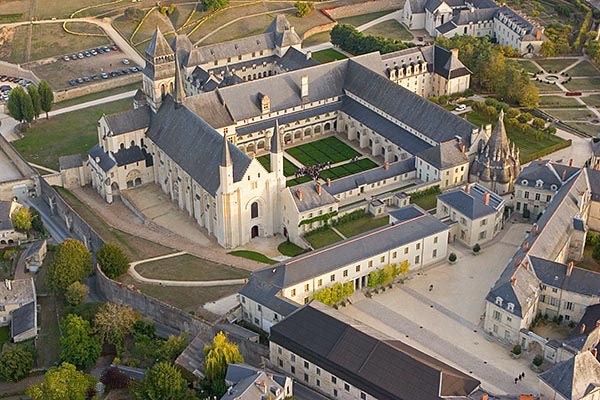
Royal Necropolis, Double Monastery Structure, Centre Culturel De L'Ouest
Abbaye De Fontevraud
Robert of Arbrissel, Eleanor of Aquitaine, Henry Ii of England, Richard the Lionheart, Petronilla of Chemillé, Hersende of Champagne
- Founding of the Monastery
- Recognition As A Religious Community
- Burial of Henry Ii, Eleanor of Aquitaine, and Richard I
- Seized and Disestablished During the French Revolution
- Became A Prison
- Transformed Into A Cultural Center
About Fontevrault Abbey
Fontevraud Abbey
The Royal Abbey of Fontevraud, known in French as l'abbaye de Fontevraud, stands as a significant historical and cultural landmark in the village of Fontevraud-l'Abbaye, near Chinon in France. Its origins trace back to 1101 when the itinerant preacher Robert of Arbrissel founded it, leading to the establishment of the unique Order of Fontevraud. This order was distinctive for its structure of double monasteries, where both men and women resided within the abbey's grounds, though in separate quarters, all under the ultimate authority of the Abbess.
History and Significance
The abbey flourished under its unique governance and became a site of royal importance, particularly as the burial place for English monarchs Henry II and his wife Eleanor of Aquitaine, as well as their son, King Richard the Lionheart. The first permanent structures were erected between 1110 and 1119. During the French Revolution, Fontevraud was disestablished and its properties seized. Its complex history continued as it was repurposed as a prison from 1804 until 1963, holding a considerable number of inmates.
Transformation and Heritage
In the latter half of the 20th century, the abbey underwent a significant transformation. After being transferred to the French Ministry of Culture in 1963 and undergoing extensive restoration, it was revitalized as a cultural center, the Centre Culturel de l'Ouest, from 1975. The complex opened to the public in 1985, allowing visitors to explore its rich history and architectural heritage. Fontevraud Abbey is situated within the Loire Valley, a region designated as a UNESCO World Heritage Site, underscoring its importance in both French and European history.
Source: Wikipedia ↗
Frequently Asked Questions
Who founded Fontevraud Abbey?
Fontevraud Abbey was founded in 1101 by Robert of Arbrissel, an itinerant preacher. He established a new monastic order known as the Order of Fontevraud.
What makes the Order of Fontevraud unique?
The Order of Fontevraud was composed of double monasteries, meaning it housed both men and women. Uniquely, all members were subject to the authority of the Abbess of Fontevraud, with men and women living in separate quarters.
Which famous figures are buried at Fontevraud Abbey?
Notable figures buried at Fontevraud Abbey include King Henry II of England, his wife Eleanor of Aquitaine, and their son King Richard the Lionheart. Their tombs, featuring effigies, are a significant feature of the site.
What was the history of Fontevraud Abbey after its monastic period?
Following its disestablishment during the French Revolution, the abbey complex was converted into a prison in 1804 and served this purpose until 1963. It housed a large number of prisoners and gained a reputation for harsh conditions.
What is the current status of Fontevraud Abbey?
Since 1975, Fontevraud Abbey has been home to the Centre Culturel de l'Ouest, a cultural center dedicated to its preservation and promotion. It was opened to the public in 1985 and is now a significant heritage site.
Is Fontevraud Abbey a UNESCO World Heritage Site?
Yes, Fontevraud Abbey is situated within the Loire Valley, which is recognized as a UNESCO World Heritage Site. This designation highlights the cultural and historical importance of the region.
Related Monasteries

Fontenay Abbey
The Abbey of Fontenay, founded by Saint Bernard of Clairvaux in 1118, is one of Europe's oldest and most complete Cistercian abbeys. Located in Marmagne, France, it exemplifies Romanesque architecture with its well-preserved original buildings, including the church, dormitory, cloister, and chapter house. Recognized as a UNESCO World Heritage Site in 1981, Fontenay Abbey provides an exceptional glimpse into 12th-century Cistercian monastic life and architecture.

Abbey of Saint-Sernin
The Abbey of Saint-Sernin, located in Toulouse, France, is a former abbey church noted for its significance as a pilgrimage site and its exceptional Romanesque sculpture. Originally built on the site of a 4th-century basilica containing the relics of Saint Saturnin, the current structure evolved over centuries, with major construction phases in the 11th and 12th centuries. Its architectural plan, featuring an ambulatory and radiating chapels, became influential, and it was recognized as a UNESCO World Heritage Site in 1998 as part of the Routes of Santiago de Compostela in France.

Ainay Abbey
The Basilica of Saint-Martin d'Ainay, a significant Romanesque church in Lyon, France, boasts legendary origins linked to early Christian martyrs. Originally a Benedictine priory founded in 859 and later elevated to an abbey, it became a powerful religious institution before declining into a secular chapter. Today, it stands as a testament to Lyon's historical importance and architectural diversity, recognized as a UNESCO World Heritage site.