
Fail Monastery
Fail Monastery, also known as Failford Abbey, was a Trinitarian friary dedicated to Saint Mary and the Holy Trinity. Founded around 1252, it played a role in the redemption of Christian captives from slavery. Though partially destroyed by fire in the 14th century, its ruins persisted until much of them were removed in 1952 for the construction of Prestwick Airport.
Key Facts
- ›Founded circa 1252 by John de Graham or Andrew Bruce.
- ›Belonged to the Trinitarian Order, also known as "Red Friars" or "Mathurines."
- ›Trinitarian friars were tasked with redeeming Christian captives from slavery.
- ›Suffered partial destruction by fire in 1349 or 1359.
- ›Most remaining ruins were removed in 1952 for Prestwick Airport construction.
- ›Associated with the 'Warlock Laird of Fail', Walter Whiteford.

Fail Castle, Saint Mary's Dedication, Holy Trinity Dedication
Failford Abbey, House of the Holy Trinity of Failford, Ministry of Failford, Valle, Faleford, Feil, Feill, Faill, Ffele
John De Graham, Lord of Tarbolton, Andrew Bruce, Thomas the Rhymer, John Stewart, Earl of Carrick, William Houston, Robert Cunninghame, William Wallace, Walter Whyteford, Walter Wallace, Edward Hunter-Blair
Fire Destruction In 1349 Or 1359, Subject To A Petition For Suppression In 1459, Destruction Ordered In 1561, Removal of Ruins In 1952
About Fail Monastery
Fail Monastery, also known by its Latinized name "Valle" and occasionally as Failford Abbey, was a significant religious establishment of the Trinitarian Order in Scotland. Dedicated to Saint Mary and the Holy Trinity, its primary mission revolved around the redemption of Christian captives from slavery, a duty that shaped its ethos and architectural simplicity. While its exact founding date is debated, historical accounts place its establishment around 1252, likely through the patronage of local lords.
History and Function
The Trinitarian friars, also referred to as "Red Friars" or "Mathurines," wore a distinctive white outer garment with a red and blue cross. Their order's core purpose was to ransom Christian slaves, a costly endeavor that meant their buildings were not typically ornate. Fail Monastery was situated on the bank of the Water of Fail, near the village of Tarbolton in South Ayrshire. The monastery suffered a partial destruction by fire in either 1349 or 1359. Despite its religious significance, the community faced investigations regarding the conduct of its ministers and the financial management of its assets, particularly in the later medieval period.
Later History and Demise
Over time, the monastery's lands and patronage passed through various hands, including the Wallace family of Craigie, who converted the Minister's dwelling into a fortified structure known as "Fail Castle." The monastery was officially ordered to be destroyed in 1561, though a small number of residents remained for a short period. In the 20th century, a significant portion of the remaining ruins were removed in 1952 to facilitate the construction of Prestwick Airport. Archaeological finds, including a sarcophagus possibly belonging to Walter Stewart, have provided glimpses into the monastery's past and the individuals interred there. The site is now largely ruined, with only fragments of walls and foundations remaining.
Source: Wikipedia ↗
Frequently Asked Questions
When was Fail Monastery founded?
Fail Monastery was founded around 1252. Historical accounts vary slightly on the exact founder, with William Aiton attributing it to John de Graham, Lord of Tarbolton, while Love suggests Andrew Bruce.
What was the primary purpose of the Trinitarian friars at Fail Monastery?
The Trinitarian friars, also known as "Red Friars" or "Mathurines," were primarily charged with the duty of saving Christian captives from slavery. They achieved this by paying ransoms or exchanging pagan captives for Christians.
What happened to the ruins of Fail Monastery?
Most of the remaining ruins of Fail Monastery were removed in 1952. They were used as foundations for buildings and a runway at Prestwick Airport. Some rubble was also used to construct a grotto at Annbank's Roman Catholic church.
Are there any significant figures associated with Fail Monastery?
Thomas the Rhymer, a biographer of William Wallace, is said to have been a frequent visitor and may have retired to Failford. The monastery is also associated with Walter Whiteford, known as the 'Warlock Laird of Fail,' who lived in the converted Minister's dwelling, Fail Castle.
What religious order did Fail Monastery belong to?
Fail Monastery belonged to the Trinitarian Order. This order is also known as the "Red Friars" or "Mathurines," originating from the monastery of Saint Mathurin in Paris.
What architectural features or structures were notable at Fail Monastery?
Prior to its final destruction, the ruins were mainly of a rectangular building, likely a 16th-century tower or "manor-house," which had served as the "domus" of the head of the monastery and later the home of the commendator or Laird of Fail. This tower is said to have comprised at least three principal storeys. The Wallace family converted the Minister's dwelling into a defensive structure known as 'Fail Castle'.
Related Monasteries
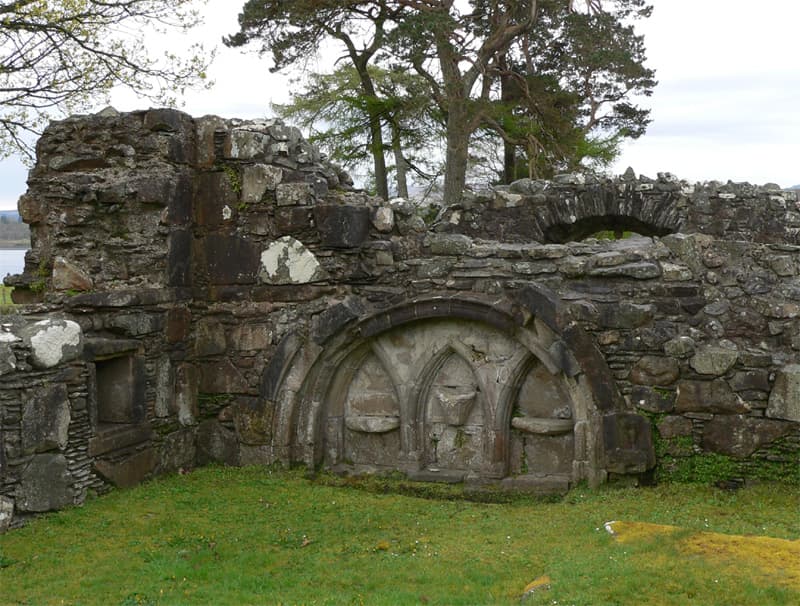
Ardchattan Priory
Ardchattan Priory was a Valliscaulian monastic community established in 1230 by Duncan Macdougall in Ardchattan, Argyll, Scotland. It holds historical significance as the site of a council of local chiefs held by Robert the Bruce in 1308, believed to be the last Gaelic-speaking parliament. Over time, the priory transitioned from its original monastic function, with parts converted into a dwelling and the church eventually falling into disuse and ruin.
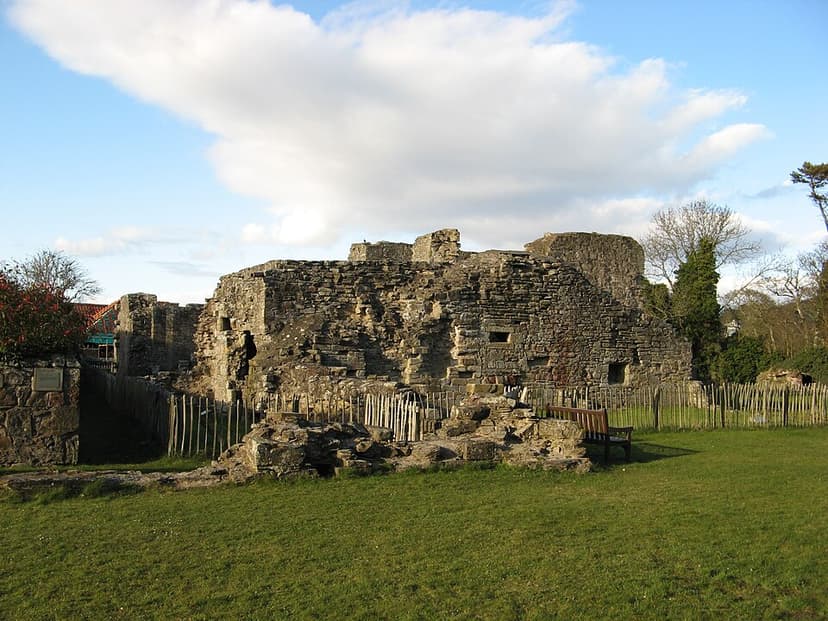
Balmerino Abbey
Balmerino Abbey, also known as St Edward's Abbey, was a Cistercian monastery located in Balmerino, Fife, Scotland. Founded between 1227 and 1229, it was patronized by Ermengarde de Beaumont and King Alexander II. The abbey suffered destruction during the War of the Rough Wooing and later during the Scottish Reformation, leading to its decline and eventual ruin by the 16th century. Today, the ruins are managed by the National Trust for Scotland.
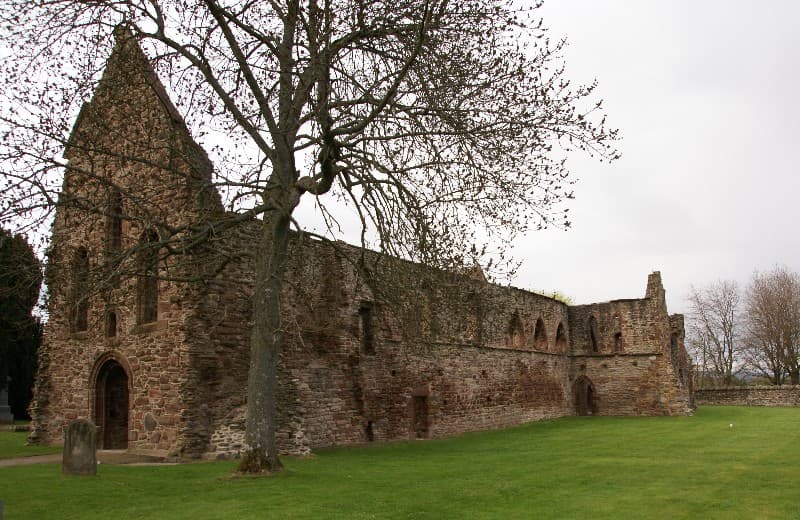
Beauly Priory
Beauly Priory was a monastic community established likely in 1230 in what is now Beauly, Inverness-shire. Originally founded by the Valliscaulian Order, it later became Cistercian in 1510 following the suppression of its original order. Today, the priory's extensive ruins are a significant visitor attraction, protected as a scheduled monument.