
Ethiopia
Ethiopia, officially the Federal Democratic Republic of Ethiopia, is a landlocked country in East Africa with a rich and ancient history, recognized as a cradle of humankind. It has been a significant political and cultural entity for millennia, with early kingdoms like D'mt and Aksum shaping its trajectory. The nation has a complex religious landscape, with Christianity and Islam establishing a long-standing presence, and it has a history of repelling foreign invasions, notably against Italy in the late 19th century. Despite facing modern challenges, Ethiopia is considered an emerging economic power in sub-Saharan Africa.
Key Facts
- ›Anatomically modern humans emerged from modern-day Ethiopia.
- ›The Kingdom of Aksum, established in the 1st century AD, was one of the four great powers of its era.
- ›Christianity arrived in the kingdom in 330 AD, making Ethiopia one of the first major powers to adopt the faith.
- ›Ethiopia successfully repelled foreign invasions, most notably defeating an Italian invasion at the Battle of Adwa in 1896.
- ›It is a founding member of the UN and hosts the headquarters of the African Union Commission.
- ›Ethiopia is considered one of the least developed countries but is an emerging power with the fastest economic growth in sub-Saharan Africa.

- Ancient Hominid Fossil Sites
- Rock Shelter At Fincha Habera
- Stone-Tipped Projectile Weapons From the Middle Stone Age
- Fasil Ghebbi Royal Fortress
Abyssinia
Queen of Sheba, Menelik I, Solomon, Frumentius, Ezana, Queen Gudit, Yekuno Amlak, Amda Seyon I, Zara Yaqob, Ahmad Ibn Ibrahim Al-Ghazi, Pedro Paez, Fasilides, Tewodros Ii, Menelik Ii, Haile Selassie
- Emergence of Anatomically Modern Humans
- Establishment of the Kingdom of D'Mt
- Kingdom of Aksum Maintained A Unified Civilization For 900 Years
- Arrival of Christianity
- Influence of Islam During the First Hijra
- Collapse of Aksum
- Establishment of the Ethiopian Empire and Solomonic Dynasty
- Ethiopian–Adal War
- Oromo Expansion
- Zemene Mesafint
- Reunification and Modernization Under Emperor Tewodros Ii
- Defeat of Italian Invasion At the Battle of Adwa
- Italian Invasion and Establishment of Italian East Africa
- Liberation By the British Army and Restoration of Sovereignty
- Derg Military Junta Takes Power
- Dissolution of the Derg and Dominance of Eprdf
- Ethiopia Becomes A Full Member of Brics
About Ethiopia
Ethiopia, officially the Federal Democratic Republic of Ethiopia, is a landlocked country situated in the Horn of Africa, renowned as one of the earliest sites for the emergence of anatomically modern humans. Its history stretches back millennia, marked by the rise and influence of significant ancient kingdoms such as Dʿmt and Aksum. The Kingdom of Aksum, in particular, was a major power in the 3rd century AD and was among the first to officially adopt Christianity in 330 AD, establishing a rich religious heritage that continues to this day alongside Islam.
Historical Trajectory
The historical narrative of Ethiopia is one of resilience and transformation. Following the decline of Aksum, various dynasties, including the Zagwe and the Solomonic dynasty, shaped the nation's political and cultural landscape. The Ethiopian Empire experienced periods of expansion under rulers like Amda Seyon I and consolidation under Emperor Zara Yaqob. The nation has a notable history of defending its sovereignty, successfully repelling foreign invasions, most significantly defeating an Italian attempt at conquest at the Battle of Adwa in 1896, thereby remaining independent during the Scramble for Africa. Despite periods of internal strife, such as the "Age of Princes" (Zemene Mesafint), Ethiopia has consistently worked towards reunification and modernization, a process notably advanced by Emperor Tewodros II and Emperor Menelik II.
Modern Era and Significance
In the 20th century, Ethiopia faced occupation during the Second Italo-Ethiopian War but regained its full sovereignty after World War II. The country has since navigated periods of political upheaval, including military rule and civil war. Today, Ethiopia is a multi-ethnic state and a founding member of the United Nations, hosting the headquarters of the African Union Commission. While grappling with development challenges, it is recognized as an emerging economic power in sub-Saharan Africa, characterized by significant economic growth driven by foreign investment and a strong agricultural sector. Its historical depth, cultural diversity, and strategic importance continue to define its place on the global stage.
Source: Wikipedia ↗
Frequently Asked Questions
What is the origin of the name "Ethiopia"?
Tradition holds that the name Ethiopia derives from the legendary King Ethiopis, who is believed to be a descendant of Adam. The Greek name 'Aithiopia' is thought to mean 'burnt-face', from the Greek words 'aithō' (I burn) and 'ops' (face).
When did Christianity arrive in Ethiopia?
Christianity arrived in the Kingdom of Aksum around 330 AD. Frumentius, who became the first bishop of Aksum, was instrumental in converting members of the royal court to Christianity.
What was the significance of the Battle of Adwa?
The Battle of Adwa, fought in 1896, was a pivotal victory for Ethiopia against an Italian invasion. This decisive defeat ensured Ethiopia's independence during the Scramble for Africa and solidified its territorial integrity.
What is the historical significance of the Kingdom of Aksum?
The Kingdom of Aksum, which emerged in the 1st century AD, was a major power in the ancient world, listed by the Persian prophet Mani alongside Rome, Persia, and China. It was the second country to officially adopt Christianity and had significant trade connections via the Silk Road.
What historical periods are notable in Ethiopian history?
Key historical periods include the emergence of early hominids, the kingdoms of D'mt and Aksum, the Ethiopian Empire with its Solomonic dynasty, the fragmentation of the Zemene Mesafint (Age of Princes), and the period of imperial consolidation and modernization.
What is Ethiopia's current geopolitical significance?
Ethiopia is a founding member of the UN and serves as the host for the African Union Commission headquarters. It is also a member of BRICS and is considered an emerging power in sub-Saharan Africa due to its economic growth.
Related Monasteries
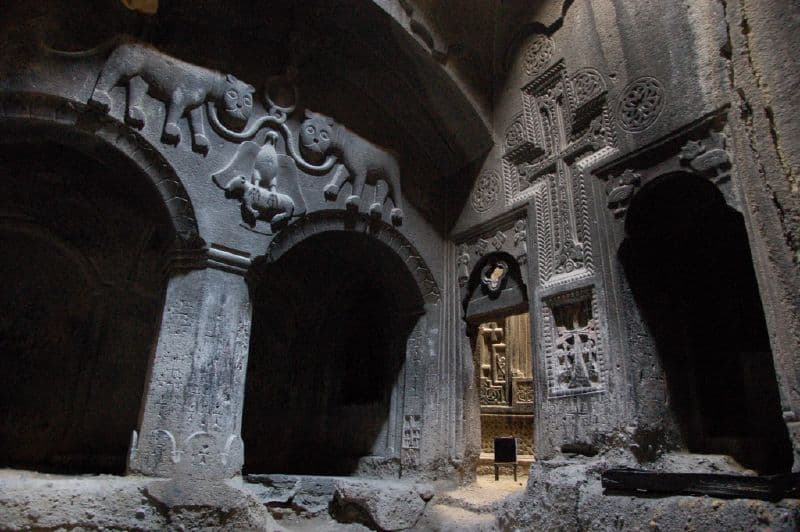
Monolithic church
Monolithic churches are remarkable structures carved entirely from a single block of stone, often hewn into the ground or hillsides rather than built as freestanding edifices. The most renowned examples are the eleven churches in Lalibela, Ethiopia, believed to have been created in the 12th century, which form a UNESCO World Heritage Site and remain active centers of Ethiopian Orthodox Christianity and pilgrimage. While the Lalibela complex is unique for its freestanding external walls, the concept of rock-hewn churches is found globally, with significant examples in Armenia, Bulgaria, France, Finland, and Turkey.

Abbaye de la Fille-Dieu
The Abbaye de la Fille-Dieu is a Cistercian monastery near Romont in Switzerland, continuously occupied by nuns since its founding in 1268. Initially a Benedictine priory, it later affiliated with the Trappists and has undergone significant restorations, including a notable 1990s modernization and the preservation of medieval murals. The abbey is recognized as a Swiss heritage site of national significance.
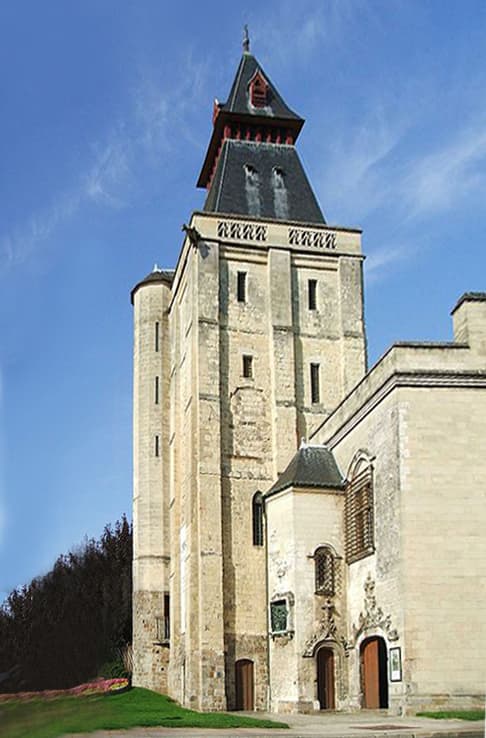
Abbeville
Abbeville is a historic commune in northern France, located on the Somme River and serving as the historical capital of the County of Ponthieu. Its strategic location made it a significant crossing point and trading port throughout history, experiencing periods of both prosperity and conflict during the Middle Ages and beyond. The town is also notable for its connection to early prehistory due to the discovery of Paleolithic stone tools.